Get Full Government Meeting Transcripts, Videos, & Alerts Forever!
Get email alerts on the Body Worn Cameras topic
No spam. Unsubscribe anytime.
Metro Police wins approval for body-worn camera retention policy that sends arrest video to DA within 24 hours
Summary
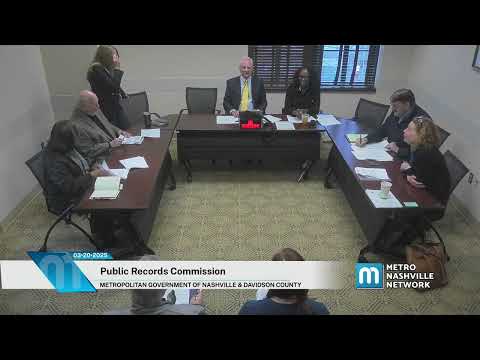
Metro Police presented and the Public Records Commission approved a retention schedule for body-worn and in-car camera footage that sets 18 months for many routine categories, automated transfer of arrest-related video to the district attorney within 24 hours, and extended holds for litigation or cases with property-losses.
Metro Police Department officials told the Public Records Commission that a newly adopted retention schedule for body-worn and in-car camera video will shorten storage of non-evidentiary footage while preserving longer retention for arrests and cases under legal hold.
John Singleton, IT director for the Metro Police Department, said the department’s system automatically uploads officer body-worn and in-car video at the end of shifts, categorizes events and links them to incident numbers, and uses an automated process to deliver arrest-related video to the district attorney’s office within 24 hours of upload. “We have developed an automated process with our vendor, to satisfy the DA’s office need to receive all arrest related video,” Singleton said.
Singleton and Capt. Charles Beasley, who leads the department’s body-worn camera division, described retention categories the department proposed. Investigative stops, general citizen contacts, calls for service and traffic stops are set at 18 months. Police-involved crashes with property loss were described as having a three-year relevant retention that, with other handling, leads to roughly three and a half years of retention in the police system. Singleton said the proposed schedule generally exceeds many other departments’ standards, noting some agencies retain non-evidentiary footage for 12–15 months or as little as 180 days.
Officials described administrative holds for litigation and public-records requests. When Metro Legal issues a litigation hold or when a lawsuit is filed, the department tags related video and suspends deletion; Metro Legal said it will not release holds until appeal periods run or litigation is resolved. Cindy Gross of Metro Legal said the office “issues litigationables routinely” and that holds remain until appeals have run or the legal team clears the release.
Commissioners asked technical and operational questions about who manages cloud storage and who pays for DA retention. Department officials said the vendor (Motorola, which acquired WatchGuard) provides a cloud video-as-a-service platform; the department manages access controls and audit logs, and the district attorney maintains a separate cloud instance to which a full copy of arrest-related video is pushed. Officials said the police department initially purchased storage to facilitate the DA’s instance but does not plan to indefinitely cover DA storage costs.
A commissioner asked whether the retention clock is measured from the incident date or from case closure; Singleton confirmed the retention clock uses the incident date, and Metro Legal confirmed litigation holds will pause deletion until appeals run.
After questions, a motion to approve the department’s retention schedule was made, seconded and approved by voice vote.