Get Full Government Meeting Transcripts, Videos, & Alerts Forever!
Get email alerts on the Reentry Drivers License topic
No spam. Unsubscribe anytime.
Senate Transportation Committee lays over bill extending reintegration driver’s license from 15 to 24 months
Summary
The Senate Transportation Committee on April 2 heard testimony and laid over Senate File 3101, which would extend Minnesota’s reintegration driver’s license from 15 to 24 months and add a 90‑day transition window to apply for a regular license.
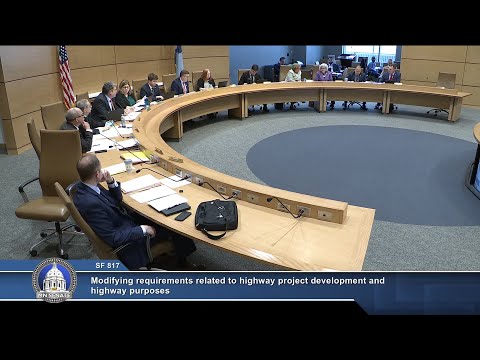
ST. PAUL, Minn. — The Senate Transportation Committee on April 2 heard testimony on Senate File 3101, a bill to change Minnesota’s reintegration driver’s license and laid the measure on the table for possible inclusion in an omnibus bill.
Supporters said the reintegration license — created in 2023 as a temporary, no‑cost credential for people recently released from incarceration — helps people meet conditions of release, find housing and employment, and reconnect with family. Anna Odegaard, Midwest regional director of the Fines and Fees Justice Center, told the committee the bill “extends validity of the license from 15 to 24 months” and “adds a 90 day extension period after expiration, during which someone who has successfully maintained the reintegration license without additional violations can transition to a regular driver’s license without penalty.”
Why it matters: Advocates said the modest statutory changes address barriers people face when trying to move from a temporary reintegration license to an ordinary license. Carrie Warren, who said she was incarcerated at MCF Shakopee and later obtained the reintegration license, described concrete outcomes: since getting the license she said she found work at Target Field through Delaware North, entered a job training program and reconnected with her children. Erin Palmer, who identified herself as an associate director at a national nonprofit serving on the Minnesota Collaborative Justice Project steering committee, said clinics and outreach by the collaborative had shown implementation challenges and that the additional time would “allow individuals the opportunity to continue to drive safely and legally.”
Key details: The bill would (1) increase the reintegration license duration from 15 to 24 months, and (2) add a 90‑day extension after expiration that allows a person who maintained the reintegration license without new violations to apply for a regular license without paying reinstatement penalties that otherwise apply. Anna Odegaard said the Department of Public Safety “has no concerns about these changes.” Committee members discussed whether the 90‑day window could encourage driving on an expired credential; Odegaard responded that regular Minnesota driver’s licenses already have an informal renewal window and that the reintegration license extension is a more limited accommodation intended to avoid penalizing people who briefly miss the deadline.
Committee action and next steps: Committee Chair announced the committee would “lay Senate File 3101 on the table, and layover for possible inclusion in the omnibus bill.” No formal roll‑call vote was recorded on the measure at the hearing.
Voices at the hearing: Senator Pa presented the bill on behalf of the chief author, Senator McKeown (attending remotely). Testimony came from Anna Odegaard (Fines and Fees Justice Center), Carrie Warren (formerly incarcerated resident), and Erin Palmer (associate director, national nonprofit; Minnesota Collaborative Justice Project steering committee). Committee members asked questions about renewal windows, fees and how the transition would work in practice.
Background and context: The reintegration driver’s license was created by the 2023 Minnesota Legislature (codified in chapter 171.301) as a no‑cost, temporary credential to reduce barriers for people returning from incarceration who face suspended or revoked licenses due to unpaid fines or old violations. Advocates said the proposed change would give more time for education and for individuals to transition to a regular license after demonstrating safe driving behavior.
What the bill does not do: The measure does not change eligibility criteria for the reintegration license, and the 90‑day extension does not make it lawful to drive while the reintegration license is expired — the committee record notes that driving on an expired license can still carry penalties.
Outlook: The committee laid the bill on the table for possible inclusion in an omnibus package; sponsors and advocates signaled support for further work with state agencies on implementation details.