Get Full Government Meeting Transcripts, Videos, & Alerts Forever!
Get email alerts on the Healthcare Medicaid Fraud topic
No spam. Unsubscribe anytime.
Committee advances bill expanding Attorney General unit's powers to probe medical assistance fraud
Summary
The Minnesota House Judiciary Finance and Civil Law Committee moved House File 2,354 to the Human Services Finance and Policy Committee after testimony that the measure would expand subpoena authority and other prosecutorial tools for the Attorney General's Medicaid Fraud Control Unit.
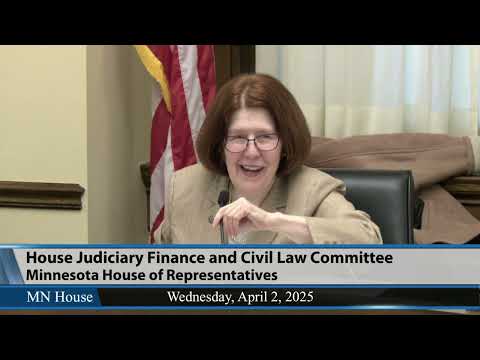
The Minnesota House Judiciary Finance and Civil Law Committee advanced House File 2,354 on April 2, moving the bill to the Human Services Finance and Policy Committee. The bill would expand the Attorney General's Medicaid Fraud Control Unit's investigative authority, including new subpoena powers for financial records, and make conforming prosecutorial and venue changes for a revised medical assistance fraud statute.
The bill's sponsor, Representative Norris, told the committee that the measure aims to protect taxpayer-funded healthcare programs. "Medical assistance fraud steals from hardworking taxpayers across Minnesota. It also steals money meant to provide healthcare to low income Minnesotans," Representative Norris said. He said the bill is designed to give the Attorney General's office the tools needed to pursue provider fraud.
Nick Wonka, director of Minnesota's Medicaid Fraud Control Unit in the Attorney General's Office, testified in support and described three provisions he said were central: the authority provision granting enhanced subpoena power, legal representation and the venue provisions. "We are asking here for similar subpoena power that county attorneys have when they conduct criminal investigations," Wonka said, describing the change as allowing subpoenas for financial records in provider-fraud investigations under the cited Medicaid statute.
Wonka also said the bill would recodify the current medical assistance fraud statute (he referenced renumbering from 609.466 to 609.467) and would match venue language used elsewhere in Minnesota law for theft and identity-theft prosecutions.
Committee members pressed for details about staffing and data classification. Wonka said the bill's funding request would support nine additional positions for the Medicaid Fraud Control Unit'seven investigators, one attorney and one support staff'consistent with a federal Office of Inspector General recommendation. "The budgeted size was 32. Now based on the size of our state Medicaid budget, it's 41," he said.
On the question of whether investigative records become public after an investigation becomes inactive, testimony said that criminal investigative data would be treated under Minnesota's Data Practices Act (chapter 13); active investigative data remains confidential while inactive investigative data can be public under section 13.82, according to a committee legal adviser who answered committee questions.
After questions and brief discussion, the committee chair renewed the motion that House File 2,354, second engrossment, be re-referred to the Human Services Finance and Policy Committee. The motion was approved by voice vote.
Why it matters: Medicaid represents the largest share of funds disbursed by the Department of Human Services; witnesses told the committee roughly 89% of DHS funds flow through Medicaid while about 3% are grants. Supporters argued that expanding investigative tools for provider fraud is aimed at protecting a major source of state healthcare funding.
What the bill would do: among other items the bill (as described in testimony) would expand subpoena authority for the Attorney General's Medicaid Fraud Control Unit to obtain financial records in provider-fraud investigations, preserve the Attorney General's authority to prosecute medical assistance fraud (with statutory recodification), and establish venue rules consistent with other theft statutes. Supporters said the bill does not displace county attorneys.
Next steps: The committee referred the bill to the Human Services Finance and Policy Committee. No formal appropriation vote was recorded in committee; appropriations and staffing requests described in testimony would be considered in subsequent budget discussions.
Speakers quoted in this article spoke during the committee hearing and were identified on the record as shown in the committee transcript.