Get Full Government Meeting Transcripts, Videos, & Alerts Forever!
Get email alerts on the Corrections Telecom Fees topic
No spam. Unsubscribe anytime.
Committee lays over bill to ban communication fees in direct care and treatment facilities
Summary
A Senate committee heard testimony on a bill (file 666) to eliminate fees for phone calls, video and electronic communications in direct care and treatment and correctional settings and laid the measure over for possible inclusion in the omnibus budget bill.
A Minnesota Senate human services committee on [date not specified] heard testimony on a bill to eliminate communications fees in direct care and treatment facilities and laid the measure over for possible inclusion in the committee's omnibus funding bill.
Advocates and the bill sponsor told the committee that private telecom vendors for confinement settings have charged families steep fees for years and that the fees can cause families to go into debt. Senator Verbatin, the sponsor, told members the legislation is aimed at eliminating predatory fees on "all forms of communication, including video calls, emails, and electronic messages" in direct care and treatment settings and said the change follows recent federal action: "Thankfully due to previous legislation and then really recently the FCC's ruling commissions have gone away," she said.
Why it matters: Testimony tied the issue to public-health and fiscal outcomes. Witnesses said regular contact between residents and family improves treatment engagement and safety, and that removing fees can reduce recidivism and downstream state costs. Senators pressed agency staff on a fiscal note and whether rate reductions tied to the FCC cap will lower projected costs.
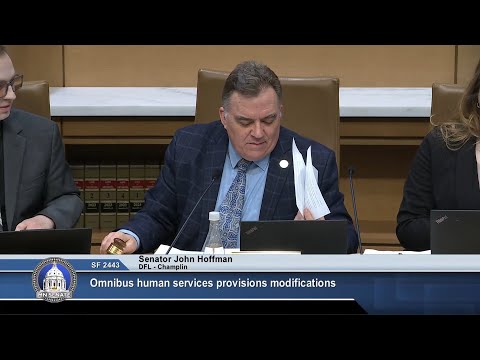
What happened at the hearing: Sponsors and agency staff said direct care and treatment facilities already provide some electronic messaging and video, and that recent FCC rulings have reduced telephone rates. The bill's fiscal note included funding previously used for phone services; sponsors and members said they expect the required amounts to fall but asked agencies to confirm updated estimates, including the basis for additional FTE costs reported in the note. Chair Hoffman directed staff and agency liaisons to follow up with the bill sponsor before markup. The committee's stated plan was to lay the bill over for the omnibus.
Voices in the room: Senator Abler and other senators criticized private-equity owners of telecom and other housing providers during the hearing; Senator Abler said private equity often profits from low-income residents. Supporters referenced national advocacy groups and family testimonials; one supporter said one third of families with an incarcerated loved one "go into debt just to keep in touch."
Next steps: Committee members laid the bill over for possible inclusion in the funding omnibus and asked agencies to provide updated fiscal information and to meet with the sponsor in advance of any markup. No formal final vote on the bill occurred at the hearing.
Ending note: Committee members repeatedly asked agencies to confirm whether any savings from rate changes must be reinvested in communication services under existing law, and they requested prompt fiscal follow-up before further action.