Get Full Government Meeting Transcripts, Videos, & Alerts Forever!
Get email alerts on the Health Policy topic
No spam. Unsubscribe anytime.
Committee concurs on insurer-notice and telehealth bills; declines to concur on insulin-analog expansion
Summary
The Health and Government Operations Committee voted to concur with Senate language on House Bill 848 (adverse decision notices) and House Bill 869 (telehealth prescribing rules), and voted not to concur with the Senate on House Bill 970 concerning insulin analogs; members cited cost differences as the rationale for withholding concurrence.
The Health and Government Operations Committee handled multiple short items and recorded concurrence on two health-insurance-related measures while declining to concur on a third.
House Bill 848, as amended, requires private review agents to post the criteria and standards used in utilization review on member and provider webpages, clarifies voicemail and email response timing (two business days unless a shorter period applies), and alters effective dates for certain provisions. The committee voted to concur with the Senate on this bill; no opposition was recorded on the transcript.
House Bill 869, the Preserve Telehealth Access Act of 2025 as amended, authorizes prescribing Schedule II controlled substances via telehealth when there is an established practitioner–patient relationship and an in-person assessment has previously been conducted by the practitioner or another practitioner in the same group practice. The committee recorded concurrence; the transcript notes the House passed the bill 131–0 and the committee adopted amendments making the House and Senate versions identical.
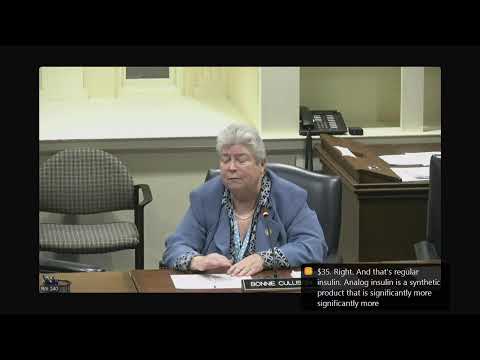
On House Bill 970 (health insurance; insulin; prohibition on step therapy/fail-first protocols), committee members voted not to concur with a Senate amendment that would have included insulin analogs in the prohibition. During discussion a committee member explained the fiscal implications: "I think it's $35 ... $35. Right, and that's regular insulin. Analog insulin is a synthetic product that is significantly more, significantly more expensive than regular insulin," and that including analogs would raise the payment to about $290 per treatment. The committee voted 'not to concur' on the Senate amendment; the transcript records the chair saying the choice will be transmitted to the Senate, which may recede or further amend the bill. If neither chamber agrees, the bill will not pass.
All three items were decided on the record and the committee concluded the session.