Get Full Government Meeting Transcripts, Videos, & Alerts Forever!
Get email alerts on the Cybersecurity Workforce topic
No spam. Unsubscribe anytime.
Committee keeps Cyber Maryland program funding and broad grant eligibility after debate over labor unions and industry groups
Summary
Health and Government Operations Committee approved House Bill 1468 (conforming to Senate Bill 867) to move Cyber Maryland to a different agency and to authorize grantmaking; committee members debated and declined an amendment to remove industry associations and labor unions from eligible grantees.
The Health and Government Operations Committee on April 2 voted to pass House Bill 1468, which transfers the Cyber Maryland program, fund and board and revises grant and program language to conform to the Senate cross‑file. Amendments adopted in subcommittee and in committee change grant awarding language, relax some appropriation requirements and direct the program to seek nonstate funding sources.
During committee debate, Delegate Shaliga moved to strike “industry associations and labor unions” from a list of entities eligible for grants from the Cyber Maryland fund. Shaliga argued those entities should not receive taxpayer dollars; the motion to strike was seconded. Delegate Bandari responded that organized labor and other groups are “essential partners” in workforce development and that registered apprenticeship and training programs often rely on those entities’ infrastructure.
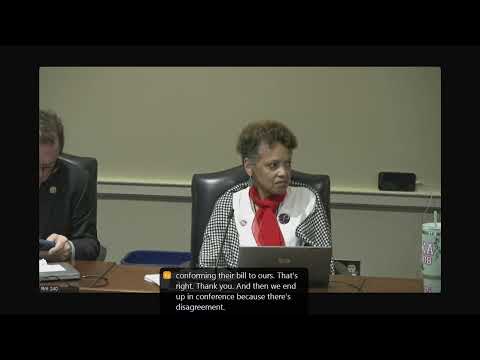
Chair Jocelyn Pena Milnick said the bill requires the Department to adopt standards to award grants and that the fund’s applications must meet those standards. She also said the committee often conducts public‑private partnerships to support workforce pipelines and that organizations training cybersecurity workers can be part of those efforts. After discussion, Delegate Shaliga withdrew the motion to strike while also noting she opposed some of the broader list in principle. The committee then moved and passed the bill as amended. Several delegates recorded that they did not want to be listed as sponsors; the committee also recorded multiple “no” positions for the record on the final tally.
Key elements of the bill as amended include a transfer of the Cyber Maryland program and fund, authorization to seek nonstate funding sources, direction that the board adopt bylaws rather than specifying membership in statute, and a requirement that the program report on cyber workforce activities in coordination with specified partners. The bill also specifies that amounts awarded may be allocated for cybersecurity clinics and clarifies allowable uses of the fund.
Delegate Carr, presenting the bill, said the program’s money remained in the budget and that the bill is ready to proceed. When asked why unions appeared in the list of eligible grantees, Carr said she did not have an immediate answer but the item was negotiated during bill drafting and had not been controversial during subcommittee.
After further remarks and a motion by the sponsor to adopt the amendments, the committee adopted the amendments and passed House Bill 1468 as amended. The conforming Senate cross‑file, Senate Bill 867, was also amended to add one member to the Cyber Maryland Board and passed in committee.