Get Full Government Meeting Transcripts, Videos, & Alerts Forever!
Get email alerts on the Hazardous Materials Permitting topic
No spam. Unsubscribe anytime.
Committee approves RD&D permit language for chemical-warfare-materials incineration with emergency‑plan and public‑meeting requirements
Summary
Senate Bill 253, which would exempt certain research incineration of chemical warfare materials from some special permitting requirements, was approved with amendments requiring an emergency preparedness plan developed with public participation and presented at public hearings in specified jurisdictions.
The House Environment and Transportation Committee voted to approve Senate Bill 253 with amendments that exempt incineration of chemical warfare materials at a Department of Defense–designated research facility from certain special permitting requirements, provided a Research, Development, and Demonstration (RD&D) permit is issued under strict conditions.
Under the amended bill the exemption applies only when the incineration is conducted for research, development or demonstration purposes and when an RD&D permit is used. The amendments add a requirement that the Department of the Environment may not issue an RD&D permit unless an emergency preparedness plan has been developed with adequate public participation and presented at public hearings or public meetings in specified jurisdictions.
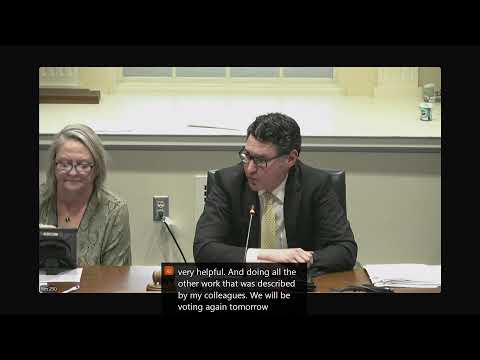
Committee members discussed whether the amendments changed what constitutes an emergency or merely made existing practice more transparent; counsel and those who negotiated the amendment said the language was intended to make definitions explicit and require public-facing planning without imposing unrealistic operational burdens on the research facility.
"Bottom line, delegate, is my understanding is the facility is fine with these amendments," said a committee member explaining the negotiations and stakeholder input. A committee counsel clarified that the bill does not change existing hazardous-materials notification processes in an emergency: "There's already currently a process," counsel said, noting that the statutory hazardous‑materials framework remains in force.
Governor Guyton asked whether the amendments gave "Aberdeen everything they need" to conduct the research; committee members said the amendments reflect stakeholder agreement and added oversight without mandating provision of local emergency assets.
The amendments were moved, seconded and approved. The committee then moved the bill as amended; members recorded a small number of oppositions on the final vote, and the bill passed the committee.
Ending: The committee adopted explicit emergency‑planning and public‑engagement requirements for RD&D permits under SB 253 and advanced the bill to the House floor for further consideration.