Get Full Government Meeting Transcripts, Videos, & Alerts Forever!
Get email alerts on the Vehicle Emissions Regulation topic
No spam. Unsubscribe anytime.
House environment panel delays penalties under Clean Cars 2, pauses Advanced Clean Trucks enforcement
Summary
The House Environment and Transportation Committee voted to concur with Senate amendments to House Bill 15 56, moving language that delays parts of Maryland’s Advanced Clean Trucks implementation and narrows when penalties under the Clean Cars 2 program may be applied.
The House Environment and Transportation Committee voted to concur with Senate amendments to House Bill 15 56, moving language that delays parts of Maryland’s Advanced Clean Trucks implementation and narrows when penalties under the Clean Cars 2 program may be applied.
The bill, as amended and approved by the committee, prohibits the Maryland Department of the Environment from implementing the Advanced Clean Trucks program until MDE publishes a needs assessment and a deployment plan that meet conditions set in the amendments. The amended bill also narrows the circumstances under which MDE may apply enforcement or penalties to a motor vehicle manufacturer for failure to meet Clean Cars 2 requirements for model years 2027 and 2028.
Why it matters: the changes slow the timetable for truck electrification rules and give manufacturers a path to avoid penalties in the near term, heightening the role of negotiations between manufacturers, California regulators and federal authorities in determining whether penalties apply.
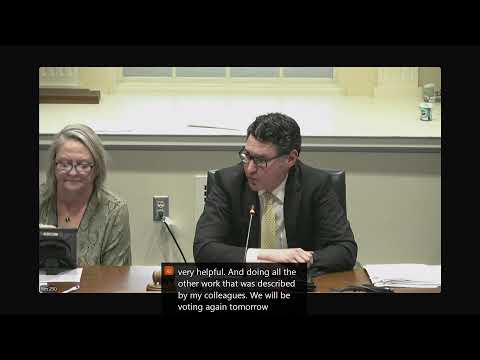
Committee Chair Stein summarized the package and the threshold that triggers the penalty exemption. "For the Clean Cars 2 program, 40% that, the no penalty provisions do not apply if manufacturers representing 40% of the cars and vehicles subject to Advanced Clean Cars 2 in the state have agreed to them," Chair Stein said. He also noted leading market-share examples while explaining the threshold: "Toyota is 18.6%, Honda is 11.6%, GM is 12.5%, Ford is 10.2%, Stellantis is 6.2%, Tesla is 4.6% and dropping." The chair characterized the 40% test as a market-share floor that, if met via an agreement with the California Air Resources Board or federal authorities, would limit penalties for the two model years specified.
Members pressing for clearer public record and protections raised infrastructure and affordability concerns during debate. "Climate change is real and we're seeing the effects now and we need to start cleaning up our transportation," said Delegate Dahlia Ruth, who voted for the amended bill but emphasized continued expectations for manufacturers. "It says this act may not be construed to have any effect on the annual percentage sales targets established under the Clean Cars 2 program or the Advanced Clean Trucks program," she said, reading uncodified language added at her request to keep statutory sales targets on the record.
Other members echoed concerns about EV charging infrastructure and vehicle cost. Several delegates warned that if manufacturers reduce supply or raise prices in response to mandated targets, consumer uptake could lag. Committee members said federal funding uncertainties for charging infrastructure — including delays to NEVI-related disbursements — complicate implementation.
Committee discussion also clarified technical points in substitute amendments. One substitute amendment is technical; another adjusts how penalties and delays apply to trucks and cars, and adds an uncodified preamble clarifying legislative intent and the relationship to federal and California programs.
The committee moved the amendments and then the bill as amended. After extended discussion and multiple members explaining their votes, the committee recorded the bill as passed with no recorded dissenters on the final vote. Chair Stein said members should expect further floor action on the measure.
Ending: The committee’s changes reduce near-term enforcement pressure on manufacturers while keeping Maryland’s long-term sales targets on the record. The bill will proceed to the House floor for further consideration.