Get Full Government Meeting Transcripts, Videos, & Alerts Forever!
Get email alerts on the Education Safety topic
No spam. Unsubscribe anytime.
House restores funding to rebuild Montana hunter-education program using Pittman'Robertson match
Summary
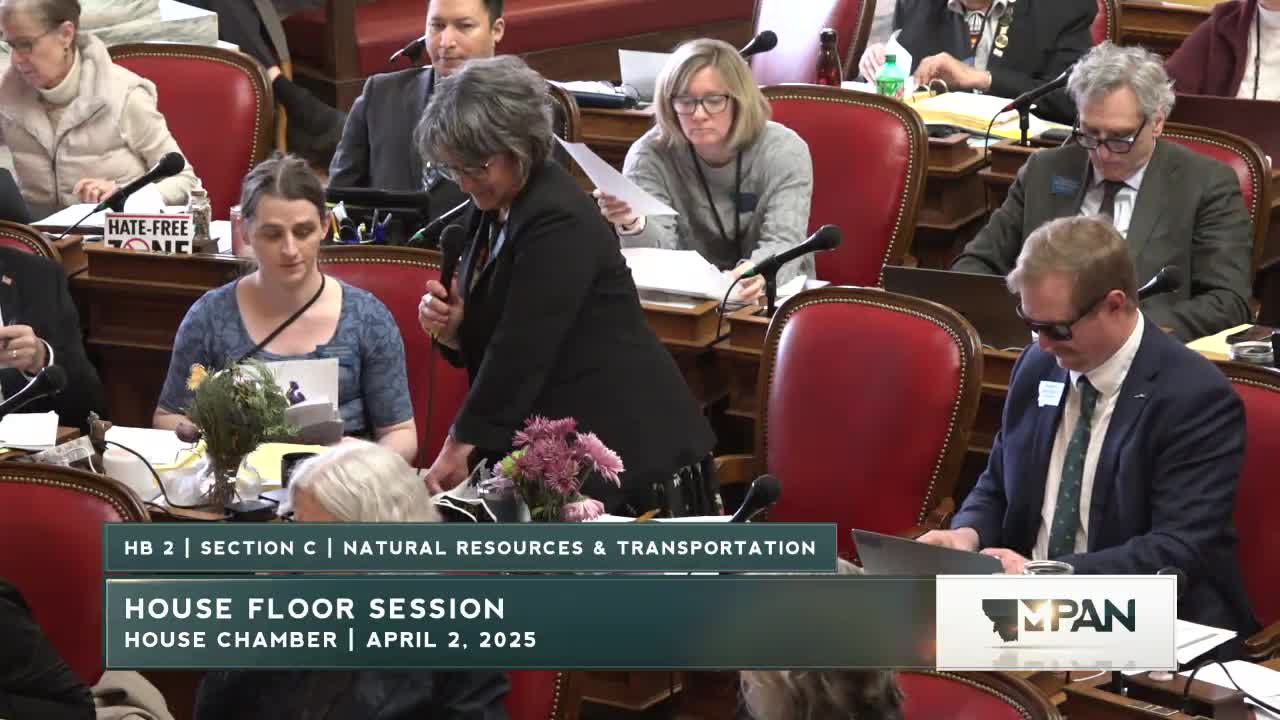
Lawmakers approved an amendment to direct Pittman'Robertson and state special hunting-license funds to reestablish in-person hunter education and rebuild the volunteer instructor network. Supporters called it a safety and cultural priority; opponents raised process concerns about adding spending on the floor.
Lede: Lawmakers on April 1 approved an amendment that directs state special and Pittman'Robertson funds to rebuild Montana's in-person hunter-education infrastructure, restoring paid positions and local training capacity.
Nut graf: The amendment, offered by Rep. Marler, uses hunting-license revenues and the federal Pittman'Robertson excise tax match to fund a hunter-education specialist and related positions to revive volunteer networks and in-person training that contracted during the pandemic. The House adopted the amendment on a recorded vote.
Body: Rep. Emma Marler, the amendment's sponsor, said the money is already designated for hunter education and is matched by the federal Pittman'Robertson wildlife and sport-fish restoration excise fund: "The funding for this comes, it's a 1 to 3 match of state special revenue that comes from, selling the state sells hunting licenses, and part of that is held for hunter education. And it's matched, 1 to 3 with the federal Pittman Robertson, excise tax on guns and ammo, which, it makes sense, is supposed to be spent on teaching people gun safety. So the money is there." (transcript excerpt)
Supporters argued that after COVID and changes to program delivery, the volunteer instructor network has thinned and communities lack the practical, hands-on training that hunter education historically supplied. Representative Durham, who said she has taught courses, told the House that practical classroom and field instruction cannot be replaced by online-only curricula and that some local programs have waiting lists.
Opponents, including Rep. Jones, urged caution about adding floor increases during HB2 consideration and noted the broader budget process concerns. Nonetheless, the amendment passed by a recorded vote: the clerk recorded 58 yes and 40 no.
Ending: The amendment will fund specialist staff to coordinate volunteer instructors and expand in-person hunter-education opportunities statewide. Lawmakers said the next steps will include working with Fish, Wildlife & Parks to implement the positions and report back on program expansion.