Get Full Government Meeting Transcripts, Videos, & Alerts Forever!
Get email alerts on the Ems Training topic
No spam. Unsubscribe anytime.
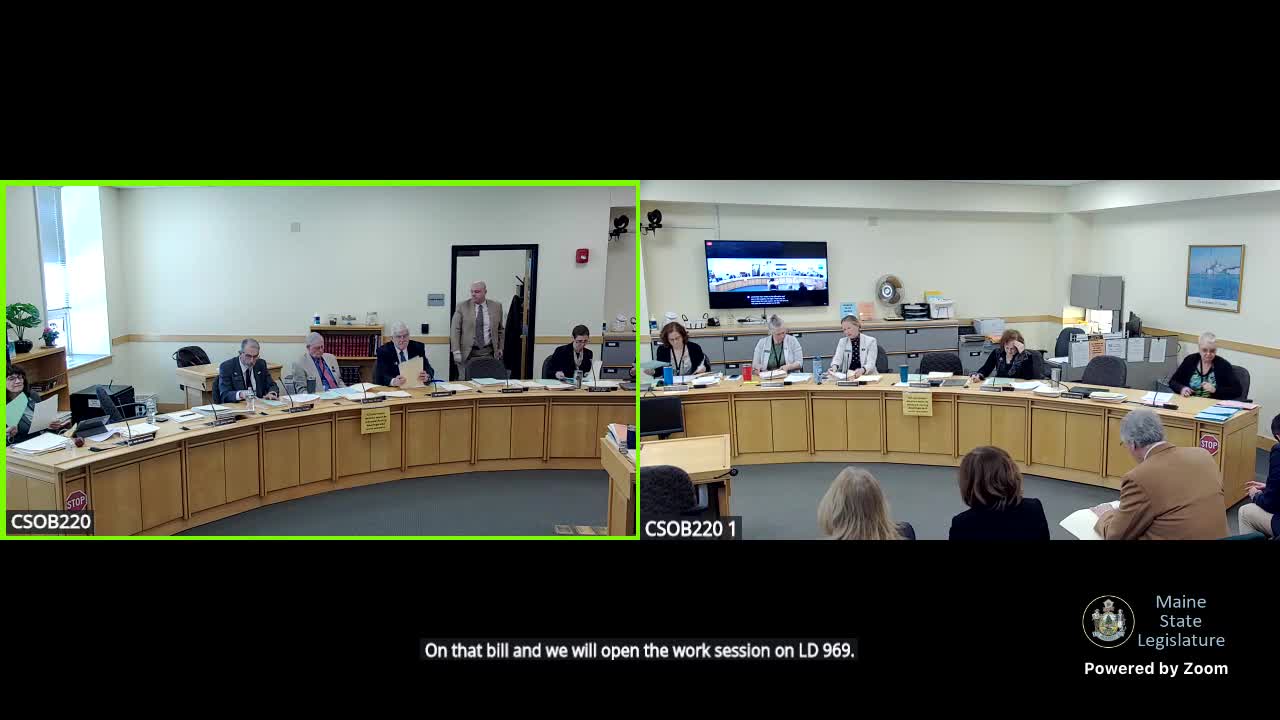
Panel debates allowing municipalities to host EMS licensing training as volunteer shortages bite; committee majority votes not to pass with letters to Education
Summary
The committee considered LD 969, which would require the EMS board to adopt rules allowing municipalities to host EMS licensing and relicensing training to address volunteer access barriers.
The Health Coverage, Insurance and Financial Services Committee reviewed LD 969, a bill that would direct the Maine Emergency Medical Services Board to adopt rules allowing municipalities to host or conduct emergency medical services (EMS) licensing and relicensing training.
Sponsors and testimony described a statewide volunteer workforce that cannot access existing training: long travel times to training centers, classes scheduled during daytime hours, limited slots, and strict attendance policies that make it difficult for volunteers who work full‑time jobs. The sponsor said regional training centers are not designed around the schedules of volunteer responders and argued that municipalities need authority to host training locally.
Committee analysis and options
Colleen summarized that the bill would direct the EMS board to adopt rules but would not itself set trainer qualifications; rules could require that training be provided by licensed or approved trainers. The EMS board and the community college system both participate in training delivery and already have rules and standards for approved training centers and instructors. Committee members were urged to consider whether the bill should be marked routine technical or major substantive (which would require legislative review of the rules) and whether statutory language should specify timelines or trainer qualifications.
Public testimony, practical constraints and implementation
Witnesses and members described practical barriers: the typical EMT initial training program runs 12–14 weeks with multiple sessions per week; many potential volunteers cannot travel an hour to a campus or attend daytime classes. SMCC and other community colleges provide training and have, in certain cases, offered night and weekend classes and have used grant funds to underwrite student costs. However, training center certification is resource‑intensive and, as an EMS volunteer and attorney from Harpswell explained in committee testimony, it can be “practically impossible” for a small town to become a certified training center.
Committee action and follow‑up
The committee recorded a majority recommendation of 'ought not to pass' on LD 969, with a minority report recommending 'ought to pass.' The majority vote accompanying the 'ought not to pass' recommendation included directions to send letters to the Education Committee (which is considering bills on EMS education through the community college system) and to the EMS board, asking them to address volunteer accessibility, evening/weekend scheduling, and expedited or alternative pathways for licensure for people with existing medical qualifications. The roll call recorded in the transcript shows the committee vote in favor of 'ought not to pass with two letters' (8–3), and a minority of members indicated they would have supported advancing the bill.
Committee members asked staff to emphasize the need for evening/weekend offerings, hybrid formats that are genuinely accessible outside regular work hours, regional approaches to bring cohorts together so a minimum class size can be met, and exploration of alternative pathways for individuals who already hold other medical qualifications.
Next steps
Legislative staff will send the committee's letter to Education and to the EMS board and will try to coordinate with related bills pending in the Education Committee that propose community college‑led EMS education and funding.