Get Full Government Meeting Transcripts, Videos, & Alerts Forever!
Get email alerts on the Medical Debt topic
No spam. Unsubscribe anytime.
Committee weighs medical‑debt reporting bans and a proposed medical‑debt relief program; some measures tabled for more study
Summary
The committee held extended discussion of three related bills: LD 5 58 (broad ban on reporting medical debt), LD 10 30 (narrower ban limited to out‑of‑network emergency debt), and LD 902 (a medical‑debt relief program to buy and forgive qualifying debts). Lawmakers questioned enforcement, litigation risk and program administration.
Committee analysts and members reviewed three related medical‑debt proposals with overlapping goals: reducing the credit‑reporting impact of medical bills, narrowing which debts may appear on consumer reports, and creating a program to purchase and forgive qualifying debts.
Colleen, the committee analyst, summarized LD 5 58 as “an act to strengthen consumer protections by prohibiting the reporting of medical debt on consumer reports.” The analysis identified changes to Maine’s consumer reporting rules and proposed cross‑referencing a definition of “medical debt” added last session to the Maine Fair Debt Collections Practices Act. That definition would exclude charges placed on general purpose credit cards and home‑equity lines, among other exclusions.
Representative Morris’s LD 10 30 would take a narrower approach, prohibiting reporting of medical debt that arises when a covered patient receives emergency out‑of‑network care. The committee considered whether one bill might be used as the vehicle for both approaches rather than advancing separate measures.
Senator Baldacci’s LD 902 proposed a medical debt relief program administered by the Bureau of Consumer Credit Protection to purchase and forgive qualifying debts for residents whose incomes do not exceed 400% of the federal poverty level. The bureau testified it lacks the staffing and expertise to operate such a program and recommended contracting with a nonprofit administrator, as other jurisdictions have done.
Policy issues and litigation risk
Analysts and members flagged several recurring issues: the ongoing federal litigation over whether state bans on reporting medical debt are preempted by the federal Fair Credit Reporting Act and whether the pending Consumer Financial Protection Bureau rulemaking would change the legal landscape. Colleen said the deputy attorney general did not think current litigation would prevent the committee from making a policy decision because it would not materially change the state’s legal arguments.
Members also discussed potential effects on consumer behavior and hospital collections. Colleen noted that removing medical debt from credit reports does not erase the legal debt; it only removes that item from consumer reporting. Witnesses also pointed to industry changes: the credit reporting companies have taken independent steps — for example, not reporting medical debts under certain small thresholds and waiting periods.
Actions and committee disposition
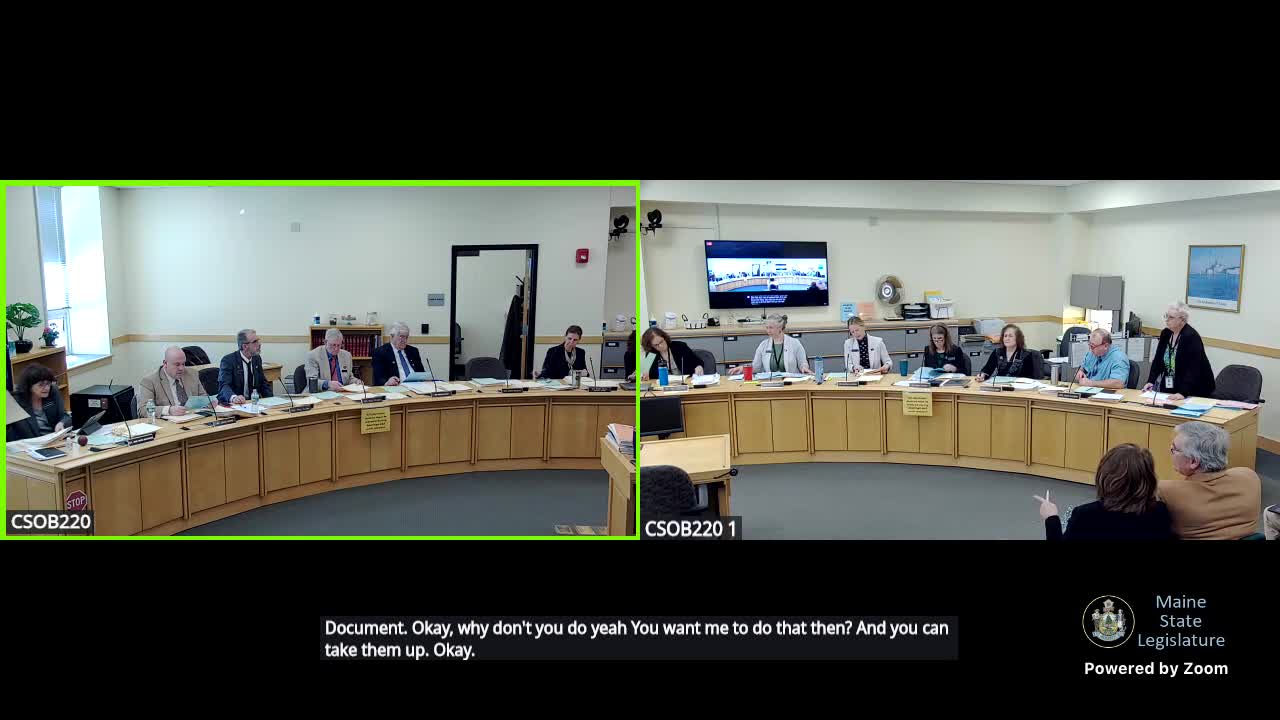
The transcript records a roll call on LD 10 30: Representative Morris moved “ought not to pass” on LD 10 30 and the motion carried by roll call (11–0). For LD 5 58 (the broader ban), the committee voted to move a proposed amendment adding a statutory definition (sponsored by Senator Bailey) and discussed seeking additional information about other states’ enforcement approaches and hospital practices; the committee ultimately voted to table further action on LD 5 58 to permit follow‑up research and letters. LD 902 (the debt relief program) drew concerns about administrative responsibility and cost; the committee recorded a motion of “ought not to pass” on LD 902 that passed 11–0 by roll call.
What lawmakers asked for next
Members requested: (1) clarification about enforcement mechanisms used in other states that have adopted reporting restrictions; (2) details on how hospitals and collection agencies currently manage patient accounts and financial assistance; and (3) whether providers nationwide contract with nonprofit debt‑relief programs if the state chose to pursue a purchase/forgiveness model. Multiple members said they wanted more information before moving the broader reporting ban forward. The committee tabled LD 5 58 for additional follow‑up; LD 10 30 and LD 902 received “ought not to pass” recommendations in recorded roll calls.