Get Full Government Meeting Transcripts, Videos, & Alerts Forever!
Get email alerts on the Payments Surcharges topic
No spam. Unsubscribe anytime.
Maine committee debates letting retailers add credit‑card surcharges; amendment would cap fees at 3% and give AG enforcement authority
Summary
Lawmakers in the Health Coverage, Insurance and Financial Services Committee debated LD 151, a proposal to let retailers impose credit‑card or debit‑card surcharges, and considered an amendment to cap surcharges at the seller’s direct cost or 3% and to give enforcement authority to the attorney general.
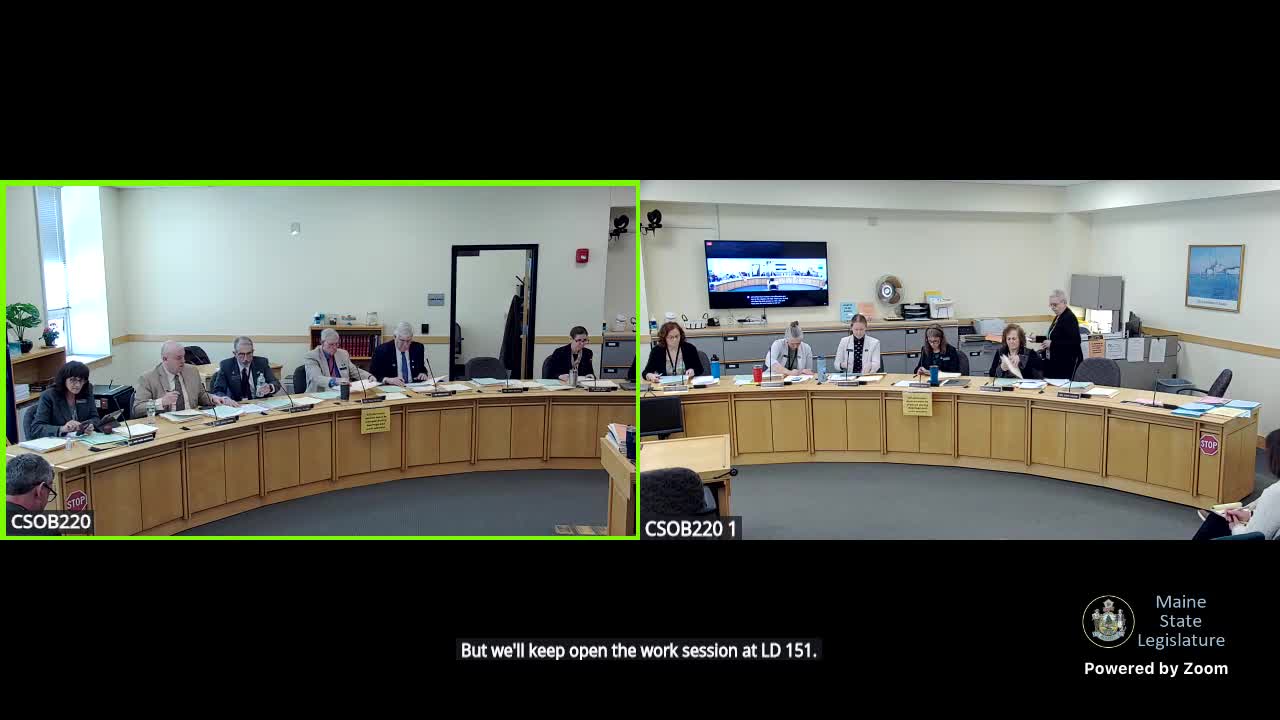
Lawmakers in the Health Coverage, Insurance and Financial Services Committee spent more than two hours debating LD 151, a proposed change to Maine law that would repeal the existing prohibition on merchant surcharges for credit‑card and debit‑card transactions.
The bill, as explained by the committee analyst Colleen, would “repeal the provision in law that prohibits a seller … from imposing a surcharge for use of a credit card or debit card” and instead allow sellers to impose a surcharge so long as it is “clearly disclosed and does not exceed the cost associated with providing the credit card or debit card service.”
Supporters said merchants—especially small businesses and restaurants—face rising swipe or interchange fees and should be able to recoup those costs directly. Representative Morris said the measure “gives them the flexibility to be able to charge it if they wish,” adding it is a market decision whether customers accept that practice. Several lawmakers described examples of small vendors and farm stands where modest surcharges or cash‑only minimums have been used.
Opponents said the change would amount to a de facto price increase for consumers, especially in Maine where personal cost of living already is high. Representative Boyer, a small business owner, said she considers surcharges “a bit like a new tax” on shoppers. Several members expressed concern that larger chains would not implement surcharges while small retailers would, putting small businesses at competitive risk.
Amendment debated and roll call
Committee members discussed an amendment that would: allow sellers to impose a surcharge only up to the lesser of the seller’s direct cost or 3%; require clear disclosure at the point of sale; and add an enforcement mechanism assigning enforcement authority to the attorney general under the Unfair Trade Practices Act while removing a private right of action. Colleen described that an earlier draft had allowed enforcement by private suit and that some tourism industry testimony opposed that remedy.
The transcript records a roll call on the amendment and multiple exchanges about drafting and placement in statute (Title 9A, the consumer credit code). The roll call recorded in the transcript shows a 6–6 split on the amendment during the committee proceeding; the transcript does not contain a clear single‑sentence statement of final outcome immediately after that tally. The amendment language discussed would have limited surcharges to direct costs or 3% and required disclosure and AG enforcement (without a private right of action).
What the committee debated, not decided
Members agreed on the committee floor that local governments (municipalities and state agencies) are currently allowed to impose disclosed surcharges under an exception in law; the bill would expand similar authority to sellers. Lawmakers discussed whether the provision belongs in the consumer credit code (Title 9A) or in another title and whether a uniform cap was preferable to a direct‑cost standard. The Bureau of Consumer Credit Protection had told the committee it lacks explicit statutory enforcement power over sellers and recommended either removing the provision from the consumer credit code or adding an enforcement mechanism—an observation that prompted the proposed amendment giving enforcement authority to the attorney general.
No factual findings beyond the committee record are reported here. The transcript records extended debate about economic effects, competitive impacts, the availability of alternative options (cash discounts), and how contractual merchant agreements with card networks (Visa/Mastercard) affect allowable surcharges.
Next steps and outstanding questions
Committee members flagged drafting questions (whether the provision should stay in Title 9A), asked whether a uniform percentage cap or a cost‑based rule is preferable, and discussed removing the private right of action. The transcript does not record a final committee report text beyond the amendment debate. If the committee later reports a recommendation, the precise amendment language and any vote tallies will be reflected in the official committee report.