Get Full Government Meeting Transcripts, Videos, & Alerts Forever!
Get email alerts on the Public Access Private Land topic
No spam. Unsubscribe anytime.
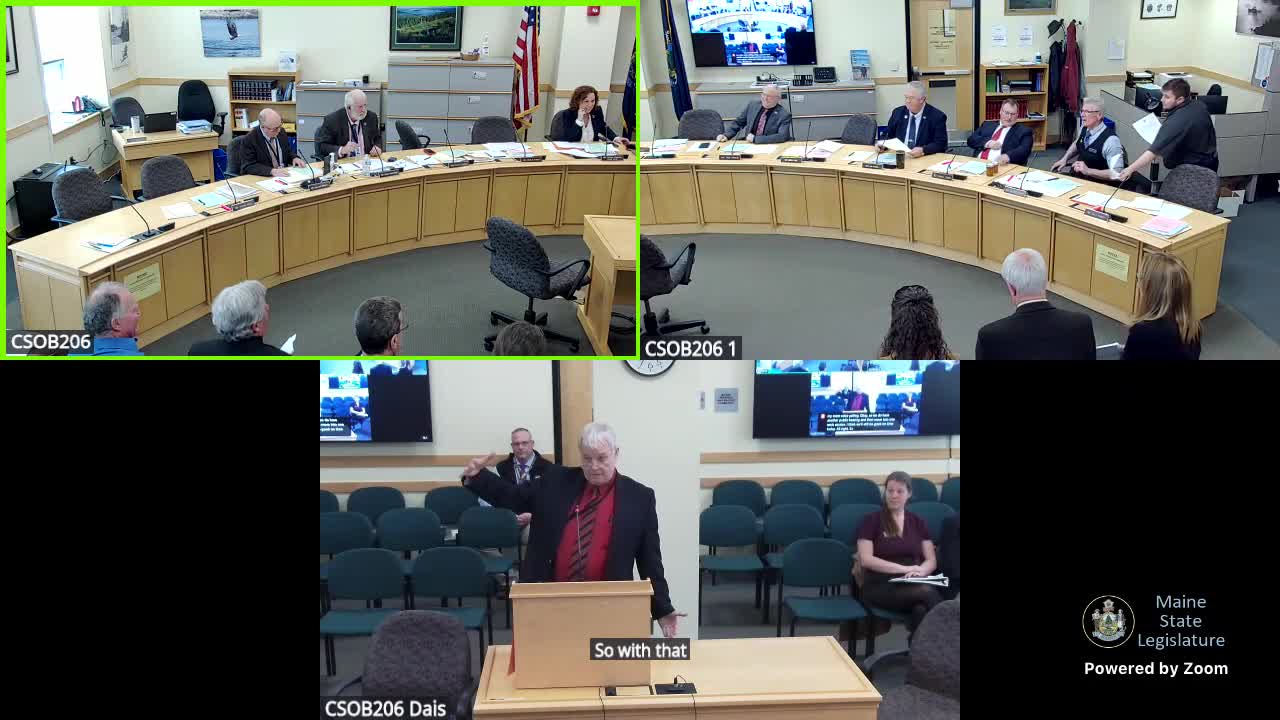
Committee hears proposals to protect public access to private lands; working group proposed
Summary
LD 13 08 would direct the Department of Inland Fisheries and Wildlife to convene a working group to explore public–private partnerships to maintain public access to privately owned lands for hunting, fishing and recreation.
Lawmakers and landowners told the Joint Standing Committee on Inland Fisheries and Wildlife that Maine’s long tradition of public access to private land faces new pressures, and they supported a resolve to convene a working group to explore possible public–private partnerships to maintain access.
Representative Jim Dill, introducing LD 13 08 for sponsor Senator Joe Baldacci, said the resolve directs the Department of Inland Fisheries and Wildlife to convene stakeholders to explore opportunities to work with landowners to preserve public access. "This resolve directs the Department of Inland Fisheries and Wildlife to convene a working group to explore opportunities to work with commercial landowners to establish public private partnerships designed to maintain public access to privately owned land," Representative Dill told the committee.
Deputy Commissioner Tim Peabody testified on behalf of the department and said the agency relies on public access to private land for hunting, trapping and fisheries management. "The department relies on public access to private land for carrying out the mission of the department," Peabody said, and recommended the bill be broadened to include a range of landowner types rather than focusing only on "commercial" owners.
Witnesses who testified in favor included representatives of the National Resources Council of Maine, Maine Coast Heritage Trust, The Nature Conservancy, and local conservation groups; they framed the issue as both an economic one and a matter of tradition. Sarah Nichols of the Natural Resources Council said outdoor recreation supports thousands of Maine jobs and argued the state should study ways to sustain access as ownership patterns change. "Given the economic and cultural significance of Maine's tradition of public access to private land, we would support any effort by this committee to study its decline and develop legislative solutions," Nichols said.
Commercial forest owners and landowner groups who spoke during the hearing urged a cautious approach. Tom Doke of Maine Woodland Owners said landowners were surprised by the bill’s wording and cautioned that the word "commercial" and the word "partnership" raised questions about intent and possible links to tax programs. "When you put the word commercial in, that's what landowners see," Doke said, and he recommended preliminary, direct conversations between the department and landowners before formal legislation.
The committee closed the public hearing on LD 13 08 after hearing a mix of support and caution. Several witnesses urged the committee to coordinate this resolve with other bills the committee may consider addressing recreational-trail access and landowner concerns.