Get Full Government Meeting Transcripts, Videos, & Alerts Forever!
Get email alerts on the Consumer Protection Home Improvement Financing topic
No spam. Unsubscribe anytime.
Senate committee advances bill to curb predatory home‑improvement financing
Summary
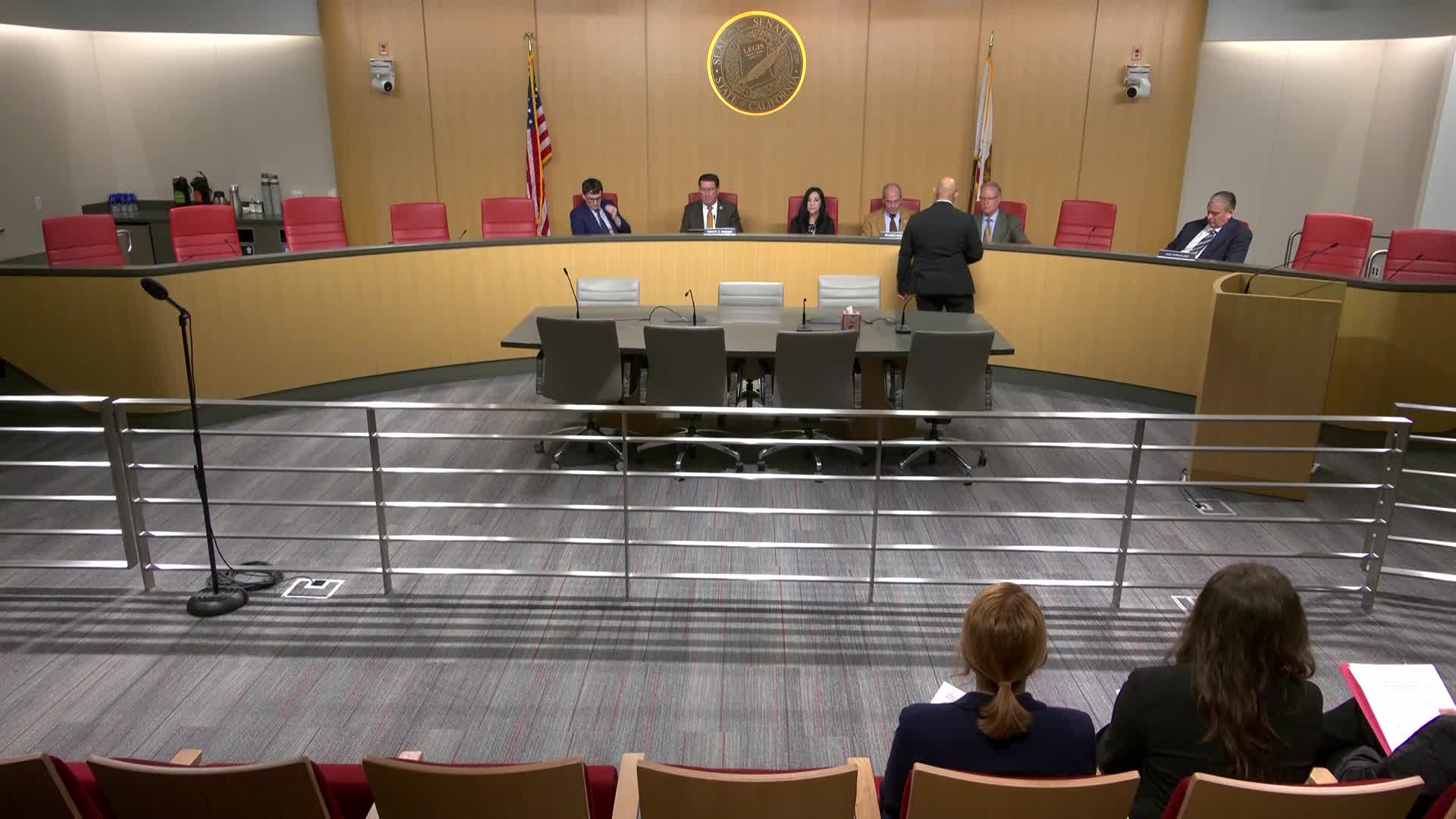
Senator Durazo presented SB 784 to the Senate Committee on Banking and Financial Institutions, saying the bill aims to protect homeowners from deceptive financing tied to home‑improvement and solar sales.
Senator Durazo presented SB 784 to the Senate Committee on Banking and Financial Institutions, saying the bill aims to protect homeowners from deceptive financing tied to home‑improvement and solar sales. "This industry targets seniors, non English speakers, poor communities, and those who are less familiar with digital platforms," Durazo told the committee, describing cases in which consumers signed on a contractor’s tablet and later discovered they had taken on large loans and liens they had not understood.
The bill would require a confirmation call between a lender and borrower before a loan is finalized without a salesperson present, delay loan repayment until the project is verified as complete and operational, ensure consumers can access their loan and project documents, provide a lender liability path for financial misrepresentations unless cured during the confirmation call, add transparency for dealer fees and extend the contract cancellation period.
Natasha Blazer, a staff attorney at Housing and Economic Rights Advocates, described a client example she said illustrates the problem: a Solano County resident who speaks only Spanish was pressured to sign an English form on a salesperson’s tablet and later learned he owed more than $80,000 with monthly payments he could not afford, and that a UCC financing statement had been placed on his home. "By the time they come to us, the contractor is gone, the lender denies responsibility, and the homeowner is left with debt and no remedy," Blazer said.
Rebecca May, Chief of Legislation for the Contractors State License Board (CSLB), told the committee that CSLB does not oversee lenders but has seen a steep increase in complaints related to residential solar installations. She said residential solar‑related complaints have risen by approximately 154% since 2019 and said CSLB has created a multiple offender unit pilot within its enforcement division and is seeking budgetary authority to make it permanent. "This bill creates greater transparency through the home improvement loan process," May said.
Opponents representing industry groups said they support the bill’s intent to curb bad actors but asked for amendments to address operational hurdles. Brad Hefner, executive director of the California Solar and Storage Association, asked for clearer timing rules for when repayment should start for solar systems, noting utility permission‑to‑operate (PTO) processes can be slow and can create uncertainty lenders must price in. He suggested a compromise that would allow repayments to begin either after a consumer or lender confirmation that equipment is operational or after a set period, such as 90 days, if a utility PTO is delayed.
Julia Piper, vice president of public affairs at GoodLeap, described situations where quick financing enables urgent repairs and cautioned that some provisions could impede access when households need rapid help. GoodLeap said it has already adopted fraud‑protection changes and asked for refinements to the bill’s documentation and timing requirements so lenders can operate across hundreds of local permitting regimes.
Committee members asked about contractors acting as loan brokers, the scope of lender liability, disclosure of hidden fees and options such as interest‑only payments during construction or verification periods. Vice Chair Nilo and other members urged further work to balance consumer protections with access to needed financing. Senator Hurtado moved the bill.
The committee voted to pass SB 784 with amendments and re‑refer it to the Committee on Judiciary. The roll call in committee recorded five affirmative votes, no negatives; the chair announced the bill "is out of committee."