Get Full Government Meeting Transcripts, Videos, & Alerts Forever!
Get email alerts on the Agency With Choice topic
No spam. Unsubscribe anytime.
Oregon agencies outline roll‑out of 'agency with choice' option, cite licensing, staffing and budget hurdles
Summary
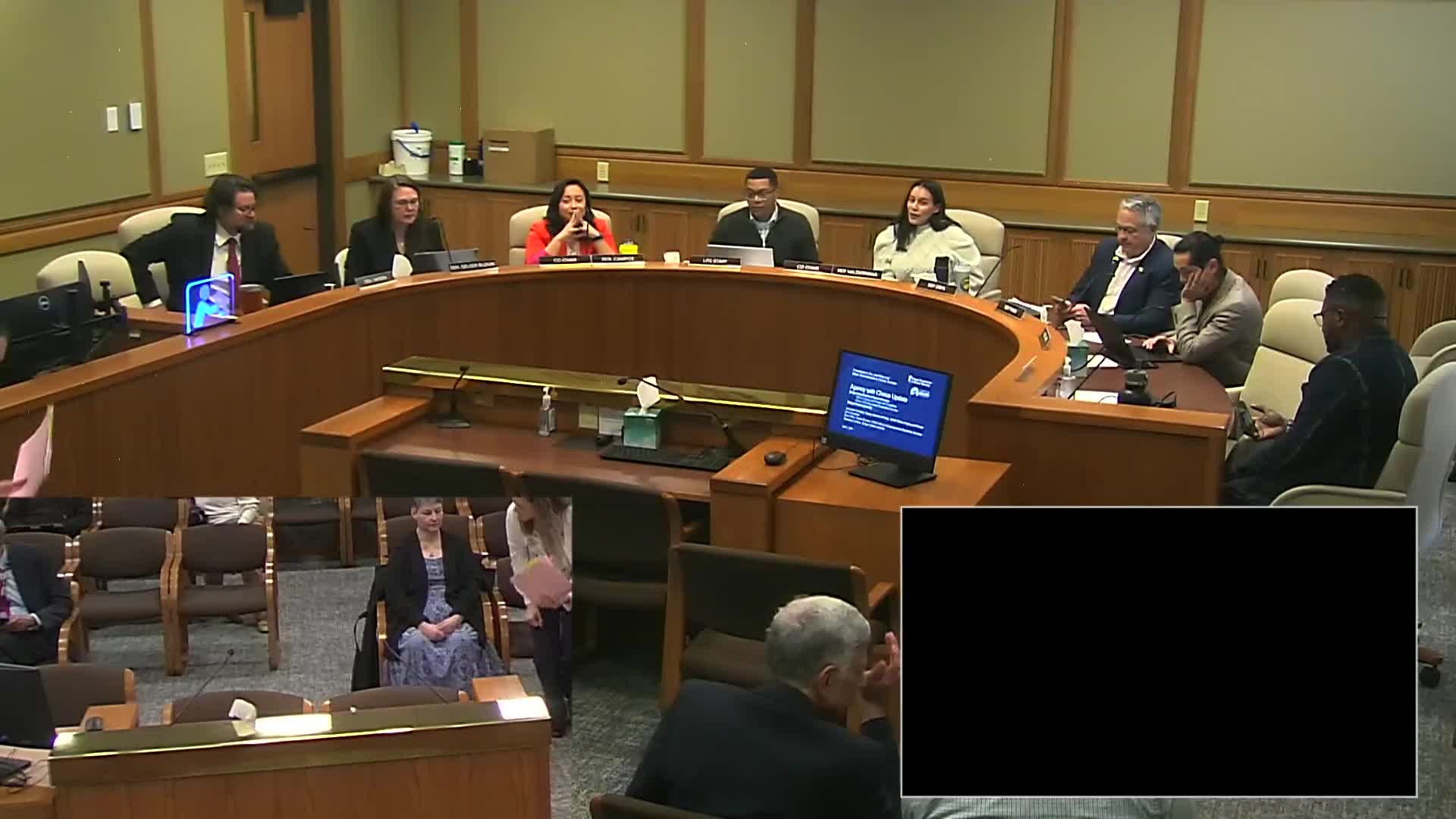
The Joint Interim Subcommittee on Human Services heard an update Wednesday on implementation of an "agency with choice" service option created by recent legislation and funded in the state budget.
The Joint Interim Subcommittee on Human Services heard an update Wednesday on implementation of an "agency with choice" service option created by recent legislation and funded in the state budget.
Janellen Weidance, deputy director of policy for the Office of Aging and People with Disabilities, and Dana Hittle, interim director of the Office of Developmental Disability Services at the Oregon Department of Human Services, told lawmakers the agencies plan to jointly contract with up to two statewide providers, finalize administrative rules and licensing, and have the program ready to start on Jan. 1, 2026.
The agencies said the new option is intended to sit between the existing consumer‑employer model and standard in‑home agency models. "It is an in between service option for people, with IDD who live in their own family home. It is more of a self‑directed model than our traditional agency model," Hittle said. The agency with choice model will employ "direct support workers" while giving consumers more assistance from an agency with administrative tasks such as payroll, background checks and recruiting.
Why it matters: The change affects thousands of Oregonians who receive in‑home care and the direct care workforce that serves them. Agencies emphasized three priorities: protect consumer self‑direction, ensure financial transparency through licensing and rules, and provide worker supports so workers do not lose hours or wages when a consumer is hospitalized or no longer eligible for services.
Budget and staffing: Agencies provided order‑of‑magnitude figures discussed during implementation planning. For the Office of Developmental Disability Services (ODDS), staff estimated an approximate $10 million cost in the 2023–25 biennium tied to anticipated wage increases as workers transition into the new model. The agencies said biennial implementation costs for the next biennium are substantially larger: roughly $148 million in total funds was cited for the period when provider payments begin in January 2026; current‑biennium implementation outlays were reported as about $3 million in total funds. Agencies also summarized state staffing funded for implementation: APD has hired six staff, ODDS two, and the Oregon Health Authority five, with additional APD and DD positions coming online to oversee licensing, procurement and compliance.
Rules, licensing and procurement: House Bill 4129 and a separate DD statute require that no more than two agency‑with‑choice providers be licensed and that their rates be comparable to existing home‑care and personal‑care wages. Agencies stressed that licensing is essential to hold providers accountable: "If they are complicit in abuse or neglect ... if they're not licensed, we can hold the direct support worker accountable, but not the agency," Weidance said. Agencies expect to complete an RFP and select providers in a procurement window running roughly June–September 2025, with a planned ramp‑up of services through mid‑2026.
Program features and worker protections: Agency responsibilities will include criminal background checks, payroll, electronic visit verification (a federal requirement), billing for hours worked, training verification, quality assurance and reporting abuse or critical incidents. Agencies must maintain advisory mechanisms to embed consumer and worker input; ODDS is required to create a feedback and engagement process and APD/OHA must establish an advisory council of consumers. Agencies also plan tribal consultation and to collect utilization data for tribal members.
Uncertainties and questions from lawmakers: Lawmakers pressed agencies on workforce estimates. Agencies said they do not have a precise count of additional direct support workers because the change largely shifts existing workers into the new model rather than adding a separate cadre of workers. APD estimated that up to about 50% of its current consumer‑employer arrangements might transition to agency with choice, but agencies cautioned the figure is an estimate. Agencies said they used Burns & Associates to design a rate model intended to capture training, supervision and lost productivity when setting hourly rates.
Labor and contracting: Agencies said prospective agency‑with‑choice contractors must agree to a labor peace agreement before contracting, allowing collective bargaining. The model also requires the contractor to minimize lost wages for workers during gaps in client hours and help workers find new placements when clients lose eligibility.
Next steps: Agencies will continue rule advisory committees, complete tribal consultation, finalize the RFP and licensing rules, conduct outreach to community living support agencies beginning June 2025, and start case‑management entity training in September 2025. Agencies said they expect full readiness for service start and paid provider claims beginning January 2026, with implementation ramping through mid‑2026.
No formal motions or votes were taken during the informational hearing.
Ending: Committee co‑chairs closed the informational hearing after the presentation and questions. Agencies said they will return with additional rate‑study material and details during continued implementation work.