
Judiciary committee approves bill to create state Board of Professional Bondsmen after hours of debate
Get AI-powered insights, summaries, and transcripts
Sign Up Free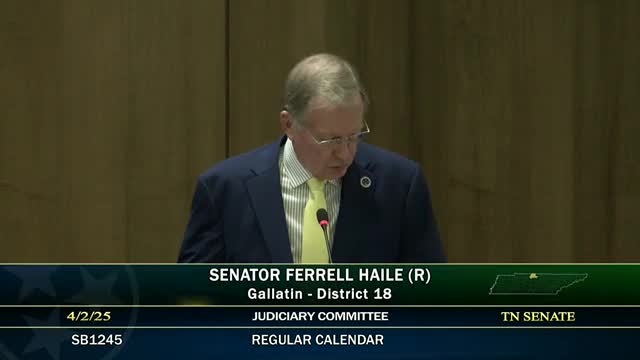
Summary
Senate Bill 12 45, which would move much regulatory authority over bail bondsmen to a new statewide board while preserving local judges’ authority over courtroom access, passed out of committee after extended testimony from sheriffs, bondsmen and prosecutors.
After extended testimony from sheriff’s officials, bail agents and prosecutors, the Senate Judiciary Committee voted to send Senate Bill 12 45—establishing a Board of Professional Bondsmen with statewide licensing and disciplinary authority—to the Government Operations Committee.
Sponsor Senator Hale told the committee the bill would centralize oversight, provide standardized licensing and disciplinary procedures and improve information sharing across judicial districts. “The bill shifts much of the regulatory authority over the professional bondsmen from the courts to the newly established board…standardizing these practices will improve fairness and predictability in the bail process,” Hale said.
Supporters included Sheriff Joe Guy, who described multiple local investigations alleging misconduct by individual agents—cases he said a state board could address more efficiently—and Ken Holmes and Joel Mosley, who represent bondsmen and argued for consistent statewide rules and reporting. "By creating a dedicated regulatory body, improving accountability measures, and ensuring fair and ethical practices, Senate Bill 12 45 will enhance public trust," Holmes told the panel.
Opponents and cautious advocates urged more work on the bill’s details. Bail agents and industry representatives said a new board should preserve local flexibility and criticized the draft for omitting rules for bounty hunters and for leaving some language unclear. Senator Roberts raised a constitutional concern about whether the amendment’s content embraced more than one subject under Article II, Section 17 of the Tennessee Constitution and asked for an expedited attorney‑general review if the amendment were adopted.
Prosecutors’ representatives said the change would not eliminate judicial authority; General Steven Crump, executive director of the Tennessee District Attorneys General Conference, said the bill preserves judges’ ability to deny or suspend a bondsman’s privilege to admit bail in a particular court if the court finds the bondsman’s conduct detrimental to a client or disruptive to proceedings.
After debate and several negotiated changes, committee members voted: 6 ayes and 3 no votes were recorded; the bill was reported to Government Operations with the sponsor’s commitment to provide proposed clarifications to committee staff and to consult the attorney general on the constitutional question.
What’s next: The sponsor asked industry and law‑enforcement groups to submit suggested revisions over the weekend; committee staff said members would seek a written AG opinion if requested.