
Senate committee advances bill creating civil and criminal remedies for AI "deepfake" impersonation
Get AI-powered insights, summaries, and transcripts
Sign Up Free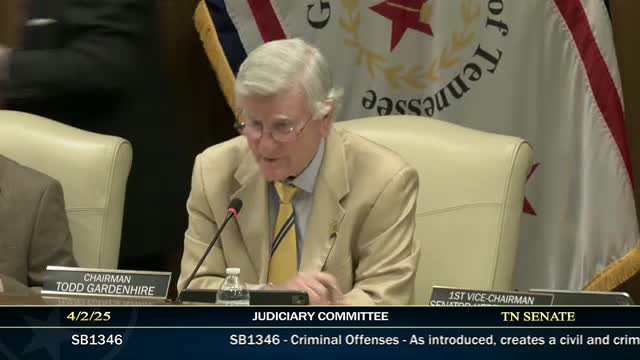
Summary
The Senate Judiciary Committee voted to send Senate Bill 13 46 to the calendar after testimony from a local broadcaster who said AI-generated impersonations used her image in sexualized and fraudulent posts. The bill, as amended, would create a civil cause of action, equitable relief and a new criminal offense for intimate digital depictions.
Senate Bill 13 46, a measure that would create civil and criminal penalties for nonconsensual intimate deepfakes, was advanced to the Senate calendar after testimony from a witness who said the technology destroyed her sense of safety.
Bree Smith, a Sumner County meteorologist, told the Judiciary Committee she discovered fake social‑media accounts last fall that used her face and voice in sexualized images and videos. “Discovering these imposter accounts and seeing the very degrading images was devastating,” Smith said. She told senators the accounts were used to impersonate her followers and to solicit money.
The bill, sponsored in committee by Senator Yarbrough, was explained to the committee as intended to keep Tennessee law “in step with rapidly developing and changing technology.” The amendment adopted in committee defines relevant terms, creates a civil cause of action and permits equitable relief, sets a statute of limitations and creates a criminal offense for intimate digital depictions, according to the sponsor’s description.
Committee members asked how law enforcement would find anonymous offenders and whether the changes would meaningfully help victims. Senator Yarbrough and others said creating a criminal offense and civil remedies would incentivize investigations and give victims ways to pursue wrongdoing and compensation. “I think this is actually the first essential step to getting to that,” Yarbrough said when discussing enforcement and civil incentives.
The committee adopted the amendment and then took the bill up for a vote. The secretary recorded eight aye votes; the bill was reported to the floor calendar.
The measure does not specify particular technology standards or platforms and does not alter platform takedown procedures; it primarily creates private and criminal rights under state law. Supporters said the bill fills a gap because many victims now have little or no legal recourse.
What’s next: The bill, as amended, goes to the Senate calendar for further consideration by the full chamber.