Get Full Government Meeting Transcripts, Videos, & Alerts Forever!
Get email alerts on the Open Space Maintenance topic
No spam. Unsubscribe anytime.
Parks staff outlines open-space maintenance approach; panel calls for clearer jurisdiction, more training and vandalism response
Summary
Parks and Recreation described current open-space maintenance as largely reactive and said staff are building capacity for trail work; the panel urged clearer jurisdiction maps, more training and stronger responses to sign theft and vandalism.
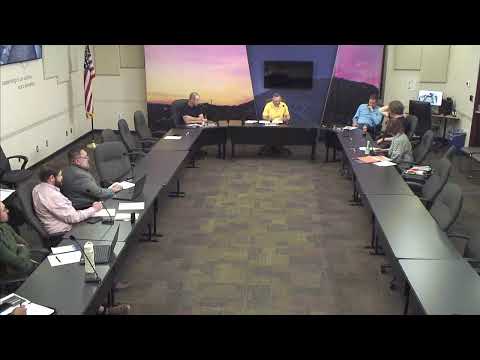
Parks and Recreation staff described open-space maintenance practices and gaps, and the panel discussed coordination with partners, training needs and enforcement options for vandalism and illegal trail-building.
Jorge Castillo, parks coordinator for Open Space and Trails, told the panel that the department maintains paved trails with a formal crew (pruning and general maintenance four days a week and weekly trash collection), and that trailheads are visited weekly to empty trash cans and check amenities. But he said the city currently lacks a formal, proactive policy and staff capacity for maintenance of natural (unpaved) open-space trails and that much of the work has been reactive — responding to reports of illegal dumping, vandalism or privately built pump tracks.
Castillo said the department is improving GIS maps to clarify jurisdictional boundaries between the City of El Paso and El Paso Water, and to identify which areas fall under Frontier Land Alliance conservation easements. He reported that EP Water has earmarked funds to support Frontier Land Alliance trail maintenance and staff are evaluating how that arrangement works so similar models could be used for city-managed areas.
Panel members and staff discussed training and resource needs. Castillo said staff are exploring hands-on trail-builder training offered by the Professional Trail Builders Association and the International Mountain Bicycling Association; he noted procurement and vendor processes for bringing trainers to the city can be lengthy. Panel member comments identified an estimated cost of about $5,000 to host a trail-builder class for 10–15 people and suggested cost-sharing with local nonprofits.
Vandalism and sign theft were raised as immediate issues. Dr. Bonar said she received a message that "someone stole 4 veil signposts from Lost Dog." Castillo said the city has used security cameras in park areas with high vandalism rates and that the security group can sometimes produce evidence suitable for prosecution. The panel asked staff to consider a more active enforcement approach in places with repeat theft or vandalism.
Other topics included pump tracks and surface choices: staff noted a national trend toward hard-surface (asphalt) pump tracks for lower maintenance, and panel members suggested studying successful projects (for example, a Chaparral asphalt pump track that cost roughly $250,000) and state funding opportunities through Texas Parks and Wildlife. The panel also discussed outreach to user groups, including the Borderland Mountain Biking Association and Frontier Land Alliance, and Castillo said staff will continue coordinating with partners on volunteer maintenance events and training.
Panel members asked Parks and Recreation to provide updated maps of the North and South Open Preserves, a current list of trails/trailheads (the panel’s most recent comprehensive list dates to 2017), and a recommended set of maintenance priorities or an updated project list for panel review.