Get Full Government Meeting Transcripts, Videos, & Alerts Forever!
Get email alerts on the Palisades Trailhead topic
No spam. Unsubscribe anytime.
Palisades Trailhead redesign pushed to end of EP Water construction; panel raises routing, parking and dam concerns
Summary
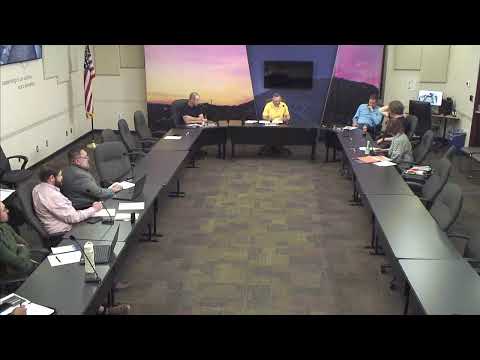
City staff described the Palisades Trailhead design, timeline and features; board members asked for clearer maps, a plan to prevent mountain-bikers from using the dam as part of the trail, and more detail about parking, access and ownership footprints.
The panel received an update on the Palisades Trailhead and raised questions about trail routing, parking and dam design as El Paso Water proceeds with a larger drainage project in the area.
Gilbert Guerrero, interim director of capital improvements, presented printed layout plans and said the project’s construction estimate for the access road is about $160,000 with construction to start in fall 2026. He explained El Paso Water included the trailhead design within its dam/drainage improvement project to avoid building the trailhead early and then having construction damage it. Guerrero said EP Water’s design is at about 95% and that the trailhead will be constructed at the end of EP Water’s work; EP Water’s overall construction was described as starting in summer of the current year and lasting 12–16 months, with the trailhead completion targeted for fall 2026.
Guerrero listed planned amenities: a pedestrian and pet drinking fountain, a bicycle-repair station, trash receptacles, a picnic table with an overhead canopy, an information kiosk, rock mulch/grama ground for parking spaces, landscaping and irrigation and at least one ADA-accessible parking space in concrete. He told the panel there will be five parking spaces within the city right-of-way; additional parking on adjoining private land would require property-owner cooperation or a formal agreement.
Panel members said the current materials sent to them differ from earlier 2020 materials. Dr. Bonar asked why construction would not start sooner given the 2012 quality-of-life bond funding; Guerrero said the schedule reflects coordination with EP Water’s larger dam project to prevent repeated construction and damage from heavy equipment and dump-truck traffic. Guerrero confirmed there is no restroom at this trailhead and that the trailhead scope does not include large recreation fields or playgrounds referenced in materials seen by at least one board member.
Board members pressed for a clear plan to prevent mountain bikers from using the dam and ponding area as a jump or route. Guerrero said the plan is for the trail to go on top of the rebuilt dam rather than through the ponding area, and he explained the broader drainage project will include rebuilding three dams and a pond at the bottom. He described portions of the dam as concrete and other portions as rock or landscape-facing finishes so the structure blends with the surroundings.
Other substantive points: the trailhead location is on city property while land below the entrance is private; EP Water has coordinated with the private property owner to secure access and the gate at Robinson will be relocated north of the trailhead so parking access won’t require crossing the gate. Guerrero said the gate and culverts at the entrance will be cleaned up as part of EP Water’s design work. The access road will remain gravel.
Panelists asked for clearer, larger maps and a follow-up presentation from EP Water showing the dam footprint, expected materials, and how trails will be rerouted to avoid the ponding area. Guerrero agreed to return with additional graphics and to coordinate EP Water’s schedule and design details with the panel in a future briefing.
No formal action was taken on the item during the meeting.