Get Full Government Meeting Transcripts, Videos, & Alerts Forever!
Get email alerts on the Environment Wildlife Constitutional topic
No spam. Unsubscribe anytime.
Court of Appeals hears challenge to HB 469 that loosened limits on cougar hunting
Summary
Appellants the Mountain Lion Foundation and Western Wildlife Conservancy told a Utah Court of Appeals panel that House Bill 469 unconstitutionally removed the executive branch’s ability to regulate cougars, while the state argued the groups lack standing and the dispute raises political-question and exhaustion issues.
Appellants the Mountain Lion Foundation and Western Wildlife Conservancy argued before a Utah Court of Appeals panel that 2023’s House Bill 469 (HB 469) unconstitutionally removed regulatory protections for cougars by stripping references to the species from the wildlife code and prompting the Utah Division of Wildlife Resources to repeal related rules.
Jessica Bloom, counsel for the appellants, told the court the 2020 Utah constitutional amendment creating a right to hunt and fish (Article I, Section 30) imposes conservation and wildlife-management obligations on the state. “In 2020, voters amended the Utah Constitution to establish a right to hunt and fish for present and future generations,” Bloom said, arguing that subsection 2 requires laws and rules affecting the right to “promote wildlife conservation and management” and “preserve the future of hunting and fishing.” She asked the court to find HB 469 facially and as-applied unconstitutional because it effectively removed the executive’s authority to manage cougars.
Counsel for the state, Sarah Goldberg, urged dismissal on jurisdictional and justiciability grounds. The state argued the conservation groups lack the required third-party or public-interest standing to bring the claim, that the right-to-hunt amendment does not create a standalone conservation duty for any specific species, and that the dispute raises political questions unsuited for judicial resolution. “There are three reasons the conservation group should not be able to maintain their challenge,” Goldberg said, listing standing, the scope of the amendment, and the political-question doctrine.
The court’s questioning focused on three recurring themes: (1) standing — whether the conservation organizations or their members fall within the amendment’s protective scope; (2) exhaustion and futility — whether a challenge to agency rule amendments was required and whether filing an administrative challenge would have been futile when the Wildlife Board repealed the rules in response to the statute; and (3) the political question doctrine — whether deciding the case would require courts to make technical, values-laden wildlife-management choices inappropriate for judicial resolution.
Appellants argue an exhaustion requirement is excused when the agency is statutorily stripped of power because the agency cannot remedy the constitutional defect and the futility exception therefore applies. Appellants also urged that the constitutional text and the voter guide accompanying the ballot initiative show the right to hunt was designed to include conservation and future preservation of wildlife "for the public good," not only hunter access.
The state urged the panel to dismiss the suit for lack of prudential standing and warned the court that resolving whether HB 469 violates the right to hunt would require judges to resolve ecological tradeoffs between predators and prey — a matter the state called political and suited to legislative or agency decisionmaking.
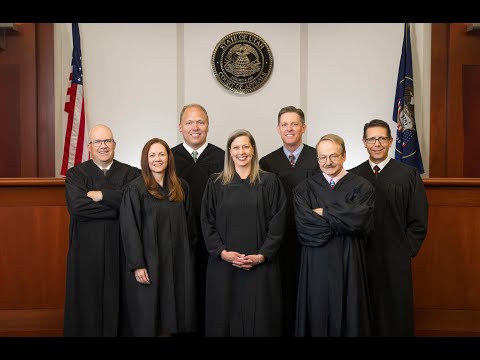
After argument and questioning, the panel said it would take the matter under advisement and issue a written decision. Presiding Judge Michelle Christensen Forrester closed by saying the court will review the parties’ briefs and the record before issuing an opinion.
If the Court of Appeals allows the case to proceed and rules for appellants on the merits, the ruling could return some regulatory authority over cougars to the Division of Wildlife Resources; if the court dismisses for lack of standing or justiciability, the statutory changes from HB 469 will remain in place unless changed by future legislation or rulemaking.