Get Full Government Meeting Transcripts, Videos, & Alerts Forever!
Get email alerts on the Criminal Appeals Ineffective Assistance topic
No spam. Unsubscribe anytime.
Court of Appeals hears arguments in State v. Medina over alleged ineffective counsel and unavailable witness
Summary
The Utah Court of Appeals heard oral argument in State v. Medina on whether trial counsel provided ineffective assistance by not requesting a unanimity instruction for an obstruction charge and whether a witness’s prerecorded testimony was admissible after the witness was deported.
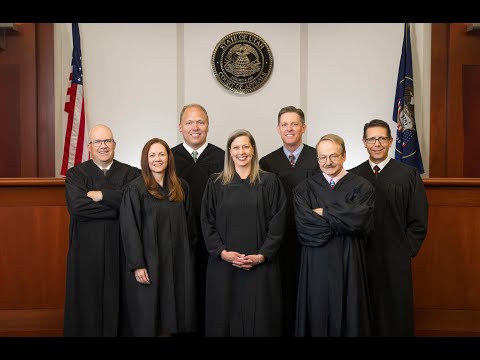
A three-judge panel of the Utah Court of Appeals heard oral argument in State v. Medina over whether Mr. Medina received ineffective assistance of counsel and whether a key witness was properly deemed unavailable so prerecorded testimony could be played at trial.
Rachel Phillips Zainzkopf, counsel for appellant Sergio Medina, told the court that trial counsel was deficient for not requesting a unanimity instruction for the obstruction-of-justice count and that the omission prejudiced Medina because the prosecution relied on multiple acts to support that single charge. “It was still unreasonable for counsel to ask for an instruction that the jury be unanimous as to the specific act supporting the one charge of obstruction,” Zainzkopf said.
The state, represented by Daniel Boyer, urged the court to defer to the trial court and the jury’s verdict. “Medina’s arguments target isolated pieces of the large evidentiary mosaic,” Boyer told the panel, arguing there is no reasonable probability of a different verdict absent the alleged errors and that the record shows strong evidence supporting at least some of the obstructive acts.
The attorneys clashed on two principal issues. First, whether defense counsel’s decision not to request a specific unanimity instruction was an objectively unreasonable omission under Strickland v. Washington and related Utah case law. Appellant’s counsel said the prosecution presented a “laundry list” of obstructive acts (the briefs identify roughly six to eight categories), and that giving jurors a written list risked convicting Medina without juror unanimity as to a single act. The state countered that when evidence for multiple acts is strong and overlaps with the murder charge, a tactical decision to avoid amplifying those acts in writing can be reasonable.
Second, the parties disputed whether Jose (referred to at trial as Robledo), whose prerecorded testimony the jury heard, was properly found unavailable under Utah Rule of Evidence 804. Zainzkopf argued the prosecution did not exhaust reasonable means to secure Jose’s presence after his deportation and pointed to Facebook posts and photographs her team presented suggesting he might still have been in the United States. The state described those leads as speculative and presented its own trial record showing attempts to contact a single pay phone in a remote Mexican village, adding that prosecutors were prepared to fund travel and that immigration control limited the state’s ability to compel re-entry.
Judges pressed both sides on legal standards and the practical limits of law-enforcement efforts. The panel questioned whether requesting a unanimity instruction would always be constitutionally required where multiple acts could support a charge, and whether deference to a trial court’s finding that a witness was unavailable was appropriate where the prosecution documented efforts to locate and contact the witness.
The court also heard argument on related litigation points raised in post-conviction briefing, including a dispute over whether defense counsel’s failure to call a retained cell-phone expert (identified in the record as Gabler) was tactical or a mistake and whether the appellant’s post-conviction affidavits met the standard for a hearing under Utah Rule 23B.
After questioning and rebuttal, the panel took the matter under advisement. Presiding Judge Michelle Christensen Forrester told counsel, “We will take the matter under advisement and render a written decision as soon as we are able,” and recessed the argument.
The appeals court record shows Medina was convicted at trial of murder and of obstructing justice. The court’s written opinion will determine whether the trial record supports a Strickland claim on the unanimity issue and whether the trial court properly applied Rule 804 to admit prerecorded testimony.