Get Full Government Meeting Transcripts, Videos, & Alerts Forever!
Get email alerts on the Public Safety Fire Department topic
No spam. Unsubscribe anytime.
Alameda County Fire chief outlines staffing, response times and new training center for Newark
Summary
Alameda County Fire Chief Emily McDonald told the Newark City Council on Jan. 23 that the Alameda County Fire Department staffs three stations in Newark, handled roughly 4,520 calls in the city last year, and is seeking additional relief personnel while building a new training center and replacing aging stations.
Alameda County Fire Chief Emily McDonald told the Newark City Council on Jan. 23 that the Alameda County Fire Department staffs three stations in Newark, fielded about 4,520 calls in the city last year and is pursuing staffing and facility projects including a new regional training center and several station rebuilds.
McDonald said the department’s operating budget for fiscal year 2024–25 is $13,737,000 and that 27 firefighters are assigned to Newark. She described Engine 27, Truck 28 and Engine 29 as all advanced life support–capable companies and gave company-level call totals for 2024: Engine 27 — about 88 fires and 925 EMS calls (roughly 1,500 total runs); Truck 28 — about 82 fires and 1,200 EMS calls (about 2,110 total runs); Engine 29 — about 89 fires and 1,200 EMS calls (about 2,260 total runs). McDonald said the three Newark companies together responded to roughly 4,520 calls in 2024.
Why it matters: Council members pressed McDonald on staffing, mutual-aid impacts from neighboring station closures, and pilot programs that could reduce unnecessary ambulance transports. Fire department staffing levels, response times and the location of companies affect response reliability for medical and fire emergencies.
McDonald summarized countywide capabilities and initiatives: Alameda County Fire responded to roughly 48,000 calls in 2024, extinguished about 1,500 structure fires, conducts thousands of inspections and plan checks each year, and maintains type‑1 hazardous‑materials and technical‑rescue teams. She said the department’s average response time countywide is 5 minutes 26 seconds and that most calls (about 64%) are medical aid.
On staffing, McDonald said the department recently started a recruit academy with 35 new firefighters who are expected to graduate in June. She said the department staffs the number of positions required each day and that retirements and vacancies mean the system currently relies heavily on overtime; she said the department has asked its partner cities to support adding relief positions to reduce repeated long shifts for individual members.
McDonald described a pilot “advanced practitioner” unit launched in November in San Leandro that pairs a nurse practitioner with firefighter‑paramedics and a community responder to handle mental‑health and other nontransport care on scene, and said the county will continue to expand collaboration among fire agencies even though Alameda County Fire did not win a county EMS bid McDonald said the department had sought.
She reviewed capital projects funded in part by a 2020 ballot measure for fire safety in unincorporated county areas, including design work and plans to start construction on three new stations this year and a training center project due to begin construction in April and expected to take about 18 months. McDonald said the department is also developing a 10‑year strategic plan and is expanding fuel‑mitigation crews for wildland fire risk reduction.
Council members asked about call distribution, mutual aid and recruiting. Councilmember Jorgens asked why Engine 27 showed lower call volume; McDonald replied it is largely due to that station’s location and nearby industrial land use. Vice Mayor Little asked whether regional park units cover East Bay parks; McDonald said some parks have resources but the county department provides outside‑park responses and mutual aid as needed. On recruitment, McDonald said the department works with local community colleges including Mission and Ohlone and welcomed connections to their programs; she also noted a recent change in law that allows some formerly incarcerated people to pursue firefighting careers if they meet EMT and other requirements.
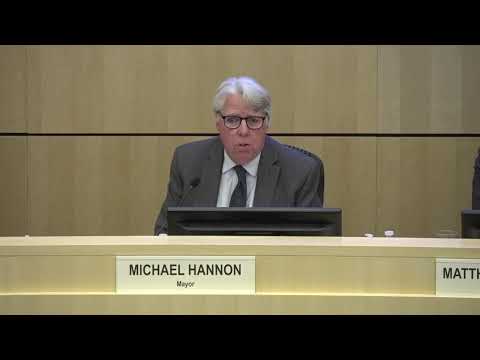
McDonald closed by saying, “We are proud to have had the opportunity to serve the city of Newark,” and Mayor Hannan thanked the department and said, “you’re part of the Newark team.”
Meeting context: The presentation generated questions from several council members; topics raised included mutual aid after a neighboring station closure, overtime and relief staffing, the advanced practitioner pilot, training and capital projects, and outreach to local colleges for recruitment. No formal council action was taken on the presentation itself.