Get Full Government Meeting Transcripts, Videos, & Alerts Forever!
Get email alerts on the Public Safety topic
No spam. Unsubscribe anytime.
Cerritos council backs crime-abatement measures, keeps ALPR trailer in place and orders traffic study for neighborhood access trials
Summary
After residents reported a drop in burglaries near Liberty Park following deployment of a live-feed license-plate-recognition trailer, the council directed staff to continue crime-abatement measures, keep the trailer in place, expand ALPR deployment and do a traffic study for proposed single-entry trials in two neighborhoods.
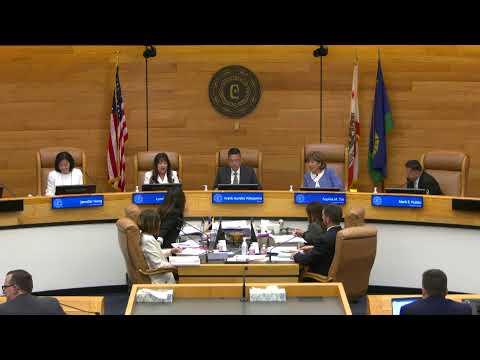
The Cerritos City Council took a series of crime-abatement steps on March 27 after public comment from two residential neighborhoods and staff briefings about recent burglary patterns and pilot surveillance measures.
Public safety staff described a neighborhood pilot near Liberty Park where a live-feed automatic license plate reader (ALPR) trailer was placed on Feb. 7. Residents and staff reported zero reported residential burglaries in that tract after the trailer’s deployment. Susie Vigil, a resident of the affected Liberty Park tract, presented a petition signed by 174 homes asking the city to install permanent surveillance cameras at both tract entrances rather than pursue a single-entrance trial.
Public Safety Manager Daryl Evans and Public Works Director Alvin Papa briefed the council on crime data, fire and emergency response implications of limiting access to neighborhoods, and estimated implementation costs. Papa said a traffic-control plan, temporary barricades and a traffic study would be required before a temporary closure and estimated implementation costs of $28,000 to $50,000 for a single location, plus a $3,500–$4,500 traffic study.
Council actions and direction:
- Item 9C2 (Liberty Park-adjacent tract): Councilmember Linda Johnson moved to receive and file the staff report and proceed with continuous crime-abatement measures; Councilmember Mark Pulido seconded. The motion passed on a roll call vote of 5-0 (Hong, Pulido, Se, Johnson, Yokoyama). Staff were directed to keep the live-feed ALPR trailer currently deployed on Bigelow in place pending further direction and evaluation.
- Item 9C1 (Morning Sun tract / Spinnaker entrance): Councilmember Pulido moved that the council follow JPIA guidance, conduct a full traffic study and undertake extensive public outreach before any temporary street closure; Councilmember Pulido’s motion was seconded by another councilmember. The motion passed 4-0 with one abstention from Councilmember Sophia Se (who recused because she owns property in the neighborhood under discussion). The council also directed staff to evaluate reallocating a Phase 3 ALPR camera to Phase 2 (to prioritize camera coverage in the affected residential corridors) and to return with a report.
- Consensus directions: Council members gave staff consensus to leave the Liberty Park live-feed ALPR trailer in place while staff prepares budget recommendations and to include recommendations in the 2025–26 budget process for additional live-feed trailers and for expanded CSO/reserve/volunteer patrol programs. Council also gave consensus direction to increase the number of budgeted community safety officers from three to five and asked staff to evaluate funding and operational impacts for the next fiscal year.
Public safety staff emphasized the trade-offs: the Los Angeles County Fire Department and the Cerritos Sheriff Station both cautioned that closing one entrance to a large tract could extend emergency response times. Public Works cautioned that implementation requires formal traffic-control planning and signage and would include ongoing costs for barricades and monitoring.
Council members and residents said the ALPR trailer appeared to reduce crime in the short term and asked staff to return with cost and deployment options for permanent camera placement in residential neighborhoods.