Get Full Government Meeting Transcripts, Videos, & Alerts Forever!
Get email alerts on the Autism Sdgs Inclusion topic
No spam. Unsubscribe anytime.
Panelists at UN event urge using SDGs to expand autism inclusion in schools, workplaces and health systems
Summary
Speakers at a UN World Autism Awareness Day fireside chat said the United Nations Sustainable Development Goals offer a framework to advance inclusion for autistic people, highlighting gaps in education, employment and health access and promoting grassroots partnerships and the Hidden Disabilities Sunflower initiative in Brazil.
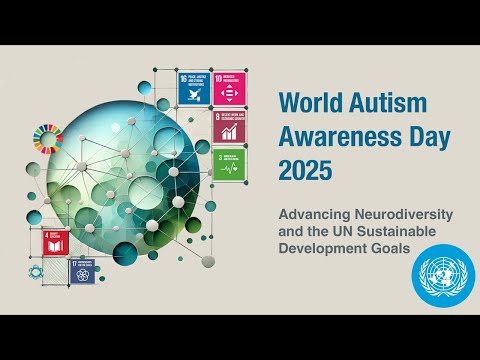
Speakers at a United Nations World Autism Awareness Day fireside chat on April 2 said the U.N. Sustainable Development Goals provide a platform to widen inclusion for autistic people but that progress depends on coordinated action across education, employment, health and grassroots partnerships.
The panel was moderated by Maureen Dunn, a neurodiversity expert and author, and featured Torakil Sanneh, a social entrepreneur who said he has helped organize past U.N. autism observances and founded a company called Strasser Serna, and Flavia Callefenge, director of the Hidden Disability Sunflower in Latin America and mother of a 15‑year‑old autistic daughter. The discussion linked several SDGs — notably SDG 4 (quality education), SDG 8 (decent work) SDG 16 (peace, justice and strong institutions) and SDG 17 (partnerships) — as mutually reinforcing paths to inclusion.
“Autistic people have a special opportunity to address the world and to be advocates for those who feel like the square peg is not fitting in,” Torakil Sanneh said, adding that the SDGs’ central promise to “leave no one behind” is a natural fit for autism advocacy. He said his organization has worked with more than 500 companies to create neurodiverse hiring and management practices, and argued that employers who adopt such approaches benefit across teams.
Panelists described school systems and workplace practices as key pressure points. Sanneh said that while some welfare systems provide many formal tools, those systems can still fail autistic people when frontline workers or peers lack understanding. “You don’t need to discuss anymore: does it make business sense to employ autistic people? The answer is yes,” he said, describing examples from agriculture to cybersecurity where neurodiverse hires have contributed.
Flavia Callefenge recounted a decades‑long series of school rejections and discriminatory incidents involving her daughter, whom she said attended 14 different schools and was once physically punished. She described repeated episodes in which classmates and educators reacted with exclusion, and said that experience illustrated the limits of special‑education placements when they isolate autistic children rather than exposing peers to neurodiversity.
“The responsibility of the schools are the first social door for the children for their lives,” Callefenge said. She urged more inclusive classroom practices and earlier interventions so children can learn together rather than being separated.
Panelists also highlighted barriers in health and insurance systems. Callefenge said Brazil has a federal law recognizing the Sunflower lanyard as a voluntary disclosure tool and that the campaign’s visibility has grown — including projections of the sunflower on landmarks — but she said families still face obstacles to medical insurance coverage. “I was omitting that she’s autistic because I was rejected from all the insurance companies,” Callefenge said, adding that many families pursue lawsuits against insurers and that in her view “9 in 10 processes are win for families.” She also described high out‑of‑pocket costs for therapies and a regional unemployment rate she said leaves “85 percent of the autistic adult population out of the workplace here,” statements she presented as observations from Brazil and parts of Latin America.
Panelists cautioned that statistics and systems vary widely across countries. Sanneh, who said he was raised in Scandinavia, noted that mature welfare systems can still falter if professionals lack flexibility, and he pointed to South Africa’s “tradition of hope” as an alternative model of community engagement. He urged the autism community to document “what works and what does not work” so governments can meet their SDG commitments.
On employment, Callefenge described Brazil’s quota law for hiring people with disabilities and said companies often hire only those with visible disabilities or, in some cases, pay penalties rather than make workplaces accessible. She credited the Sunflower initiative’s visibility at airports, airlines and retailers with helping employees disclose hidden disabilities and with prompting employer trainings. “People are coming after me and sending me messages saying thank you very much because I was praying every day to come to work,” she said.
Panelists urged a mix of top‑down and bottom‑up effort: use SDG commitments and government measurement to scale promising practices, while building grassroots partnerships among employers, families, civil society and academia to translate lessons into local change. Sanneh recommended employers and schools work together so children who grow up in inclusive classrooms enter workforces that value neurodiversity.
The panel closed with appeals to strengthen global partnerships and to focus immediate efforts where modest investments can produce large gains — training for educators and employers, broader use of voluntary disclosure tools such as the Sunflower, and improved health‑system guidance across the lifespan. Speakers emphasized that much of the required knowledge already exists among families and practitioners confronting system failures daily, and they urged channels to feed that lived experience back into policy and implementation.