Get Full Government Meeting Transcripts, Videos, & Alerts Forever!
Get email alerts on the Sustainable Development Goals Autism topic
No spam. Unsubscribe anytime.
Panel: Inclusion of autistic people must be central to achieving UN Sustainable Development Goals, panelists say
Summary
Speakers at the Institute of Neurodiversity’s World Autism Awareness Day event urged global policymakers to embed autistic voices and accessibility into SDG implementation, stressing the UN principle to "leave no one behind" and citing the Convention on the Rights of Persons with Disabilities as a guide.
Charlotte Vela, global chair of the Institute of Neurodiversity (ION), opened the event noting ION’s growth and mission and framed the day around the United Nations’ Sustainable Development Goals. "Since our inception in 2021, ION has grown into a truly global organization with over 30,000 members and supporters across more than 40 countries and still growing," Vela said.
Why it matters: speakers linked autism inclusion directly to the SDGs’ pledge to "leave no one behind," saying that implementation must reach autistic and neurodiverse people or the goals cannot be met. Mahed Nasir of the United Nations Department of Global Communications told delegates that the SDGs require inclusive implementation and that "the full participation of autistic and neurodiverse people in society is equally essential to advancing the SDGs."
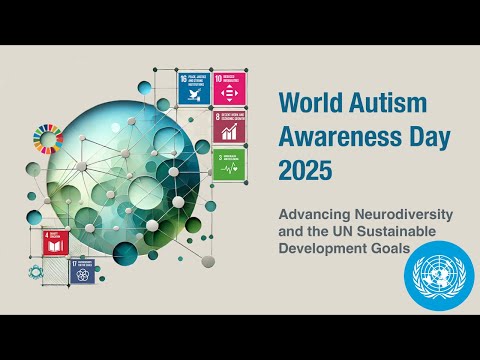
Panelists from multiple regions described concrete entry points for aligning disability inclusion with the SDGs. They emphasized four recurring priorities: centering autistic voices in policy-making; gathering standardized, shareable data for cross‑country research; investing in inclusive education and employment programs; and expanding accessible health services. Several speakers tied those priorities to particular SDGs, including SDG 3 (health), SDG 4 (education), SDG 8 (decent work) and SDG 10 (reduced inequalities).
Speakers also emphasized process and representation. Kim Shaw, leader of ION’s Canadian chapter, argued for mandatory involvement of autistic people in policy development, invoking the principle "nothing about us without us." Tony Fish and others urged international data standards and ontologies to allow comparative research and to avoid overlooking culturally variant manifestations of neurodiversity.
Panelists cited national examples that may offer transferable lessons. Danielle Cahill Gray, a journalist from Australia, pointed to political platforms and government programs that fund diagnostic and education supports as examples of how voting and public demand shape policy priorities. Several speakers recommended cross‑border collaboration through networks such as ION to amplify self‑advocacy and to coordinate knowledge exchange.
The session closed with repeated calls to center autistic lived experience in any global effort to meet the SDGs, and with the UN representative thanking ION for convening the event.
Looking ahead: panelists urged organizers and participants to continue building international coalitions, standardizing data collection, and pressuring governments to include neurodiversity explicitly in national SDG implementation plans.