Get Full Government Meeting Transcripts, Videos, & Alerts Forever!
Get email alerts on the Platforms And Children topic
No spam. Unsubscribe anytime.
Assembly committee advances Lowenthal bill to impose financial penalties on platforms for proven harms to children
Summary
Assemblymember Al Muratsuchi Lowenthal introduced AB 2, a bill to create enhanced financial penalties for large social media companies when their negligence causes physical or mental harm to children and teenagers, and the Assembly committee passed the measure as amended to the Judiciary Committee.
Assemblymember Al Muratsuchi Lowenthal introduced AB 2, a bill to create enhanced financial penalties for large social media companies when their negligence causes physical or mental harm to children and teenagers, and the Assembly committee passed the measure as amended to the Judiciary Committee.
Supporters told the committee that existing litigation and private enforcement have not produced adequate deterrents. In his opening remarks, Lowenthal said social media companies “are causing untold harm to our kids” and described internal platform research and recent policy rollbacks by platforms as evidence that stronger financial incentives are needed to change corporate behavior.
The bill does not alter the underlying elements of negligence that a plaintiff must prove in court, Lowenthal and his supporters said; rather AB 2 would scale penalties so they meaningfully deter companies whose products “drive children and teens to harmful content,” as described by the author. Parent witnesses recounted fatal incidents and urged the committee to act. Amy Neville described how her 14‑year‑old son accessed a drug dealer through Snapchat and died from a fentanyl‑laced pill; she told the committee the bill’s damages and statutory penalties are “necessary deterrent[s] to prevent future tragedies.”
Nicole Rocha of Common Sense Media testified the bill builds on existing negligence law and addresses a perceived enforcement gap by creating “right‑sized penalties” for large platforms whose conduct breaches the ordinary standard of care and causes harm to children. Rocha said courts are already equipped to resolve First Amendment and Section 230 defenses and urged the committee to let the judicial process work.
Industry and civil‑liberties witnesses opposed the bill in whole or in part. Robert Boykin of TechNet said members share the goal of protecting children but argued AB 2’s language is too broad and risks chilling speech or driving platforms to restrict access for young people. The Electronic Frontier Foundation warned the combination of a vague harm standard and statutory damages could incentivize overbroad content removal and litigation that narrows protected speech. Witnesses also urged narrowing or limiting the private right of action to reduce the risk of frivolous suits; the author said discussions about private vs. public enforcement will continue as the bill moves to Judiciary.
Committee members pressed the author on implementation details, including whether the statute would improperly reach third‑party user content and how to avoid incentivizing “shakedown” litigation. Lowenthal and his counsel said the bill tracks negligence elements courts already apply (duty, breach, causation, harm) and that the measure had been negotiated in prior sessions. Several members acknowledged the political urgency but urged further drafting and legal review before the Judiciary and floor committees.
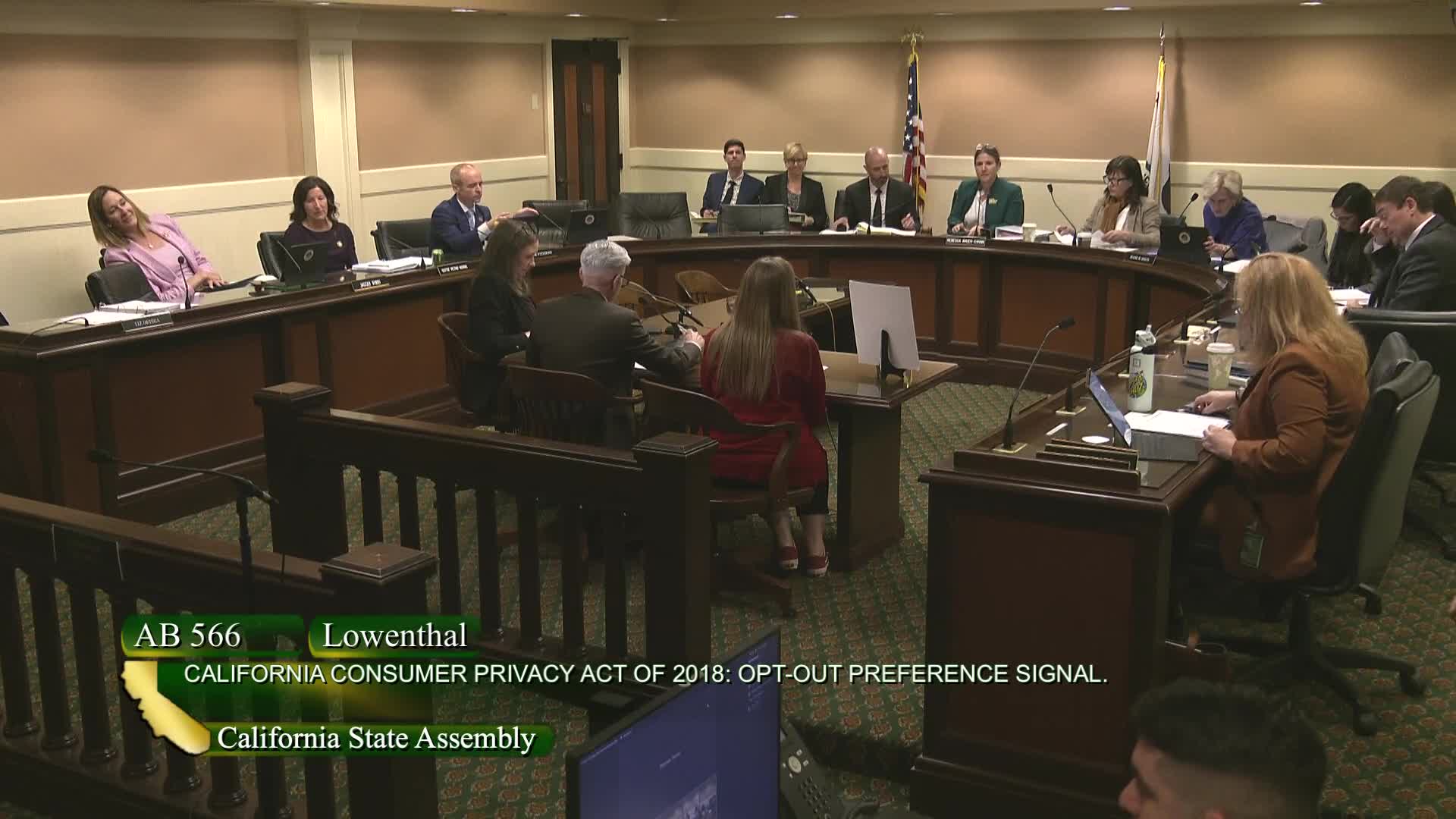
The committee moved AB 2 as amended to the Judiciary Committee; the formal record shows the motion carried and the roll was left open. The author said he will continue negotiating narrower language on enforcement and scope during subsequent hearings.
AB 2 next goes to Assembly Judiciary, where members indicated they will weigh First Amendment and Section 230 issues along with whether to preserve a private right of action or limit enforcement to public prosecutors.
Supporters: Assemblymember Al Muratsuchi Lowenthal (author); Amy Neville (parent/witness); Nicole Rocha (Common Sense Media). Opponents: Robert Boykin (TechNet); Becca Kramer Matter (Electronic Frontier Foundation listed with coalition partners); other industry witnesses (TechNet, Chamber, trade groups).
Votes at committee: Motion to pass as amended to Judiciary carried; roll left open (tally recorded in committee transcript).