Get Full Government Meeting Transcripts, Videos, & Alerts Forever!
Get email alerts on the Land Use Variance topic
No spam. Unsubscribe anytime.
ZBA grants area variance for 349 Maple Avenue with limit on box trucks
Summary
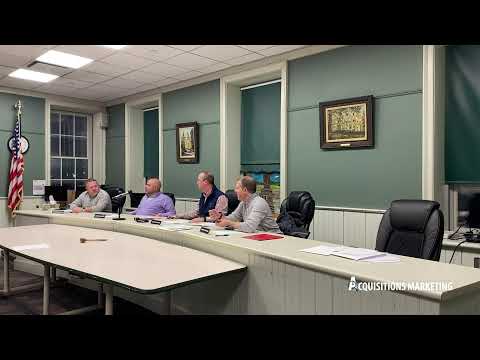
Goshen Zoning Board of Adjustment granted an area variance reducing the minimum lot size requirement for a commercial use at 349 Maple Avenue and attached conditions limiting visible vehicles to eight box trucks similar in size to existing vehicles and tying the allowance to the current operation.
The Goshen Zoning Board of Adjustment on a unanimous vote granted an area variance that reduces the minimum lot-size requirement for the operation at 349 Maple Avenue and attached a condition limiting visible vehicles to eight box trucks similar in size to those currently on site.
The board voted to allow the applicant to maintain the existing use on a reduced lot area — from the five-acre minimum down to 2.8 acres as requested — and recorded the limitation on vehicle type and count as a condition tied to the current operator. The board also noted this condition would not run with the land but would be specific to the present applicant and operation.
The applicant was represented at the hearing by John DiPalo of JG Law and a representative identified as Bryce Sandor. The ZBA reopened a continued public hearing on the application and then proceeded through the statutory five-factor area-variance analysis. In deliberations, board members repeatedly noted that the use has existed for decades and that “nothing essentially is changing on the property.” Sam (ZBA member, first name only in record) said, “Weighing the factors, I believe, I will vote in favor of granting the variance,” and cited long-standing use of the site as a key consideration.
Board members discussed alternatives including subdividing and adding five acres to the parcel as an option that would avoid the variance but could open the property to more expansive uses. The applicant acknowledged that the neighboring parcel is owned by the same party but that using that parcel for operations could change the scope of future use. Several board members said the benefits sought by the applicant could be achieved by other means but that those means carried practical complications. On the question whether the variance was substantial, members answered it was substantial in percentage terms but, taken together with the other factors, voted to grant.
The vote was recorded in sequence after deliberation; members agreed to add a condition limiting visible vehicles to eight box trucks similar in size and type to those presently used, and to tie the variance to the current operation rather than to the land. The board asked staff to prepare the decision for signature and to circulate it for final review.
The continuing public hearing had one public comment referenced from two weeks earlier (citizen Chris Healy) urging limits on the scale of use and describing the property as a legacy site; the board incorporated that comment into the record for the continued hearing. No formal objections from abutters were recorded during the vote.
Votes at a glance - Motion: Grant area variance reducing minimum lot size from five acres to 2.8 acres; condition variance to the current operator and limit visible vehicles to eight box trucks of similar size and use. (Motion language recorded in meeting minutes.) - Outcome: Approved (unanimous among board members present).
Clarifying details and conditions recorded in the meeting record - Vehicle limit: 8 box trucks “of similar size and type to the current use.” - Condition scope: The allowance is tied to the current operator/applicant and does not run with the land. - Alternatives discussed: subdividing to reach five acres (would remove need for variance but could permit broader future uses).
What happens next Staff will prepare the written decision reflecting the board’s conditions for signature, and the board indicated it will circulate the memorialized decision for review and finalization.