Get Full Government Meeting Transcripts, Videos, & Alerts Forever!
Get email alerts on the Dwi Ignition Interlock topic
No spam. Unsubscribe anytime.
Committee advances bill to expand ignition-interlock requirements for repeat DWI offenders
Summary
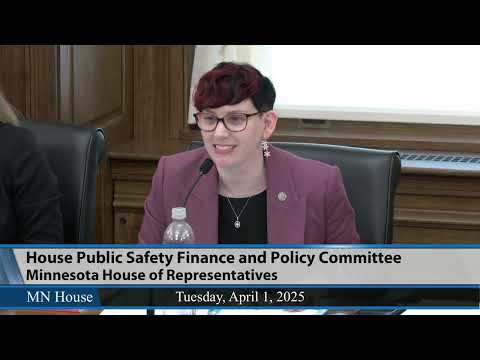
The House public-safety committee voted to re-refer House File 2,130, as amended, to Ways and Means after testimony from the bill sponsor, law enforcement and victims—s representatives supporting stricter interlock periods, expanded look-back windows and changes to administrative review and penalties.
Representative Peter Kraft introduced House File 2,130 as amended and asked the committee to re-refer the bill to the Ways and Means Committee.
Kraft said the bill responds to a Sept. 1, 2024 crash in St. Louis Park in which the driver, Stephen Bailey, allegedly had a blood-alcohol concentration of 0.325 and fatally struck patrons at an outdoor patio. "On the night of 09/01/2024, Stephen Bailey got behind the wheel of his car with a blood alcohol level of 0.325, more than 4 times the legal limit," Kraft said, adding that Bailey had multiple prior DWI convictions. The bill's primary aim, Kraft said, is to strengthen ignition-interlock requirements for repeat offenders and reduce barriers to program entry.
The bill would (as discussed by the sponsor): ramp up interlock time requirements for repeat offenders, increase the look-back period in certain situations from 10 to 20 years, require treatment beginning at a second offense, and remove a statutory barrier that required payment of a $680 license-reinstatement fee before installing an interlock device (the fee would still be owed). It also reorganizes existing statutory language into a single place, permits impoundment via permanent sticker instead of physically removing a license plate, clarifies treatment of interlock on different vehicles, makes ignition interlock available after criminal vehicular homicide convictions, and allows judicial review of DVS administrative decisions concerning interlock.
Supporters told the committee the measures would reduce repeat DWI events. "Ignition interlocks reduce repeat DWI offenses by about 70% while installed," Representative Kraft said, citing CDC findings in support of the approach. Chief Brian Crewley of the St. Louis Park Police Department said the bill could "make a difference and actually save lives," describing multiple fatal impaired-driving incidents in his city and urging expanded look-back periods so prior convictions are accounted for. Dr. Rick Hilger, medical director at HealthPartners/Methodist Hospital in St. Louis Park, said emergency and trauma teams see the results of impaired driving regularly and asked for the committee's support.
A representative of criminal-defense interests, Charles Siegel of the Minnesota Association of Criminal Defense Lawyers, said the organization supported "many portions of this bill" but opposed some provisions, especially the proposed extensions of time on interlock for people already complying with the program. "We do feel that punishes the compliant," Siegel said, and warned increased durations and associated device costs could deter participation.
Committee members asked about costs and administration. Representative Greenman asked who administers interlock and how much it costs; Representative Kraft said installation and monthly monitoring typically run in the range of about $100 to $150 per month, with programs in some judicial districts reducing the cost for lower-income participants. Committee members raised equity concerns about monthly fees and the need for supports to ensure participation.
After questions and brief closing remarks, Representative Kraft renewed his motion to re-refer the bill to Ways and Means "as amended." The committee voted by voice to re-refer House File 2,130, as amended, to the Ways and Means Committee.
For now, the bill will proceed to the fiscal committee for further consideration of funding and fiscal details related to implementation.