Get Full Government Meeting Transcripts, Videos, & Alerts Forever!
Get email alerts on the Higher Education Planning topic
No spam. Unsubscribe anytime.
Subcommittee advances bill to analyze university enrollment growth at regional scale under CEQA
Summary
The subcommittee voted unanimously to advance SB 486, which would require enrollment growth at public university campuses to be analyzed at the regional scale under the California Environmental Quality Act and tie campuses into regional planning processes including RHNA.
A California State Senate subcommittee unanimously moved Senate Bill 486, which would change how enrollment growth at public university campuses is analyzed under the California Environmental Quality Act (CEQA) and require universities to participate as full partners in regional planning processes.
Senator Cabaldon, the bill's author, said the measure responds to capacity constraints at public universities that stem from difficulties getting projects through the CEQA process. "We could add another 10 or 20% to our student body here at Berkeley. We just can't get any projects through the pipeline because we're constrained by some provisions of the California Environmental Quality Act," he said, arguing the bill would speed campus housing and classroom projects by analyzing enrollment growth at the regional rather than campus-by-campus scale.
Cabaldon said the bill would require universities to participate in regional sustainable community strategies, regional transportation planning and the regional housing needs allocation (RHNA) process "as a full partner along with all of the cities and the counties." He said California's higher-education master plan and Education Code guarantee slots for California students and that CEQA's campus-by-campus treatment does not reflect regional enrollment patterns.
Steven Stanza of Brownstein, speaking on behalf of the Chamber of Progress, stated support on the record. No lead opponents were listed.
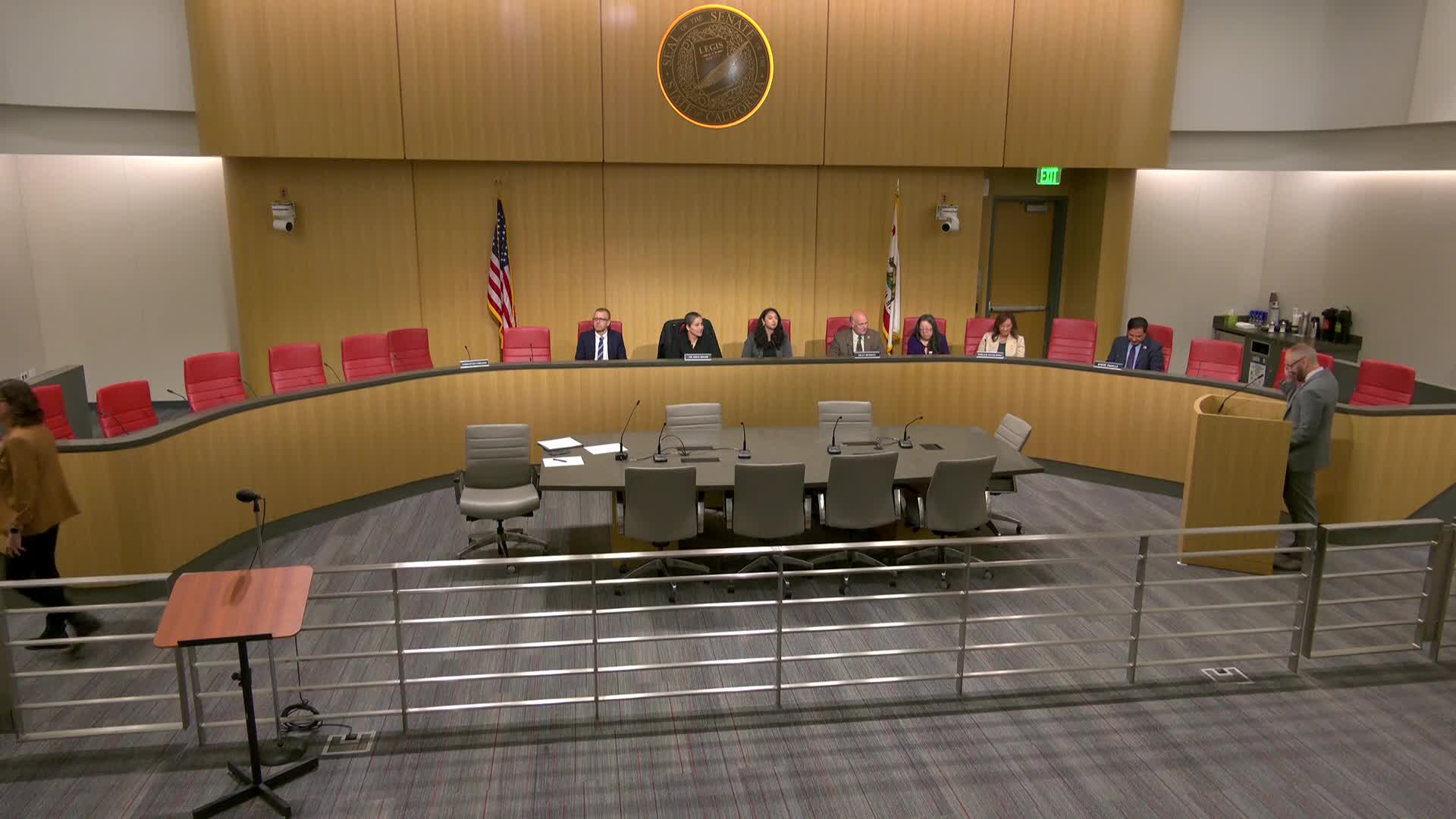
Senator Ochoa Bog moved the motion to pass SB 486 as amended to the Environmental Quality Committee; the subcommittee recorded a unanimous roll-call vote of 11 ayes and 0 noes. The bill was advanced as amended to Environmental Quality.
Supporters argued the change would accelerate production of student housing, classrooms and student services while improving regional capacity to meet climate, transportation and housing goals. The bill text, as described by the author, ties campus enrollment analysis to the regional scale and conditions campus approvals on active participation in regional planning processes.
SB 486 will proceed to the Senate Environmental Quality Committee.