Get Full Government Meeting Transcripts, Videos, & Alerts Forever!
Get email alerts on the Homelessness Shelters topic
No spam. Unsubscribe anytime.
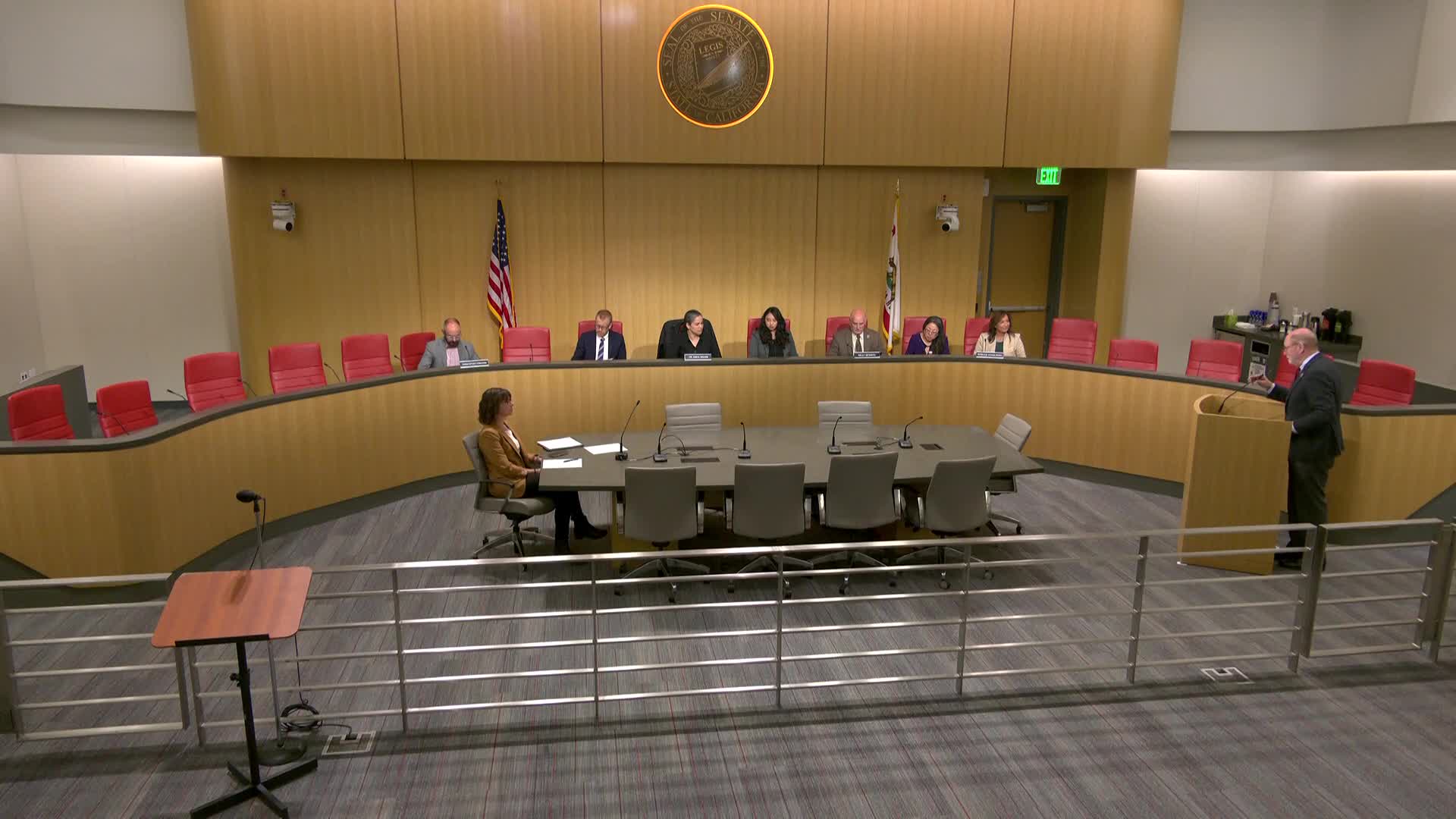
Subcommittee clears bill to make emergency shelters and on-site services by-right
Summary
A California State Senate subcommittee voted unanimously to pass SB 340 to appropriations, clarifying that by-right approval for emergency shelters includes wraparound services and expansions that had previously triggered conditional-use permits.
A California State Senate subcommittee voted unanimously to pass Senate Bill 340 to the Appropriations Committee, clarifying that the "by-right" approval of emergency shelters extends to the wraparound services and any expansion of services offered on-site.
Senator Laird, author of SB 340, told the subcommittee the bill "clarifies that by right approval of emergency shelters extends to all wrap around services offered by the shelter as as well as any expansion of services." He said the measure is intended to close a loophole in which shelters could be approved but related services — such as housing navigation and case management — then required separate conditional-use permits.
Anya Lawler of the Public Interest Law Project, a sponsor of the bill, said she was "here in support, happy to answer any questions." Mark Neuberger of the California State Association of Counties and Divya Shiv of Housing California each stated they were in support during the record of me-too witnesses.
Senator Aragin moved the motion to pass SB 340 to appropriations. The roll-call vote recorded 11 ayes, 0 noes; the measure was passed out of the subcommittee by a unanimous vote.
The bill text, as described by the author, lists services that would be covered by the by-right approval, including housing navigation, case management, outreach, and access to basic needs such as meals, showers, laundry, mail services and health care. The sponsor said the change would prevent separate conditional-use processes from delaying those services.
No lead opposition witnesses appeared on the record. Committee members did not offer substantive amendments during the hearing, and the bill moved forward to appropriations.
Votes at the subcommittee were conducted by roll call; the final tally for SB 340 was 11-0. The subcommittee adjourned after completing its agenda.