Get Full Government Meeting Transcripts, Videos, & Alerts Forever!
Get email alerts on the Women Girls Commission topic
No spam. Unsubscribe anytime.
Commission on the Status of Women and Girls seeks staff permanence, outlines programs on reproductive‑rights safety, student access and archival project
Summary
Darcy Totten, executive director of the California Commission on the Status of Women and Girls, told the Assembly subcommittee the commission seeks to convert several limited‑term positions to permanent ones to sustain oversight of programs on reproductive‑rights safety, student access and a 60‑year archival project.
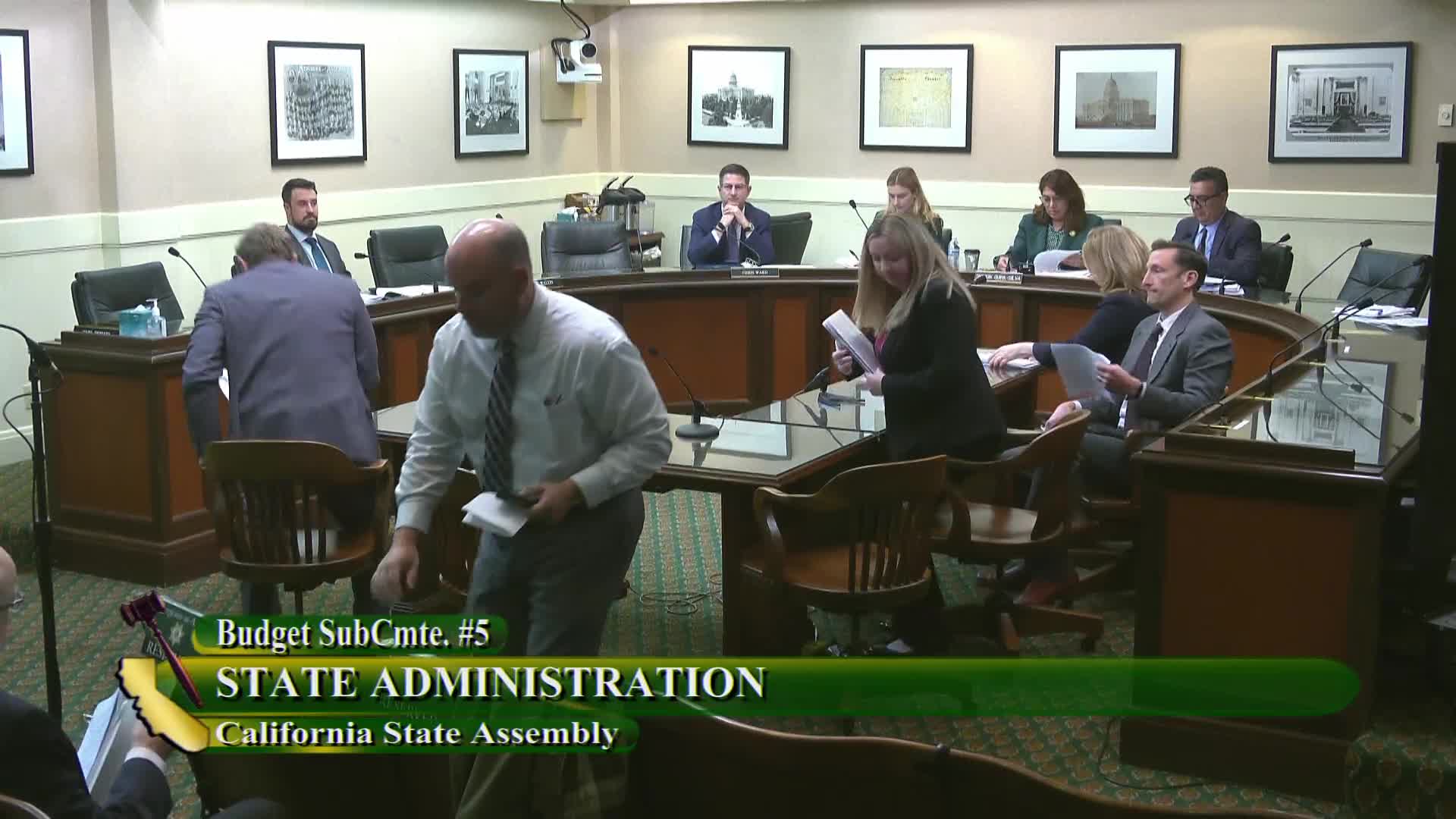
Darcy Totten, executive director of the California Commission on the Status of Women and Girls, told the Assembly Budget Subcommittee 5 that the commission carries out research, reporting and convening functions aimed at improving economic, educational and health outcomes for women and girls in California, and is seeking to convert several limited‑term positions to permanent ones to sustain workload.
Why it matters: The commission oversees programs affecting roughly half of California’s population, including projects that touch reproductive health and clinic safety, college student access to reproductive care, and a statewide archive documenting 60 years of advocacy for women and girls.
Agency mission and current work Totten said the commission — an independent state agency now in its 60th year — focuses on areas including economic and educational equity, veterans issues, access to health care including reproductive services, violence against women and representation in media. She said the commission operates with 10 permanent positions and relies heavily on a small staff to convene partners and produce reports and recommendations to the legislature.
Key programs described Totten outlined several ongoing activities: oversight of the College Student Right to Access Act through December 31, 2026, which includes partnership with the University of California and California State University systems to resolve implementation issues and build student awareness; a youth advisory council that will develop a “girls’ agenda” on public policy; an archive digitization project in partnership with the California State Library to scan 60 years of commission records; and an anti‑reproductive‑rights crimes advisory group (per AB 1356) focused on clinic safety and training, with reports due to the legislature and the attorney general.
Budget request and committee feedback The commission requested converting limited‑term positions to permanent roles to maintain institutional knowledge and reduce turnover; Totten said many limited‑term positions expire in June and that supervisory roles have been difficult to retain. Committee members acknowledged the commission’s breadth of work and advised prioritizing a shorter list of core deliverables to ensure focus and sustainability. A member suggested the commission pare down initiatives and prioritize issues such as childcare, maternity‑care access and menopause awareness alongside research and reporting functions.
Next steps The commission said it will continue to work with the committee on prioritizing initiatives and provided an overview of its planned archival and convening work. The Department of Finance and LAO reported no immediate objections during the hearing; no formal budget actions were taken at the informational session.