Get Full Government Meeting Transcripts, Videos, & Alerts Forever!
Get email alerts on the Consumer Protection topic
No spam. Unsubscribe anytime.
Senate approves SB 26 urgency measure to adjust Lemon Law procedures; allows limited manufacturer opt-out
Summary
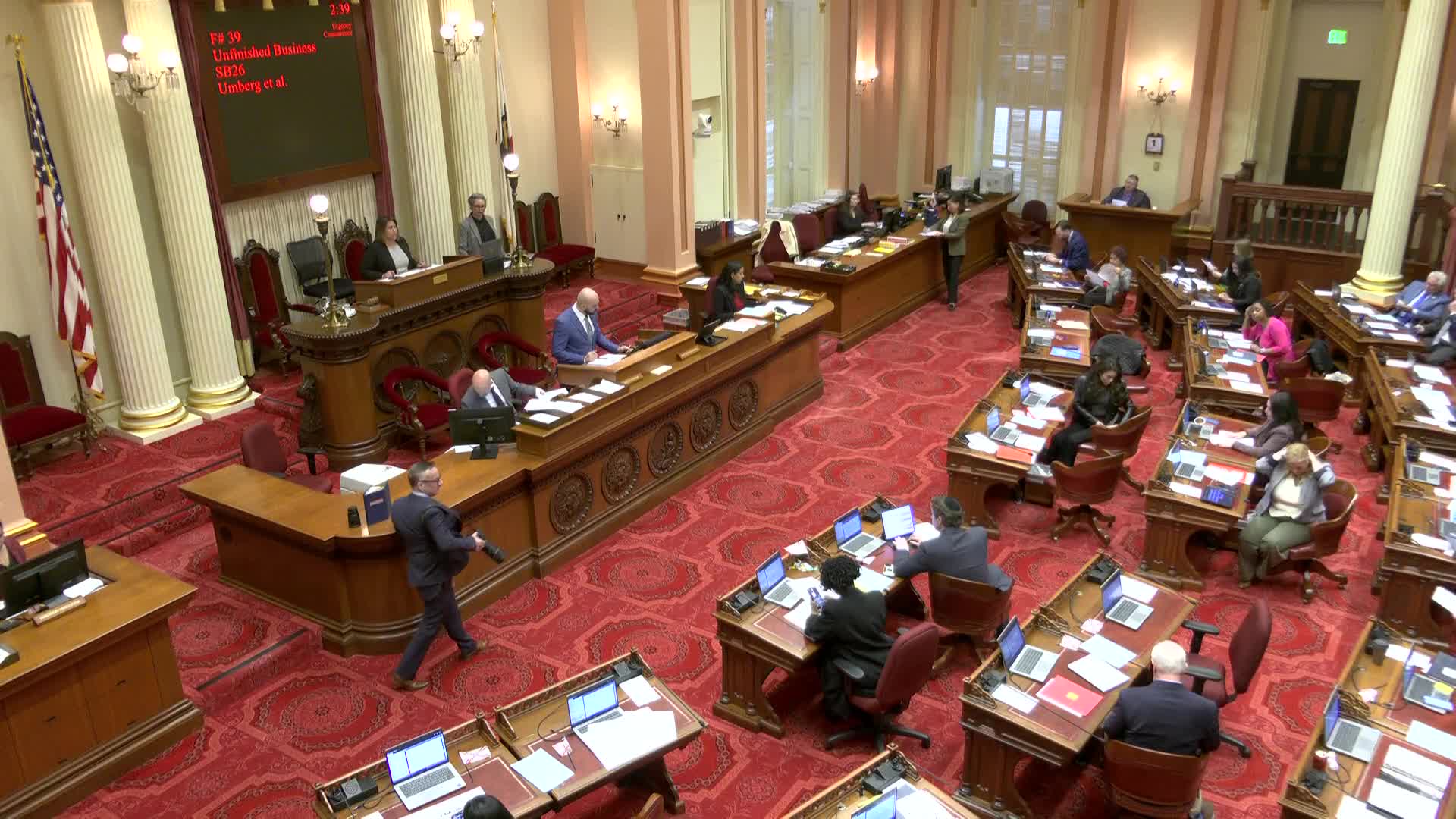
Senator Josh Enberg brought SB 26 to the floor on April 1, 2025, describing the measure as "the cleanup to the cleanup on Lemon Law."
Senator Josh Enberg brought SB 26 to the floor on April 1, 2025, describing the measure as "the cleanup to the cleanup on Lemon Law." He told colleagues the earlier change (AB 1755) was prompted by an unusual number of filings that were overwhelming some courts and was designed to speed consumers' recoveries. "SB 26 allows some manufacturers, should they choose to, to opt out of the 17 55 mechanism so that they can revert back to the old law," Enberg said.
Nut graf: The Senate voted to adopt SB 26 with an urgency clause and to concur in Assembly amendments. The measure, as explained on the floor, narrows options created by AB 1755 by permitting certain manufacturers to return to the previous statutory process if they elect to do so. Supporters characterized the change as technical cleanup; opponents did not offer extended debate on the floor.
On the floor: Debate was brief. Senator Blakespear thanked the sponsor for the verbal explanation given on the floor, noting the paper had "so little in the paper" that floor explanation was useful. No additional substantive amendments were offered during floor remarks. The Senate then voted on the urgency clause and later on concurrence with Assembly amendments. The roll calls recorded 38 ayes and 1 no on the urgency motion; the bill and its amendments were concurred in by the same margin and moved forward.
Formal action: The Senate approved the urgency provision and concurred in Assembly amendments to SB 26; the actions recorded on the floor show the urgency vote carried (ayes 38, no 1). No subsequent amendments, effective dates beyond the urgency clause, or implementation scheduling were stated on the floor.
Context and limits: The sponsor framed SB 26 as a technical adjustment to recent Lemon Law reforms (AB 1755). The floor discussion did not include fiscal or implementation details, and the record does not show any second(s) to a named motion. The transcript does not specify which manufacturers, if any, had signaled intent to opt out, nor does it detail judicial or administrative impacts beyond the sponsor's summary.
Ending: With the urgency clause adopted and Assembly amendments concurred in, SB 26 advances under an expedited timetable. The bill's text and any conforming amendments will be the authoritative source for exact opt-out criteria and procedural effects; those specifics were not read in full on the floor.