Get Full Government Meeting Transcripts, Videos, & Alerts Forever!
Get email alerts on the Transportation Safety topic
No spam. Unsubscribe anytime.
Mat-Su assembly briefed on federally backed Safe Streets plan as adoption approaches
Summary
Public Works Director Tom Adams told the Matanuska-Susitna Borough Assembly that a draft comprehensive safety action plan developed with a USDOT Safe Streets for All grant will be before the assembly for adoption and a planned April 15 public hearing; adoption is required to compete for up to $25 million in implementation grants.
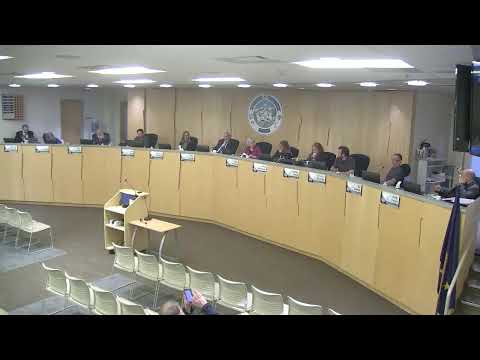
The Matanuska-Susitna Borough Assembly on April 1 received a detailed briefing on a draft comprehensive safety action plan developed with a U.S. Department of Transportation Safe Streets for All (SS4A) planning grant and scheduled for public hearing on April 15.
Public Works Director Tom Adams told the assembly the borough won a roughly $650,000 SS4A planning grant in 2022 to develop the safety action plan, which identifies crash patterns and recommends countermeasures for the project’s expanded core area. Adams said more than 10,000 crashes occurred in the study area between 2013 and 2022, including 99 fatal crashes, 345 serious-injury crashes and 69 crashes involving bicyclists or pedestrians; he said 93 percent of bicycle and pedestrian crashes resulted in injury or death and that roughly 43 borough residents are seriously injured or killed each year within the study area.
Adams described the plan as a toolkit rather than a mandate, saying it provides “recommended mitigation measures” and a priority list of projects agencies can choose to implement. He said adoption of a borough plan will be required to make the borough eligible for the next round of SS4A implementation funding, with application deadlines in June; Adams said implementation grants from the program can be as much as $25 million and that the federal SS4A program is being funded at scale across fiscal year 2025 and expected to continue.
The presentation emphasized what the plan does not do as well as what it does. Adams said the plan is not a directive to change local boundaries, it does not ban or favor any mode of travel, and it does not require implementation of any particular countermeasure. He also said the plan does not set climate- or emissions-related goals. Adams urged assembly members to read the draft, ask questions before the April 15 public hearing and to use the next two weeks to submit suggested edits or clarifying questions to staff.
Assembly members asked about specific countermeasures and whether lighting or other locally favored measures were captured. Adams said lighting had not ranked among the proven countermeasures that rose to the top in the data analysis, but he acknowledged lighting can be an important safety element. He also described an extensive public involvement process: 912 survey responses, more than 800 attendees to a virtual workshop and about 16 stakeholder meetings with local advisory boards, commissions and community councils. Adams said the draft includes 74 public comments that will be considered in the final plan.
The plan will be introduced for formal consideration and a public hearing on April 15; Adams told the assembly he expects staff to seek adoption prior to June in order to meet the grant application eligibility requirement.
Assembly members and staff framed the plan as a tool to drive data-informed pavement and safety investments rather than a prescriptive regulation, and Adams said the borough is not required to use any particular countermeasure in the plan’s toolkit. The assembly did not vote on the plan at the April 1 meeting; staff asked members to review the draft and bring questions to staff in advance of the April 15 public hearing.