Get Full Government Meeting Transcripts, Videos, & Alerts Forever!
Get email alerts on the Veterans Services topic
No spam. Unsubscribe anytime.
CalVet officials brief Assembly panel on veterans homes, Yountville steam project and county service officer outreach
Summary
California Department of Veterans Affairs officials outlined programs spanning veterans homes, the Yountville steam-distribution replacement project, county veterans service officers and efforts to link separating service members to state services, and warned about unaccredited third-party fee takers that prey on veterans.
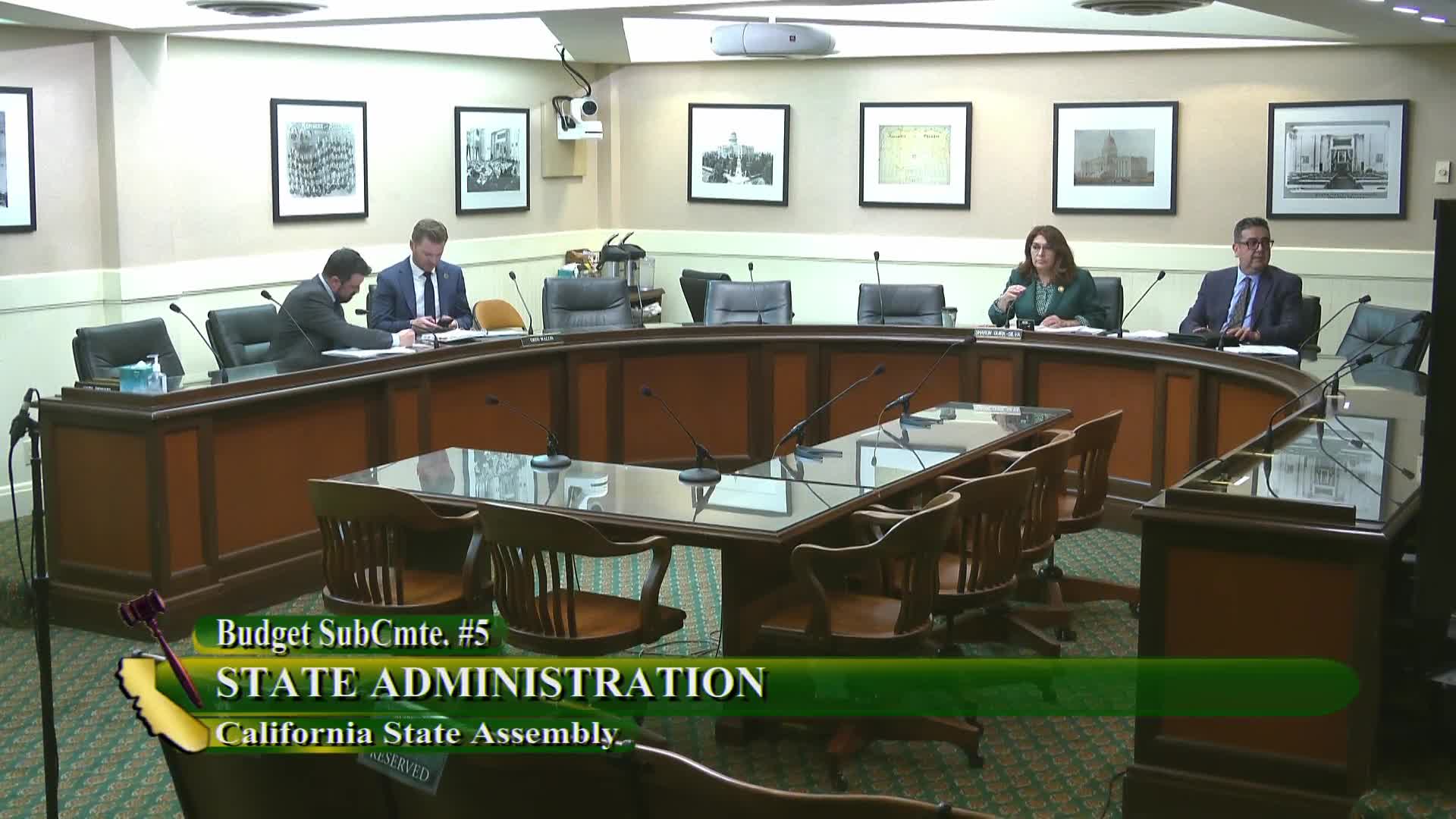
John Spangler, deputy secretary for legislation at the California Department of Veterans Affairs, told the Assembly Budget Subcommittee 5 that CalVet serves nearly 1.4 million veterans in California and provides services ranging from transition assistance and home loans to long‑term care and state veterans cemeteries.
Why it matters: Committee members heard how aging facilities and shifting veteran demographics are changing demand for different levels of care, how a large planned infrastructure project at the Yountville veterans home is proceeding, and how county veterans service officers (CVSOs) and CalVet outreach aim to steer separating service members into legitimate benefits while guarding against unaccredited providers who charge prohibited fees.
CalVet overview and mission John Spangler said CalVet’s mission is to “make sure that California veterans are the most connected, protected, and respected in the nation,” and described a portfolio of programs: CalTAP (California Transition Assistance Program) for service members who will return to or remain in California; regional local inter‑agency network coordinators; the California State Approving Agency for Veterans Education (CSAFE) for GI Bill‑eligible education programs; the Veterans Housing and Homelessness Prevention Grant program; and a CalVet home loan program that CalVet holds and services in‑house.
Assemblymember Wallace asked whether CalVet’s veterans homes will be able to meet future demand as veterans age. Colby Peterson, deputy secretary for the Veterans Homes, said the department’s master plans (2020 and 2025) show a demographic shift: fewer veterans seeking independent living and increased demand for skilled nursing and assisted living. Peterson said many veterans entering skilled nursing present with multiple physical and some behavioral‑health needs and that CalVet is “taking a hard look at the differences between an independent level of care need for a veteran and skilled nursing care need.”
Yountville steam‑distribution project CalVet asked the committee to reappropriate $38,756,000 for the construction phase of a project to replace a steam distribution system at the Yountville veterans home. A department representative said the existing system dates to the 1950s and provides domestic hot water and heating across the campus. The department reported that construction drawings are approximately 85% complete, expected to be finalized by August, with bidding planned for fall and construction potentially starting in November.
On federal reimbursement, CalVet said the U.S. Department of Veterans Affairs has agreed to reimburse 65% of the project cost; CalVet will submit invoices after construction and expects to know more about VA support then. Committee members asked whether a federal pause on grants could jeopardize reimbursement. CalVet staff said they had received positive signals from the VA and were “pretty comfortable” but could not guarantee final action until the reimbursement paperwork is submitted.
County Veterans Service Officers and transition outreach Roberto Herrera, deputy secretary for veteran services, described CalVet’s relationship with nearly 400 accredited county veterans service officers and district office staff co‑located with VA regional offices. Herrera said CalVet trains and accredits CVSOs, routes claims for quality control before submission to the VA, and conducts three training conferences annually.
Herrera explained recent data sharing with the Department of Defense on the DD‑2468 form, which flags service members enrolled in the federal Transition Assistance Program (TAP) and whose home of record is in California. He said receiving that data allows CalVet to reach out while service members are still active duty and better connect them to benefits and county resources once they transition to civilian life.
Officials also described CalVet’s driver’s license verification program (established in 2017) that requires veterans to visit a CVSOs to verify veteran status for a veterans designation on a driver’s license; CalVet staff said that interaction led to a high conversion rate of claim filings and substantial retro payments to veterans.
Concerns about unaccredited representatives Herrera told the committee that charging a fee for initial VA claims preparation, presentation or prosecution is illegal unless done by a congressionally recognized veterans service organization, an accredited VA agent or attorney, or the state’s accredited representatives. He cautioned that unaccredited, for‑profit actors continue to market guaranteed quick or high outcomes and “it’s pretty rampant” on social media. Herrera said CalVet is focused on expanding access to accredited CVSOs, training, quality control of claims and outreach to reduce veterans’ reliance on unaccredited providers.
Public comment and committee follow‑up There were no public speakers on the CalVet items during the hearing portion that preceded the department’s move to the cannabis items. Committee members thanked CalVet staff and said they planned follow‑up on site visits and federal reimbursement status.
What’s next: CalVet will proceed with design completion and a planned fall bid for the Yountville steam project; the department will submit VA reimbursement documentation at project completion and continue work to expand outreach to separating service members via CalTAP and CVSOs.