Get Full Government Meeting Transcripts, Videos, & Alerts Forever!
Get email alerts on the Erp Procurement topic
No spam. Unsubscribe anytime.
Klamath County to enter negotiations for new ERP; finance staff recommend vendor B
Summary
County staff presented results of an RFP for a new enterprise resource planning (ERP) finance and HR system, recommended vendor B, outlined costs and funding sources, and commissioners agreed to direct staff to begin negotiations.
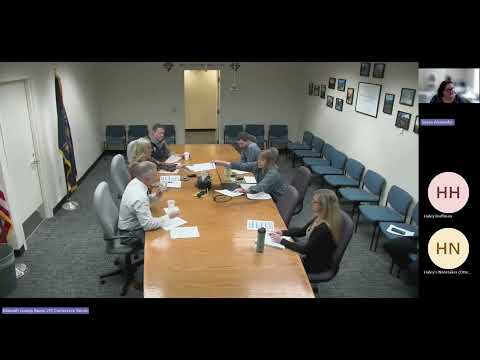
Klamath County commissioners agreed April 1 to direct staff to begin negotiations with “vendor B” for a new enterprise resource planning finance and human resources system after staff presented evaluation and funding information.
County financial analyst Susan Alexander presented the results of a months-long RFP process and concluded the selection committee recommended vendor B. “The committee's recommendation is to go with vendor B … with an 18 month implementation budget of $662,388.88, and that is before negotiation,” Alexander said.
Why it matters: County staff said the current system requires substantial manual work and creates reporting and security limitations. Commissioners were told the chosen system would reduce duplicated data entry and could yield the equivalent of roughly one full-time employee in savings when implementation costs are amortized, with possible additional savings over time.
Staff summary and evaluation: The county received six initial proposals, narrowed to three. Alexander said evaluators rated vendor B consistently highest across proposal scores and demos; the current vendor (listed as vendor A in evaluation materials) ranked third overall despite some reviewers initially scoring it higher on paper. Alexander summarized operational shortcomings of the current system, including double-entry across modules, limited security granularity, delivered reports that require manual reformatting, and a payroll module she described as “beyond the capability of this software.” She also noted the current contract with the incumbent includes a final optional renewal period that will end after a 10-year relationship.
Funding and timing: Finance staff explained funding set-asides and a staged funding plan. Vicky reported that last fiscal year she “put aside $601,000” toward implementation; she said the county budget includes $500,000 in the current fiscal year and another $500,000 budgeted in the next fiscal year to apply toward the project. Staff characterized the implementation as an 18-month effort that will require significant staff time and change management, and they proposed using internal-service savings to soften early-year subscription costs before departments begin paying their share.
Alternatives considered: Staff described vendor C as cost-prohibitive over a multi-year term and said vendor A’s new platform lacked key modules and remained limited in security and reporting. Based on reference checks and comparative cost projections, staff removed vendor C from consideration and recommended negotiations with vendor B.
Commissioner direction and next steps: Commissioners responded affirmatively when the chair asked whether there was consensus to direct staff to move forward with negotiations with vendor B. The board did not record a roll-call vote; the direction was captured as the board’s consensus. Staff said the procurement process requires issuing a notice of intent to award before negotiations begin and that pricing and contract terms remain subject to negotiation and further board review.
The county also discussed implementation staffing needs, contingency amounts and travel to vendor conferences for key staff. Alexander and finance staff said some contingency and backfill funds had been included in the project estimate, and that more detailed cost and contract terms would be brought back during the negotiation and award process.
Ending: Staff will prepare procurement steps to issue a notice of intent to award and begin contract negotiations with vendor B; the county expects implementation to span roughly 18 months once a contract is finalized.