Get Full Government Meeting Transcripts, Videos, & Alerts Forever!
Get email alerts on the Municipal Budget topic
No spam. Unsubscribe anytime.
West Warwick budget hearing spotlights nearly $6M proposal and $991,000 school request as layoff notices loom
Summary
Town manager presented a proposed FY2026 budget with a roughly $5.9 million increase and a school department request for about $991,000. Residents and officials raised concerns about benefit-line transparency, potential school layoffs and rising out‑of‑district tuition costs.
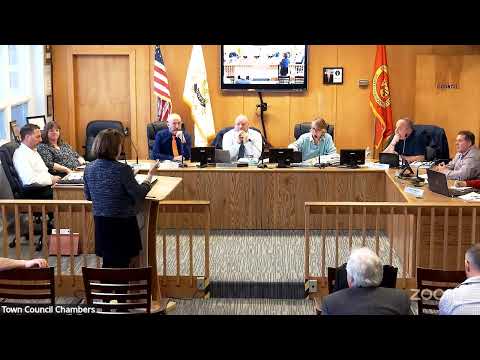
Town Manager Mark opened the April 1 public hearing on the proposed West Warwick fiscal year 2026 budget, saying, “This total budget increase is slightly more than $5,900,000,” and outlining major line items and assumptions for next year.
The proposal includes a little more than $1.7 million in municipal expense increases, roughly $3.1 million in school state-aid pass-through appropriations, and a requested increase in the school department’s local appropriation of about $991,000. The manager said the levy increase was “slightly below 4%” and that the approximate tax-rate increase was “still hovering around 2.38%,” figures that could change as final tangible property returns and appeals are resolved.
The proposal trims department capital requests — about $1.2 million in total capital asks were eliminated in the town manager’s recommended budget — and applies new employer pension rates from the Employee Retirement System of Rhode Island (ERSRI). The manager also told the council that healthcare costs in the proposal reflect a 5.2% increase, property and liability insurance rose about 7.5%, workers’ compensation rose modestly, the tax-collection rate was assumed at 97%, and the plan did not rely on use of fund balance.
Nut graf: The hearing focused on tradeoffs between limiting tax increases and preserving services, with particular attention to the school department’s request and the potential personnel impacts. Residents and council members questioned transparency in benefit reporting and pressed for clarity about school layoffs, grant prospects and the rising cost of sending students to out-of-district placements.
Public comments and council discussion
Several residents urged the council to protect school positions and to avoid cuts that would disproportionately affect low-income residents, older adults and students with special needs. One resident noted that individual benefit lines in the budget as presented could appear larger than salaries and said more detailed breakdowns would help public understanding.
Paul Hill, a West Warwick resident, asked for more transparency in the school budget presentation, saying school payroll totals appear as lumped line items on the public budget document and recommending that top salaries be broken out so taxpayers can see where major costs lie.
Council members and staff acknowledged the difficult trade-offs. Council President Gazzam and other council members said they did not want to cut school positions but that unknowns at the state and federal level, and contractual obligations, constrained options. The town manager told the council department heads and staff were trying to draft a budget “that will support the continuation of services expected by our community and provide for the upgrading of infrastructure necessary to offer these services safely and more efficiently.”
School department, layoffs and out‑of‑district tuition
The superintendent (name not specified in the record) explained the school department’s request and answered questions about layoff notices and out‑of‑district tuition. The superintendent said the district had issued layoff notices in part because of state-required notification timelines and bumping rules; she also said some notices reflected grant-funded positions whose funding is ending.
On out‑of‑district tuition, the council was given figures the superintendent had provided showing a sharp increase in state-set tuition rates for students placed outside West Warwick: about $43,000 in 2023, $58,000 in 2024 and $73,000 in 2025 for a single outplacement. The superintendent said the district has 239 students enrolled elsewhere and 19 inbound students, noting that the inbound students partially offset outbound tuition costs.
The superintendent also said legally the district faces school-choice rules for career‑technical and charter placements and that, unless a local program is determined “substantially similar” to an outside program under Rhode Island Department of Education guidance, the district must pay tuition and often transportation costs for students who choose to attend other districts or charter/CTE programs.
When asked about the number of certified teacher layoffs, the superintendent said contract terms limit the district to laying off a maximum of 10 certified positions; the larger list of notices reflects bumping and other contractual processes rather than an immediate prediction of actual job losses. The superintendent added the district is pursuing grant opportunities that could help restore some coaching and instructional positions, including a pending CLSD literacy grant the superintendent said should be known within a few weeks.
Budget transparency and benefit reporting
Multiple speakers pressed staff for clearer presentation of benefits, pensions and healthcare costs. The town manager and Finance Director Kristen Benoit explained that benefit totals are tracked as compiled department line items and that the state reporting format also aggregates certain benefit costs. Finance staff said they can provide more detailed information by department, but presenting every benefit as a per‑position line would substantially increase the size and complexity of the published budget document.
Next steps and procedural directions
Council members asked staff for updated, firmer numbers by the council’s next meeting. The manager said some figures should be more final by the council’s second meeting on April 22 and that department salary‑related accounts that had been held in reserve for anticipated collective-bargaining adjustments would be dispersed then. The council announced it would hold another public hearing on the proposal on April 8 at 6 p.m.
No formal votes on appropriations were taken at the April 1 hearing. The meeting concluded with a routine motion to adjourn, which passed without recorded opposition.
Why it matters
The FY2026 proposal affects the town’s tax levy, municipal services, capital projects and the school department’s staffing. Residents expressed particular concern about special-education services and the potential long-term fiscal impact of rising out‑of‑district tuition. Town staff and school officials said uncertainty in state and federal funding, contract obligations and the timing of aid decisions complicate final budget decisions and could force difficult choices before final state aid figures are known.