Get Full Government Meeting Transcripts, Videos, & Alerts Forever!
Get email alerts on the Water Wastewater Rates topic
No spam. Unsubscribe anytime.
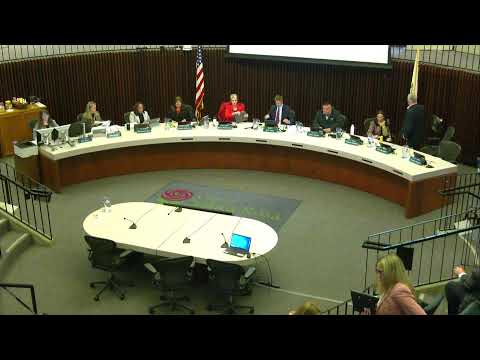
Santa Rosa council adopts five-year water and wastewater rate plan after protest hearing
Summary
After a Prop 218 protest hearing, the City Council adopted a five-year schedule of rate increases for potable, recycled and wastewater service and approved a code change to set future water rates by council resolution. Council found the number of written protests fell short of a majority and voted 6-0 on the main measures.
Santa Rosa City Council voted to adopt a five-year schedule of increases to potable, recycled and wastewater rates and to change the city code so future potable and recycled water rates can be set by council resolution. The council also adopted a written response to 10 timely objections received under newly enacted Assembly Bill 2257 and proceeded to the Proposition 218 protest hearing; the clerk reported 163 valid written protests, fewer than the majority threshold of 29,236 parcels.
The rate plan approved by the council calls for tiered changes in water revenue of roughly 6% annually for the first three years and 7% for the last two years of the five-year period, and a 5% increase each year for wastewater for five years. City staff said the schedule would support a planned increase in capital spending across water and wastewater infrastructure while keeping rates in the lower half among regional utilities. “We are looking to invest quite a bit more in the infrastructure on the water, wastewater, and regional system,” said Jennifer Burke, director of the Santa Rosa Water Department.
Why it matters: Council and the utility said the increases are intended to fund a large ramp-up in capital projects—pipes, treatment and plant work—so the system remains reliable. The council also voted to add a pass-through mechanism for Sonoma County Water Agency wholesale charges so the city can apply county price changes to retail tiers when those wholesale changes are adopted. City consultants and staff stressed that pass-throughs reduce the risk of over- or under-collecting for unpredictable Sonoma County cost changes.
Key details: The city mailed 58,470 Proposition 218 notices and set a 45-day public review period; staff reported the council has received 156–163 written protests by the close of the hearing and that oral comments do not count toward the majority protest threshold. Mark Hildebrand, the city’s rate consultant, presented the cost-of-service work showing the water utility’s capital appropriations rising from roughly $9.5 million in the near term to about $34 million in later years, and the wastewater program increasing local capital appropriations from about $3.3 million up to $42 million over the planning horizon.
The council acted on three related items: (1) a resolution formally responding to 10 timely written objections submitted under AB 2257, (2) the Proposition 218 action adopting the five-year rate schedule, and (3) introduction of an ordinance amending City Code Title 14 to allow water rates to be established by council resolution going forward. The resolution responding to objections and the rate resolution passed 6–0; the ordinance was introduced with unanimous support.
Public comment and protests: Several members of the public spoke at the hearing, including Dwayne DeWitt of Roseland. The clerk reported 163 valid written protests had been filed by the close of the public hearing—well under the 29,236 protests that would be necessary to constitute a majority veto under Prop 218—so the council moved forward with adoption. City staff reiterated that written protests must include the property address or assessor parcel number and be signed to be counted.
Support and mitigation: Staff highlighted existing assistance programs and conservation initiatives to mitigate rate impacts for lower-income customers, including an income-qualified bill-assistance program (the H2O program) and free water-use audits and conservation rebates. Director Burke noted the city cannot enact a lifeline rate under Prop 218 but can provide targeted assistance through other programs.
What happens next: The rate schedule will take effect July 1 for the first year, and in subsequent years the council will adopt the scheduled increases each fiscal year. The pass-through for Sonoma County Water Agency charges will be applied in later years when county rates are finalized and presented to council.