Get Full Government Meeting Transcripts, Videos, & Alerts Forever!
Get email alerts on the Infrastructure Roads topic
No spam. Unsubscribe anytime.
Consultant: Kernersville should raise annual pavement investment to about $2.5 million to maintain network condition
Summary
The town heard a presentation of its pavement condition survey and long‑range financial model. Withers Rabanne Engineering reported the town’s network scores about an 80 today and recommended roughly $2.5 million per year to sustain that level of service; lower funding would allow deterioration and higher long‑term costs.
A consultant presented the Town of Kernersville’s pavement condition survey and a 10‑year financial model that shows the effect of different annual funding levels on the town road network.
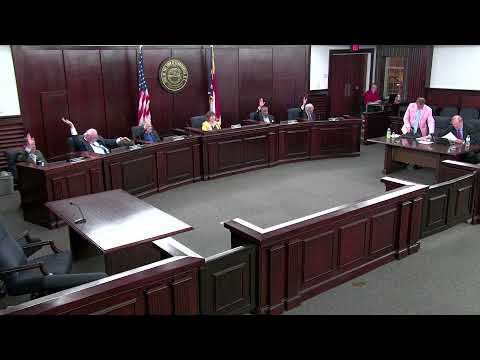
Eddie Staley of Withers Rabanne Engineering told the Board of Aldermen that the town’s current pavement condition index (PCI) is about an 80, a level he described as “optimal” for citizen experience. Staley said the town currently budgets roughly $1.5 million a year for pavement work but that the model indicates an annualized funding level of about $2.5 million would be required to maintain the network condition over the next decade.
"When we talk about asset management, really the goal of asset management is to really get the longest life, the highest level of service for the least amount of investment," Staley said. He showed model scenarios for $1.5 million and $2.5 million per year: at $1.5 million, the town’s network score would fall by about eight points over the modeled period and add lane miles in fair/poor condition; at $2.5 million, the model projected the town could eliminate streets in the poor category and improve the system score to about 82.
The financial model estimates the town’s municipally‑owned pavement asset value at roughly $72–73 million. Staley highlighted the “cost of deferring” maintenance: small, timely treatments such as rejuvenators or slurry seals cost a fraction of an eventual mill‑and‑overlay or full reconstruction. He said a typical rejuvenator can cost as little as $1.20 per square yard whereas a mill‑and‑overlay can approach $30 per square yard; deferring preventive work, he said, increases long‑term expenses and accelerates the move into reconstruction.
Board members asked about growth and adoption of new streets through development. Staley replied that newly adopted streets increase the town’s maintenance liability and should be included in long‑range planning. Public works staff noted that some stormwater and utility projects are outside town control and that coordination can reduce repeated pavement cutting.
The presentation includes an interactive executive dashboard staff will use to prioritize segments and to show the operational impact of funding decisions. Staley said the model runs many project combinations and is meant to provide transparency and an operational plan for staff to present targeted paving recommendations.
Why it matters: The model gives the town a data‑driven way to compare funding scenarios and to plan preventive maintenance. Staley and staff framed the recommendation as a budgetary choice: pay more now to keep roads in good condition, or defer and accept higher long‑term costs and more lane miles in poor condition.
The board did not take an immediate funding vote but recognized the presentation and thanked staff and the consultant for the analysis.