Get Full Government Meeting Transcripts, Videos, & Alerts Forever!
Get email alerts on the City Attorney Performance Review topic
No spam. Unsubscribe anytime.
Residents demand answers, raise ethics questions during city attorney performance review public comment
Summary
Public commenters at a special National City council meeting criticized City Attorney Barry Schultz’s conduct, questioned hiring practices, and asked the council to explain a $9,400 payment and use of past law firms for city business ahead of a closed-session personnel review.
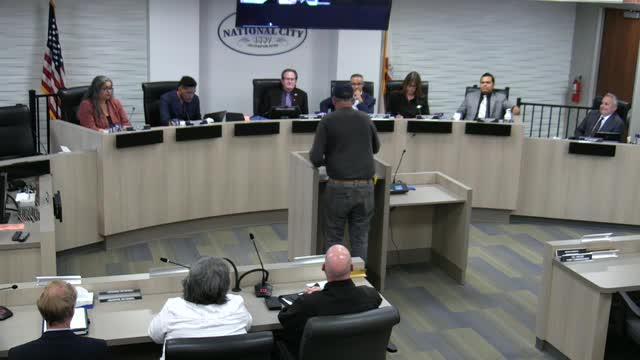
Dozens of residents used public comment at a special National City City Council meeting to criticize City Attorney Barry Schultz and to press the council for transparency as the agenda listed a closed-session performance evaluation of the city attorney.
Why it matters: Speakers linked alleged ethical lapses by the city attorney to financial risk and questioned whether the city's use of outside counsel and other payments created conflicts of interest or violated state ethics rules.
Speakers asked the council to justify payments to the city attorney and to review the process used to select outside counsel. “Please explain the justification for the $9,400 payment, authorized by the city manager, to Mr. Schultz,” said a commenter identifying themselves in the record as Veil Wabnowski. Another speaker, Michael Aguirre, told the council, “It’s time for a new city attorney,” and said the city needed a “fresh start.”
Commenters alleged repeated ethical problems, including hiring the city attorney's former law firm to represent the city, use of city funds to respond to a state bar complaint, and insufficient responses to alleged misconduct by city officials. Several speakers asked whether the payments and hiring practices created the appearance of impropriety under state rules; one commenter cited “Government code section 1,090,” which was raised in public comment as a possible legal restriction on staff dealings that create a financial interest.
Public commenters also raised concerns beyond the bar complaint and payments. A speaker referenced an open-ended indemnity clause in the Sweetwater project agreement and said the clause suggested the city attorney had not adequately protected the city’s financial interests.
The council placed the personnel evaluation for the city attorney on its closed-session agenda; no public action or vote was announced before the council recessed to closed session.
Closing note: Commenters left the open session urging the council to provide a public accounting of payments, counsel-selection records and an explanation of what, if any, remedies the council would pursue in response to the concerns raised.