Get Full Government Meeting Transcripts, Videos, & Alerts Forever!
Get email alerts on the Public Transit topic
No spam. Unsubscribe anytime.
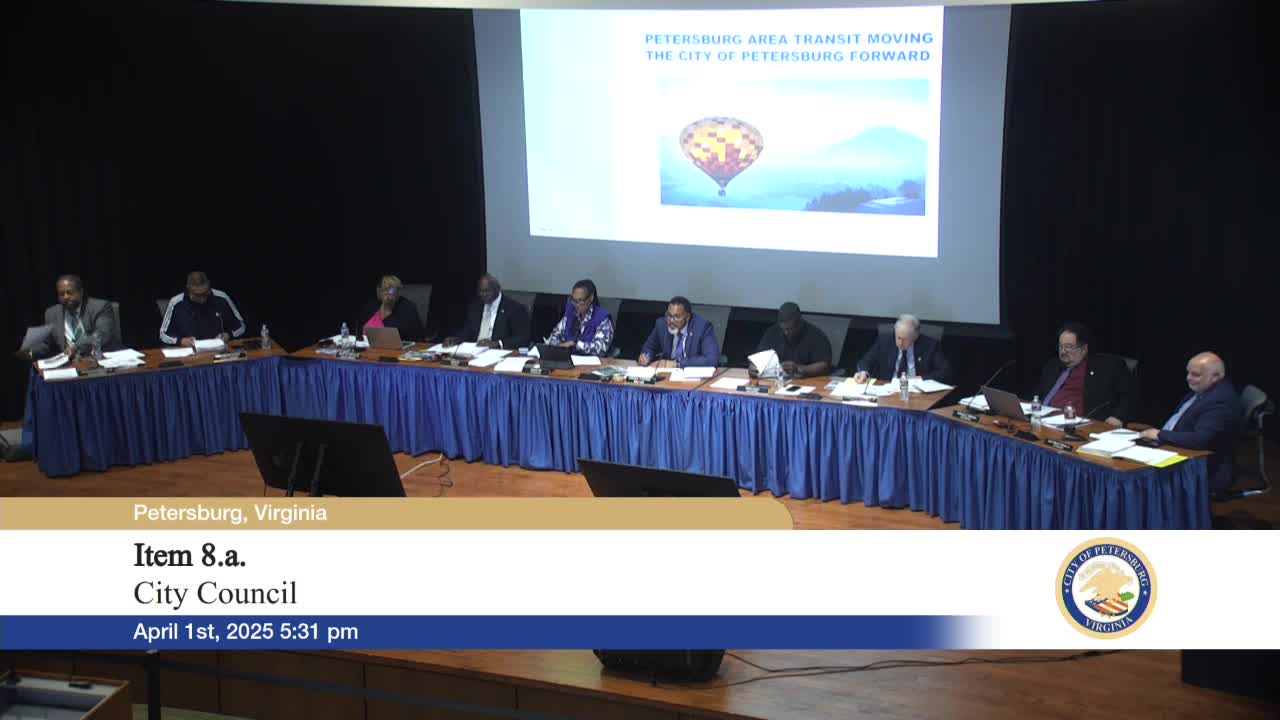
Petersburg transit director warns fleet aging; council hears plan for new buses and shelter repairs
Summary
At an April 1 council work session, the citys transit director outlined an aging fleet, rising repair costs and a plan to acquire new buses and install stalled bus shelters; councilmembers pressed for timelines, funding options and accountability.
Transit Director Mason told the Petersburg City Council at its April 1 work session that the citys transit fleet has largely exceeded federally recommended useful life and is driving frequent breakdowns and rising repair costs.
Mason, director of Mass Transit, said the system operates 29 buses and that 22 have already reached or passed their useful life. "We need buses. We need buses," Mason said, urging council to consider replacing at least seven to 10 vehicles to reduce maintenance expenses and service interruptions.
The presentation described useful-life standards used by federal grant programs: large heavy-duty buses at about 12 years, medium light-duty at five years and paratransit vehicles at shorter intervals. Mason said the agency spends roughly $350,000 a year on repairs and has accepted donations of four buses from the Greater Richmond Transit Company while negotiating for two more.
Mason told council the agency is pursuing new 40-foot buses from ABC Companies (Hometown Bus Company) priced at about $750,000 apiece; previously purchased Gillig buses had cost roughly $1 million when additional equipment was installed. He said manufacturing for new buses typically takes 12 to 18 months and that new vehicles commonly arrive outfitted with cameras, fare boxes, bike racks and driver safety barriers so they can go into service more quickly.
Council members asked detailed questions about fleet age, mileage and maintenance. Councilman Jones pressed for accountability over bus shelters Mason said had been purchased but not installed; Jones said he found multiple shelter pieces sitting outdoors and asked why they remained unused. Mason and City Manager Altman said some shelters were ordered under a prior director and that installation priorities, funding for concrete pads and turnover in staff contributed to the delay.
Mayor Parett and others pointed to specific locations with high need, including a Walmart stop where riders gather in the open. Mason said some sites are on private property or lack sidewalks and ADA access, and he suggested the city pursue agreements with property owners or use curb-side parking spaces to site shelters. City Attorney Williams said forcing a private landowner via eminent domain would be possible but long and expensive.
Council members also discussed service expansion. Mason said Petersburgs buses serve Petersburg and parts of the Tri-Cities and that the system is exploring service links with Brunswick County, Emporia and Prince George County, but expansion would require additional reliable rolling stock.
Council voiced support for prioritizing both replacement buses and shelter installations. No funding decision was made; Mason said he and staff will continue planning with the city manager and with potential vendors and grant partners.
Why it matters: Reliable transit affects daily mobility for low-income riders, access to jobs, health care and regional connections. Council members called for faster progress on shelters and asked staff to identify funding routes that would accelerate vehicle replacement or installation of existing purchased shelters.