Get Full Government Meeting Transcripts, Videos, & Alerts Forever!
Get email alerts on the Stormwater Erosion topic
No spam. Unsubscribe anytime.
Greyhawk residents ask Forney council for help with major erosion threatening neighborhood
Summary
Residents of the Greyhawk subdivision urged the Forney City Council to place an erosion repair plan on a future agenda, saying a failing drainage installation and developer inaction put nearby streets and homes at risk and that repair costs could top $1 million.
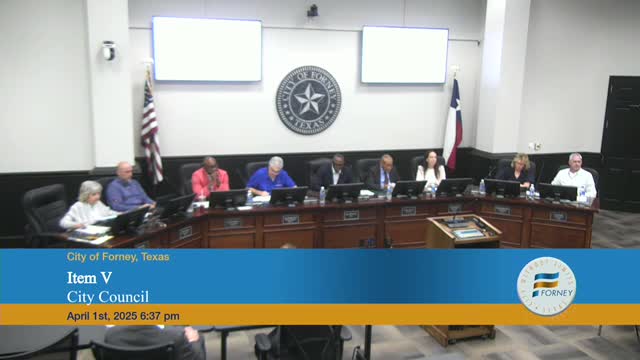
Residents of the Greyhawk subdivision told the Forney City Council they are facing a severe, ongoing erosion problem they say could damage homes and nearby city streets unless the city helps pay for repairs. During the council's public-comment period, homeowners and community representatives described failed drainage work they say was built outside approved specifications and urged the council to place the matter on a future agenda for fuller discussion.
The homeowners' association president, Tara Mansfield, told the council the erosion is located at the Little Gold entrance to the development and said the estimated repair cost is "gonna cost us $1,000,000 at minimum." Mansfield said the developer was aware of the failure when the HOA was turned over to residents and declined to make repairs.
Why it matters: Speakers said the erosion already threatens yards and home foundations near the drainage, could eventually damage Little Gold Street (also referred to as Walnut 548 in comments), and could lower home values or force the neighborhood into a public improvement district (PID) to raise repair funds. Those outcomes could have long-term tax- and safety-related consequences for residents and the city.
Several residents and local professionals described the problem in detail. Dustin Jones, who said he has lived in Greyhawk since 2018, said the developer "built the easement and the drainage system outside of the spec that was approved by the city," and that although inspections occurred, the work did not conform to approved plans. Realtor Jennifer Crim warned that a PID to fund repairs could lower property values and estimated — for illustration — that if each house lost $50,000 in value, the city could lose about $121,000 in annual tax revenue.
Daniel Murphy, who identified himself as a college-level geology instructor, said the drainage was poorly designed and built and characterized the current erosion as likely to worsen: "This was designed poorly from the get go, but then it was not even built to the poor design." Murphy said band-aid fixes could make downstream impacts worse by increasing water volume and changing the stream's course.
Kenneth Hill, speaking as a Greyhawk resident, asked the council to provide the community with records showing who reviewed and approved the original drainage design and who performed field inspections. Hill said residents expect answers at the next meeting and suggested they would escalate their concerns publicly if the city did not respond.
Discussion vs. decision: No formal action or vote on the erosion issue was recorded during the meeting. Speakers repeatedly asked the council to add the matter to a future agenda for full consideration and to provide information about past plan reviews and inspections.
Next steps noted by residents: Multiple speakers said they will return to a future meeting with photos, engineering quotes, and additional documentation and asked the city to consider providing financial or technical assistance or to clarify options such as a PID.
Ending: Council members did not take action during the meeting; residents left asking for a formal agenda item and responses from staff at the next council meeting.