Get Full Government Meeting Transcripts, Videos, & Alerts Forever!
Get email alerts on the Liquor Control Travel Audit topic
No spam. Unsubscribe anytime.
Audit flags gaps in oversight of Hawaii County liquor-department travel; council closes file
Summary
A county performance audit found gaps in written travel policy, uneven training and quorum risks for the Department of Liquor Control. Testimony from liquor commissioners defended travel as essential training; the committee voted to close the audit communication and asked the department for a written travel policy and post-travel reporting.
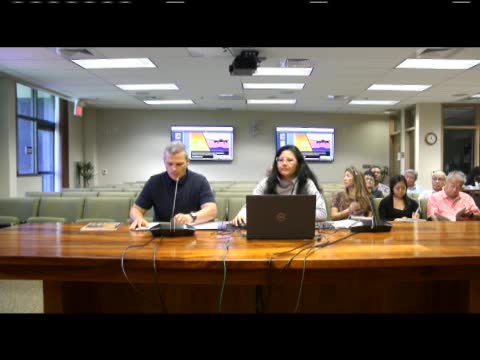
A Hawaii County performance audit released March 7 found shortcomings in how the Department of Liquor Control manages travel spending and training, and the Communication Reports and Council Oversight Committee voted April 1 to close the audit communication after hearing testimony and asking the department for follow-up actions.
The audit, presented by County Auditor Tyler Banner, examined travel expenditures from fiscal years 2019 through 2024 and made five recommendations, including that the department adopt a written travel policy, prioritize needs-based training, strengthen post‑travel reporting, limit travel that reaches quorum levels, and that the council consider a two‑year cooling‑off period for appointments between the Liquor Commission and the Liquor Adjudication Board.
Why it matters: the department is funded by liquor license fees rather than the general fund, so the auditor said fee revenue must maintain a direct and proportionate relationship to operating costs under Hawaii law. The audit found travel spending is high relative to the department’s budget and questioned whether travel is being prioritized by need or by seniority.
County Auditor Tyler Banner summarized the audit scope and methods and said the office ran the review in accordance with government auditing standards. “We conducted this audit at the request of council after deliberation and the unanimous approval of resolution 548‑24,” Banner told the committee. He said the office compiled a public dashboard showing five years of travel data, role‑level spending and destination totals to highlight disparities in who attended what events and at what cost.
Banner noted several specific findings: staff travel totaled $232,030.56 over the five‑year review with the top three staff travelers accounting for roughly 61.5% of that total; liquor commissioners attended fewer events on island and more out‑of‑state events, with commissioners’ travel totaling $77,905.54 in the same period while investigators’ travel totaled $31,973.52. The auditor also reported that a quorum was present during travel at 9 of 47 events reviewed, and that training records showed 12 instances where members had not received or did not recall receiving Sunshine Law training and 13 instances for ethics training.
Liquor commissioners and board members who testified defended travel as essential professional development. David Greenwell, a liquor commissioner from District 9, said, “The Liquor Department travel policies should not be questioned. Travel is fully funded through the department that is wholly financed through the collection of license fees. No taxpayer money is being expended for this travel.”
Mel Ventura, a liquor commissioner from District 8, told the committee he agreed “there is no waste or abuse, willful or otherwise,” and said virtual training cannot replace the networking and informal learning available at in‑person conferences. Art Taniguchi, a former chair and current commissioner, said the conferences were “vital in educating me in the industry” and described the commissioners as volunteers who benefit from in‑person learning.
Sydney Fuquay, who chairs the Liquor Education Board but testified in a personal capacity, read from the audit language that the department’s training “appears highly correlated with its successful outcomes, particularly in maintaining up to date knowledge of regulatory developments and enhancing enforcement procedures.” Fuquay noted the audit did not define “significant travel cost” and argued the department operates within its means.
Director Takase (Department of Liquor Control) told the committee the department is already drafting a department‑level travel policy and has begun sharing post‑travel reports with the mayor’s office and board and commission members. “We will include [travel reports] in our agendas to receive those reports and have the members ask questions if they wish,” Takase said.
Council members pressed the department on timing and detail. Council member Inaba asked for a timeframe for the new policy and asked whether the department had consulted the auditor; Takase said a draft exists and the department expected to present it to the commission in the next couple of months and could consult the auditor. Council member Onishi emphasized that even though the department is self‑funded, license fee revenue remains public money and urged the department to adopt need‑based travel prioritization and clearer budget justifications going into the next budget cycle.
Corporation counsel staff said training of board and commission members is standard practice and said the office can provide reminders and event‑specific guidance to reduce Sunshine Law risk when more than two members attend the same conference.
The committee formally considered Communication 178 (Performance Audit 2025‑01) and a motion to close the file on the communication was moved by Council member Inaba and seconded by Council member Houston. The committee recorded the final vote as eight in favor with Council member Akani Ali‘i Kleinfelder excused.
The committee asked the department to deliver the written travel policy and to agendize post‑travel reports; the auditor recommended the council adopt a more structured review of travel line items during the annual budget process. The audit also recommended the council consider a charter amendment establishing a two‑year cooling‑off period between service on the Liquor Commission and the Liquor Adjudication Board.
The committee adjourned after the vote; members said they expect to revisit the department’s travel policy and budget details during the upcoming budget season.