Get Full Government Meeting Transcripts, Videos, & Alerts Forever!
Get email alerts on the Short Term Rentals topic
No spam. Unsubscribe anytime.
Houston council hears wide-ranging concerns over proposed short-term rental ordinance
Summary
Dozens of residents, industry representatives and property owners urged changes to a draft short-term rental ordinance—raising enforcement, timing and platform-definition concerns—while council members said amendments are pending.
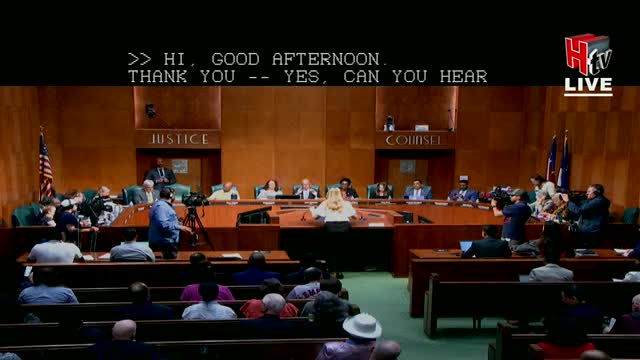
Houston City Council received substantial public comment April 1 on a proposed short-term rental ordinance, with residents, landlords and the Houston Association of Realtors warning that the draft could produce unintended consequences and asking for clearer enforcement timelines and narrower definitions.
Supporters of sensible regulation and neighbors of problem properties said they back rules that protect neighborhoods, but multiple speakers told the council that the ordinance as written is either too weak to stop repeat nuisance operators or too broad in ways that would incorrectly sweep in professional real-estate tools.
Houston Association of Realtors volunteer Kylie Rapier told the council the ordinance’s current definition of “platform” could unintentionally capture regional multiple-listing services used by licensed agents. “HAR does not take bookings, process any payments, or generate revenue from short-term rental activity. It is simply an information tool for licensed real estate professionals,” Rapier said, asking the council to narrow the definition so the regulation targets booking platforms and not MLS listing services.
Other speakers representing short-term rental hosts said they support responsible rules but sought clarity on how the city will process registrations and how long hosts would wait for approval. Host Martin Prendergast said he had not seen the final amendments yet, and flagged the risk that an unclear licensing timeline could leave operators in limbo: legal staff later said applications would be accepted online starting in August, with processing to be complete by January 2026, and that applicants could continue to operate while their application was pending.
Neighbors and community members urged stronger enforcement for multifamily properties operating as de facto hotels. Gretchen Gillis, a Museum District resident, told the council of sustained problems at a 20-plus-unit property on Bank Street and recommended treating large, hotellike operations as hotels with the corresponding responsibilities. “1116 Bank Street has become a de facto hotel … none of us bought real estate in the Museum District to live near a hotellike business,” she said.
Council member Sallie Kamen, who is co-sponsoring the ordinance, said multiple amendments will be filed to address concerns raised by stakeholders. Kamen and colleagues signaled plans for language addressing platform definitions and multifamily density and enforcement thresholds so that penalties can apply propertywide when abuse crosses defined limits.
City attorney staff told the council the ordinance will include an uncodified lead time: the administration plans to open online applications in August and aims to finish processing by January 2026; applicants will be able to operate while their applications are pending. Council members and public commenters asked for the processing timeline and enforcement mechanics to be included in the public materials so hosts and neighbors can plan.
Speakers included representatives from the Houston Association of Realtors, short-term rental hosts, neighborhood leaders and hotel industry representatives. The Hotel Lodging Association of Greater Houston urged the council to add basic insurance and life-safety requirements and to require that owners disclose safety and occupancy information to guests.
Council members said they will circulate draft amendments for review ahead of votes; legal staff and sponsors indicated the final ordinance will attempt to balance neighborhood livability, public safety and fairness to compliant hosts.
No final vote on the ordinance occurred during the April 1 meeting; council leaders said amendments would be posted and reviewed before a scheduled discussion and possible vote.
Ending
Council members asked residents and stakeholder groups to review the forthcoming amendment language and urged ongoing dialogue with city legal staff to refine enforcement procedures and timelines.