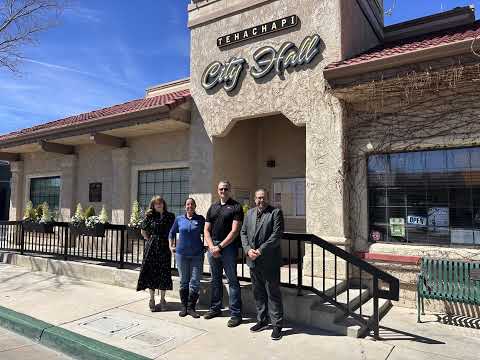
BHE Renewables describes local operations, taxes and partnerships in Tehachapi area
Loading...
Summary
BHE Renewables' vice president said the company's Kern County projects — including Solar Star and Pinon Pines wind sites — have generated significant tax revenue and local jobs; the company highlighted energy storage as a priority and described partnerships with local vendors and training programs.
Chris Kuchar, vice president of BHE Solar Operations, described the company’s local renewable-energy operations and economic impact in Kern County on the Tehachapi Chamber podcast.
“Solar Star alone powers about 245,000 homes in the local community,” Kuchar said, describing Solar Star and other regional projects. He said Solar Star has about 1,700,000 panels and 398 skids of inverters at the site and that the project has paid more than $13,000,000 in taxes since construction; Kuchar said the company’s Pinion Pines wind sites have contributed more than $64,000,000 in taxes.
Kuchar and Chamber staff discussed how BHE’s portfolio spans wind, solar, geothermal, hydroelectric and natural gas, and how that mix supports reliable electricity supply. Kuchar said energy storage is “one of the next areas we really get to continue to focus on” and named batteries and pumped hydro as options to move daytime solar generation to evening hours when demand persists.
The company outlined local partnerships to maintain and upgrade large facilities. Kuchar said Solar Star’s site team is roughly 22 people and that the company uses local vendors for larger projects, naming Pierce Renewables for site projects and RISE Renewables for technician training. He said those partnerships include panel cleaning, vegetation management and inverter work.
Kuchar described routine operations that support reliability and safety, including cleaning panels roughly twice a year and vegetation management across thousands of acres. He also talked about workforce and career-path efforts: BHE participates in local outreach and supports training efforts so residents can pursue technical roles at sites.
The podcast also described collaborative community projects supported by BHE and other firms, including a public bench project made from recycled wind turbine blades. Claire Scottie of the Chamber said the bench will include icons and a plaque explaining energy sources, and a QR code linking to further information about Kern County energy production.
Kuchar characterized the local economic effects as broader than site payrolls, noting repeated hotel stays, vendor services and other spending tied to operations in the region. “It’s pretty incredible,” he said, summarizing tax receipts and the jobs and business activity the projects have generated.
The speakers did not discuss regulatory approvals, specific contract values for local vendors, or detailed employment counts beyond the site-team example at Solar Star.