Get Full Government Meeting Transcripts, Videos, & Alerts Forever!
Get email alerts on the Humanitarian Aid Myanmar topic
No spam. Unsubscribe anytime.
WFP: Myanmar earthquake deepens crisis; agency says it needs $20 million to scale food response
Summary
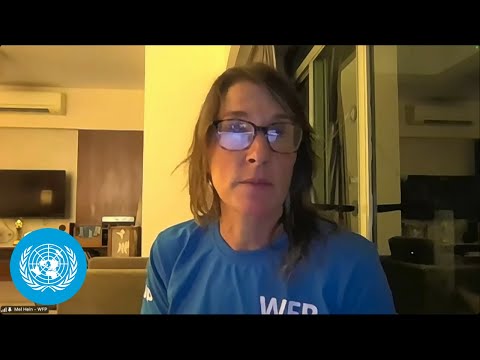
Melissa Lee Hine of the World Food Programme said almost 3,000 people have died in the recent Myanmar earthquake and that immediate needs for food, shelter and water are large. WFP has reached more than 15,000 people so far, plans to assist 850,000 in April, and estimates at least $20 million is needed for its part of the response.
Melissa Lee Hine, head of communications for the World Food Programme (WFP) in Yangon, said the earthquake that struck Myanmar on Friday has killed “almost 3,000” people and left thousands more injured and missing, worsening an already large humanitarian crisis.
The tremor damaged homes, hospitals, roads, bridges and utilities across multiple regions, Hine said, forcing people to sleep outdoors and leaving many without shelter, clean water or medical care. “For WFP, we have food in our warehouses across the country,” she said, but added that funds are urgently needed to move and distribute supplies to affected areas.
The disaster hit areas that were already under strain: Hine said 20,000,000 people in Myanmar were in need of humanitarian assistance before the quake, 15,000,000 faced food insecurity and more than 3.5 million people had been displaced by conflict over the past four years. The earthquake’s worst impacts were concentrated in the Northwest Dry Zone and in parts of Mandalay, Shan and what the briefing referred to as Seguine, Hine said. A state of emergency had been declared across six states and regions.
WFP’s initial response included deliveries of emergency food supplies to “Napeadore” within 48 hours and subsequent distributions in Shan, Seguine and Mandalay, Hine said. To date, WFP has reached more than 15,000 people with ready-to-eat rations and plans to assist 850,000 people with basic food and cash rations in April. Hine said WFP estimates it needs at least $20,000,000 for its portion of the earthquake response and that the total funding required across all actors will be higher.
Funding shortfalls have already constrained WFP operations in Myanmar: Hine said the agency recently had to “drastically scale down” regular assistance and cut planned support for more than 1,000,000 people because of prior funding gaps. She described a broader trend of rising humanitarian needs worldwide alongside declining overall funding.
On operational access, Hine said WFP teams are conducting needs assessments “all over” the country, including areas not under government control, and are coordinating with any local actors needed to reach people. Communications outages, damaged roads and complex control of territory make it slow to build a full picture of needs, she said. “It is taking time to really get a clear picture of the needs across all areas,” Hine said. She also noted that the operating environment has been complex for the past four years as a result of conflict and displacement.
When asked about reports of blocked or diverted aid, Hine said WFP had no reports so far of aid being blocked, and that the agency’s immediate food response began within days in multiple locations. On reports of looting, she said WFP had lost access to some warehouses in the past year and there have been reports of looting and damage to those sites that WFP has not been able to independently verify because of access constraints.
Journalists asked about heavy machinery and international urban search-and-rescue teams; Hine said she could not speak in detail about search-and-rescue deployments and that other humanitarian actors and incoming international teams — including from ASEAN countries, by reports — are supporting those aspects. She reiterated that cash assistance is important to meet basic needs and can help revive local markets.
Hine said the response requires three elements: an end to conflict, free and unimpeded humanitarian access, and sufficient resources to meet needs. “All three of those things are critical,” she said. The briefing ended after a short question-and-answer session with journalists from the Associated Press, U.S. News & World Report, Canada Free Press, the Gaither Short Fund for Journalists and others.
The World Food Programme’s immediate ask at the briefing was financial: funds to move food already in-country and to scale cash and food distributions to reach hundreds of thousands of people in the weeks ahead.