Get Full Government Meeting Transcripts, Videos, & Alerts Forever!
Get email alerts on the Infrastructure Projects topic
No spam. Unsubscribe anytime.
Oroville staff unveil scoring system to rank 68 city projects; $130 million in needs identified
Summary
City staff presented a weighted scoring system and a ranked project list intended to help the council prioritize 68 proposed projects, estimating roughly $130,000,000 in combined costs and placing drainage, Caltrans coordination and sewer infrastructure among the top priorities.
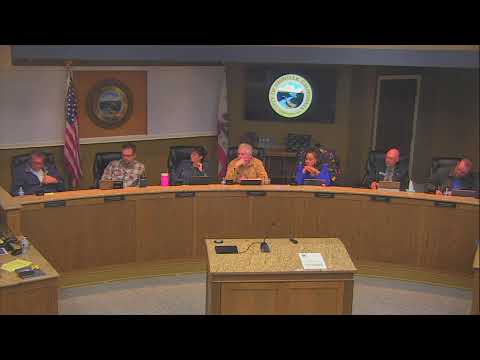
Oroville public works staff presented a formal project-prioritization framework to the City Council on April 1, proposing weighted criteria and a ranked list of projects to guide limited staff time and capital spending.
The presentation, led by Alyssa (staff member), framed the need for an objective system to choose among 68 identified projects. “There are 68 projects, so you're going to look at these and think these don't add up to 68,” Alyssa said, and later summarized citywide estimates: “All of them added together, dollars 130,000,000.”
The scoring system uses 11 criteria — including urgency, public safety and resilience, community and economic benefit, cost, feasibility, equity, environment, legal compliance, risk of not acting, public health and traffic relief — with urgency and public safety double-weighted. Staff proposed numeric scales and thresholds intended to make rankings data-driven and reproducible.
Using the proposed methodology staff produced an initial “top 20” list. The highest-ranked items included a riverbed apartment drainage issue, coordination with Caltrans on State Route 162 (a CAPM coordination item), several storm‑drain replacements (including a Foothill storm drain described as roughly 4 feet in diameter), sewer lift station modernization and emergency pumping bypass capability, a Montgomery Street roundabout, a complete‑streets project in front of Ishii Middle School, a citywide ADA compliance baseline study, Table Mountain Boulevard sidewalk railing for safety, and slope stabilization on Orodam Boulevard East.
Alyssa explained cost groupings designed to inform procurement: projects under $75,000 can be sole‑sourced, $75,000–$220,000 typically use informal bids, and projects above $220,000 require formal bids. She said staff’s rough combined estimate for all projects—including construction, consultants and staff time—was about $130 million.
Council members praised the work as a planning tool. Councilman Sean Weber thanked staff and said the prioritized, visual presentation was exactly what he had hoped to see. Several council members recommended that individual council members keep the spreadsheet available on their laptops for constituent conversations. Alyssa said she plans to use a Smartsheet implementation so the list and dashboards can be published and updated.
Staff described next steps as: (1) finalize the criteria and weighting with council feedback; (2) have the scoring team (Alyssa, Tim Caber and public works managers) score and rank projects; (3) align resources and schedules; and (4) publish and adjust priorities as conditions change. Alyssa cautioned that the list is a “living” document and that a change in conditions (for example, a sudden failure) would move a project up the list.
Council discussion included questions about specific district allocations and requests for staff to provide the district‑by‑district project lists included in the agenda packet.
The presentation did not itself enact any funding or bind the council to specific projects; it was presented for feedback and direction to proceed with the scoring and scheduling process.