Get Full Government Meeting Transcripts, Videos, & Alerts Forever!
Get email alerts on the Law Enforcement Federal Cooperation topic
No spam. Unsubscribe anytime.
Senate committee rejects bill to bar Arkansas cooperation with ATF after hours of testimony
Summary
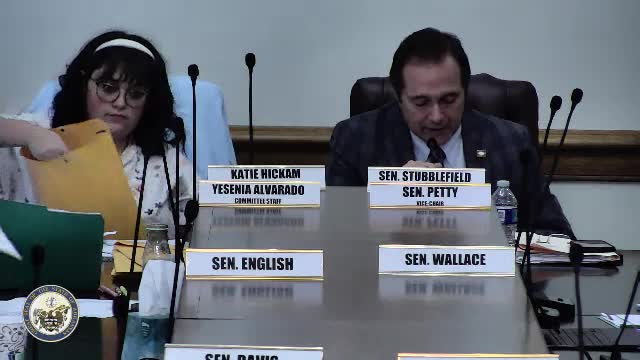
At a meeting of the City, County & Local Affairs Committee — Senate, lawmakers heard more than three hours of testimony on SB399, the “Anti‑ATF Commandeering Act,” before the committee rejected the measure after debate and an amendment. Sponsor Senator Stubblefield said the bill would bar state and local agencies from providing material aid to enforce federal firearms regulations.
At a meeting of the City, County & Local Affairs Committee — Senate, lawmakers heard more than three hours of testimony on SB399, the “Anti‑ATF Commandeering Act,” before the committee rejected the measure after debate and an amendment. Sponsor Senator Stubblefield said the bill would bar state and local agencies from providing material aid to enforce federal firearms regulations.
The measure’s sponsor framed the bill as a protection of state sovereignty and a guard against federal overreach. Senator Stubblefield said the anti‑commandeering principle is rooted in the Constitution’s Tenth Amendment and noted a Supreme Court decision he described as central to the doctrine. “We don’t have to cooperate with those federal authorities,” he told the committee.
Supporters of SB399, including gun‑rights activists and family members of a Little Rock man killed during an ATF‑led search, urged the committee to restrict federal agencies’ ability to enlist local officers. Leah Herron, a board member of Gun Owners of Arkansas and a firearms instructor, said she feared that an unannounced predawn search like the one that resulted in the death of Brian Malinowski could happen to any Arkansan. “This act is very important to protect citizens in Arkansas from these unwarranted, unnecessary actions such as we witnessed with Brian Malinowski,” Herron testified.
Opponents — including the Arkansas Prosecuting Attorneys Association, the state attorney general’s office (represented by counsel), the Arkansas State Police, police chiefs’ groups and the Fraternal Order of Police — said the bill would curtail routine, constitutionally permitted cooperation and would remove tools prosecutors and police rely on in violent‑crime investigations.
Bob McMahon, representing the Arkansas Prosecuting Attorneys Association, said the bill would “prohibit us from working with the federal government and the United States attorney’s office on prosecuting a handful of cases.” McMahon told the committee that past federal‑state partnerships, such as deputizing local prosecutors as special assistant U.S. attorneys or hosting federally funded positions in local offices, had helped secure convictions and keep dangerous offenders off the streets.
Law‑enforcement witnesses underscored specific investigative capabilities that depend on federal partnerships. Major Stacy Rhodes of the Arkansas State Police testified that the ATF and its National Integrated Ballistic Information Network (NIBIN) have been essential in linking crime scenes across jurisdictions; she said some investigations “would not have been successful without the aid of our ATF partners.” Michael Gibbons, vice president of the Arkansas Fraternal Order of Police and a current or former task‑force officer, described NIBIN and other federal resources and said some state prosecutions rely on federal statutes to obtain sentences the state cannot.
Those opposing the bill also disputed accounts that the measure would prevent the ATF from entering Arkansas or from enforcing federal law. Major Rhodes said the bill would strip discretion from local officials; prosecutors likewise stressed they make selective, case‑by‑case decisions about when to seek federal assistance. “We are choosy when we work with the feds,” McMahon said. “Sometimes we fight the feds. But to cut us off ... would really take a great tool from our kit.”
Supporters repeatedly returned to the March Little Rock raid that left Brian Malinowski dead, describing it as emblematic of overreach. Witnesses recounted details of the operation and alleged procedural failures, including timing of the entry, body‑camera use, and how local officers participated. Sponsor Stubblefield said an amendment to SB399, which the committee adopted before the broader debate, carved out some narrow exceptions but did not satisfy supporters’ or opponents’ concerns.
Committee members asked detailed questions about how the bill would affect existing multiagency initiatives and evidence‑sharing programs, and about whether local agencies receive federal money that could influence cooperation. Testimony included competing factual claims about ATF history and internal practices; witnesses on both sides cited incidents ranging from historical ATF controversies to recent federal programs.
After the public testimony and committee discussion, Senator Stubblefield moved that the committee pass SB399 as amended; the motion received a second but the committee voted to defeat the bill. No roll‑call tally was recorded in the meeting minutes provided.
Votes at the committee’s conclusion also advanced and rejected several other, shorter measures (see “Votes at a glance” summary). The committee chair said remaining agenda items would be taken up before members left to preserve quorum.
The committee action leaves SB399 without committee approval; the sponsor and witnesses indicated the issue is likely to return in future sessions or in other forms.