Get Full Government Meeting Transcripts, Videos, & Alerts Forever!
Get email alerts on the Elections topic
No spam. Unsubscribe anytime.
Senate committee defeats proposal to create Secretary of State document‑validity investigators
Summary
The Senate State Agencies & Governmental Affairs Committee rejected a bill to create a document‑validity division in the Arkansas Secretary of State's office with investigatory authority over petitions and filings.
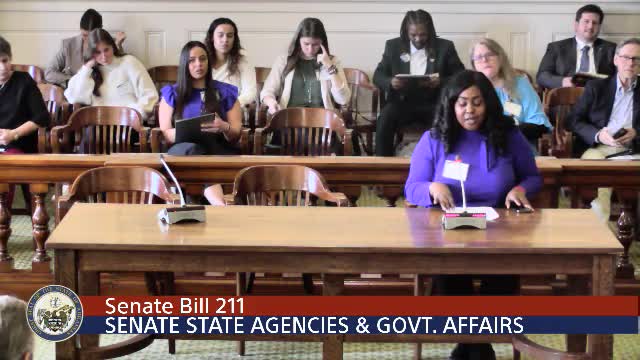
The Senate State Agencies & Governmental Affairs Committee rejected Senate Bill 2 12, a measure that would have created a document‑validity division inside the Arkansas Secretary of State's office with investigatory powers over petition and filing fraud.
Committee Chair Senator Hammer sponsored the bill and told the committee the office needs a fact‑finding arm to investigate suspected fraud and refer criminal matters to prosecutors. "[T]he secretary of state can take ownership of securing this issue and kind of being able to look into complaints," he said, arguing the change would let the office assemble evidence and then refer cases to the attorney general and local prosecutors.
Opponents, including several citizens who testified at length, said the bill would give the office unilateral power to strike signatures and act as an investigative body without sufficient due‑process protections. Jimmy Kevin, a citizen witness, warned that the legislation would allow the secretary of state to declare signatures "null and void" on a preponderance‑of‑the‑evidence standard and said there would be no effective opportunity for those accused to present a defense before signatures are removed. Multiple testimony also cited concerns about cost, training and possible politicization of the petition process.
Nathan Lee, chief counsel to the Secretary of State, said the office's proposed division would not itself prosecute and that any criminal matters would be referred to the attorney general's office and then to prosecutors. Lee described the proposed standard for civil‑type findings as the "preponderance of the evidence standard," and said criminal prosecutions would still require proof beyond a reasonable doubt.
During the committee vote, Senator Hammer moved to pass the bill; Senator Clark seconded. The motion failed on a voice vote. The committee discussion made clear the bill's supporters want the Secretary of State's office to have greater capacity to investigate petition irregularities, while critics emphasized protections for citizens whose signatures might be challenged.
The committee did not adopt the proposal; members signaled the debate may continue in the public and with stakeholders.
The vote was recorded as a committee voice vote; the committee chair announced the motion had failed.