Get Full Government Meeting Transcripts, Videos, & Alerts Forever!
Get email alerts on the Energy Generation Policy topic
No spam. Unsubscribe anytime.
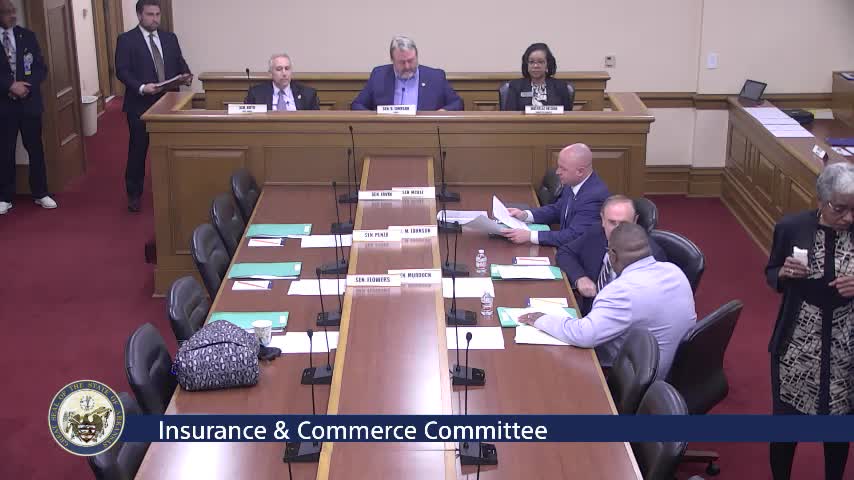
Senate committee advances bill to speed power projects, prompt debate over co-op oversight and rate impact
Summary
The Arkansas Senate Insurance & Commerce Committee voted to advance Senate Bill 307, a measure to allow utilities to recover construction costs during buildout (construction work in progress), shorten PSC review windows and set new capital and petition limits intended to speed new generation projects.
LITTLE ROCK — The Arkansas Senate Insurance & Commerce Committee on Monday advanced Senate Bill 307, a measure that would create a formal process for construction work in progress (CWIP) recovery to accelerate new electric generation projects and change how the Arkansas Public Service Commission (PSC) reviews costs and petitions.
Sponsors said the bill aims to help Arkansas attract large industrial and data-center customers that require reliable, new generation while placing limits on utility capital structures and rate impacts. Opponents — including cooperative members and some rural residents — warned the measure would reduce oversight for cooperatives and risk higher bills for low-income and fixed-income households.
Senator Jonathan Dismang, sponsor, told the committee that the state must accept “two truths” about generation: that Arkansas needs new generation and that “generation will cause energy rates to rise.” He said SB 307 provides “a new path” that he believes “is more efficient, provides more oversight than the current structure” and could “ultimately lead to a lower overall cost for the implementation of new generation.”
Senator Matt McKee, a co-sponsor, said the bill is the product of long study and negotiation and described it as “how we protect the rate payers and how we ensure that the cost that they incur…is mitigated.” He told committee members he would answer technical questions and noted the bill’s safeguards were intended to reduce the long-term cost of new generation.
Key provisions described at the hearing
- Construction work in progress (CWIP): Under the bill, utilities can recover a portion of project costs during construction through annual filings and true-ups rather than waiting until a plant is complete and in service. PSC staff described annual reports and an annual audit/true-up process as part of oversight.
- PSC review window shortened: The PSC testified that the bill would reduce the statutory review period for project applications from 240 days to 180 days; PSC staff said their internal processes can generally meet a six‑month review schedule.
- Capital structure and equity cap: The bill would limit the amount of equity included in a project’s capital structure during construction (sponsors described a 50% maximum for equity in the capital structure; PSC staff noted prior reviews capped equity near 47%). Sponsors argued capping equity protects ratepayers because equity-financed projects can raise the cost of capital.
- Rate limitation and petition rules: The bill includes a provision that a utility’s overall rates shall not exceed a threshold defined as 10% below a specified national average without obtaining PSC approval and a public-interest finding. It would also add or clarify criteria for PSC proceedings involving cooperatives — including a reduced petition threshold for member-initiated reviews (from 15% to 10% of member consumers in some committee discussion) and language specifying when cooperatives are subject to PSC rate-case procedures.
Opposition from cooperative members and rural residents
Multiple witnesses from rural areas and cooperative members urged rejection or amendment of the bill, saying the measure would weaken member protections and make it easier for cooperatives to raise rates or add fees without adequate review. Brandy McClain, who identified herself as a member of Petit Jean Electric Cooperative, testified: “What this bill does is it creates an even easier way for the cooperatives to raise rates by allowing them to side‑step regulations that are already lenient and is detrimental to the state as a whole.”
Other speakers described specific grievances with cooperative billing practices and urged more transparency and stronger PSC authority over fees and riders. A committee witness and several members asked PSC representatives whether the commission has the staff and expertise to perform the new oversight the bill would create; PSC Chairman Doyle Webb said the commission “believe[s] that we have the capacity today” but acknowledged the agency might need to add specialized financial analysts and potentially higher salary bands if filings increase substantially.
PSC testimony and capacity concerns
Doyle Webb, chairman of the Arkansas Public Service Commission, and Danny Hofer, PSC chief of staff, spoke to how the PSC would administer the bill’s requirements. Hofer explained the mechanics of CWIP annual reviews and true-ups and said the commission would continue to evaluate prudency at the end of construction. Webb told senators the commission would “do our best to comply” with any statutory framework the Legislature sets and said, candidly, that the commission has about 15 unfilled positions and had not added personnel in decades; Webb warned that if filings surged the PSC “may need 5 more people knowledgeable in financial analysis.”
How sponsors framed urgency
Supporters from the state’s economic development community told the committee the bill is necessary to land major industrial investments that require large, reliable power supplies. Brad Lacy, president and CEO of the Conway Area Chamber of Commerce, said site-selection consultants now ask first whether power can be supplied and how quickly, and he said some prospective projects would require many times a city’s current electricity use. Jack Thomas of the Little Rock Regional Chamber said project leads in 2025 were already seeking thousands of megawatts and that states able to answer “yes” to power-availability questions will win those projects.
Committee action and next steps
After public testimony the committee took a voice vote to advance SB 307. A motion to move the bill was seconded by Senator Matt McKee; the chair declared the motion carried after a voice vote. The committee did not record a roll-call tally in the hearing transcript. The bill will proceed to the Senate floor, where members said there will be additional time for review and public input before floor consideration.
Why it matters
Senate Bill 307 would change how Arkansas finances and regulates large generation projects and how quickly the PSC may act on applications. Supporters say the changes will make Arkansas more competitive for large industrial investments that bring jobs and tax revenue. Opponents say the bill insufficiently protects cooperative members and low‑income consumers from higher bills and that it reduces or clarifies PSC oversight in ways that could limit rate reviews. PSC officials told the committee they can operate under the proposed timeline but may need targeted staffing increases if filings rise.
Votes at a glance
- Senate Bill 307 — Committee vote: advanced by voice vote; motion seconded by Senator Matt McKee; outcome: approved by committee and forwarded to the Senate floor (voice vote; roll‑call not specified in transcript).
Provenance
First related transcript remark: “We’re gonna begin with Senate Bill 3 0 7, Senator Dismaine.” — committee clerk reading the agenda (transcript timestamp s=113.45).
Last related transcript remark: Committee voice vote and passage declaration: “All in favor, say aye… All opposed, like sign. Thank you, senator. You passed your bill.” (transcript timestamp s=7166.98–7173.38).
Sources: Committee hearing testimony and PSC memoranda as recorded in the Insurance & Commerce — Senate committee transcript.