Get Full Government Meeting Transcripts, Videos, & Alerts Forever!
Get email alerts on the Behavioral Health Workforce topic
No spam. Unsubscribe anytime.
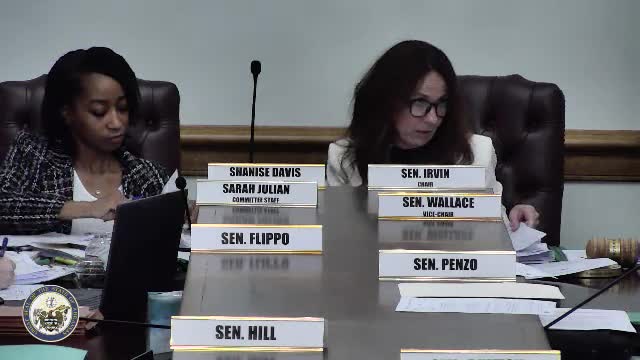
Committee passes bill to create student-loan forgiveness program for behavioral-health providers (no funding attached)
Summary
Senate Bill 554 would create authority to forgive portions of student loans for mental‑health and substance‑use disorder providers who sign contracts to work in behaviorally underserved communities; the committee passed the bill but it contains no state funding in the text presented.
The Senate Public Health, Welfare and Labor Committee voted to pass Senate Bill 554, which establishes the structure for a student‑loan forgiveness program aimed at increasing the number of mental‑health and substance‑use disorder providers in underserved Arkansas communities.
Sen. Clark Tucker (District 14) described the bill as creating the infrastructure for incentives but said "there's no funding attached to it, so let me just say that at the beginning to set your mind at ease." Under the bill as explained to the committee, the Department of Human Services secretary would identify "behaviorally underserved communities" that lack sufficient counselors. Providers who sign contracts to work in such communities would be eligible for loan forgiveness equal to 15% of the average student loan amount each year for three years (a total of 45% under the program), using the statute's measure of "average student loan amount" rather than an individual's actual loan balance. Tucker said the program would not compensate providers for unusually large individual debts.
Tucker said the bill "creates a fund, and it says any types of monies can go into the fund, federal grants, private contributions to state money, but there's no state money allocated" at this time. Committee members asked about fiscal impact; Tucker said there was no direct physical impact and that this measure is step one to create the avenue for attracting more providers. After questions, the committee moved, seconded and recorded a voice vote. The chair announced, "Ayes have it. Congratulations. You've passed your bill." The transcript records no roll-call tally and no final appropriation attached to the bill.